Would you like to save this?
French Macarons Recipe
A Short, Sweet Intro
This French Macarons Recipe gives you delicate, bakery-style almond Cookies with crisp shells, chewy centers, and endless filling options—right from your own kitchen, no trip to Paris required.
Full Recipe Introduction: Why These Little Cookies Feel So Special
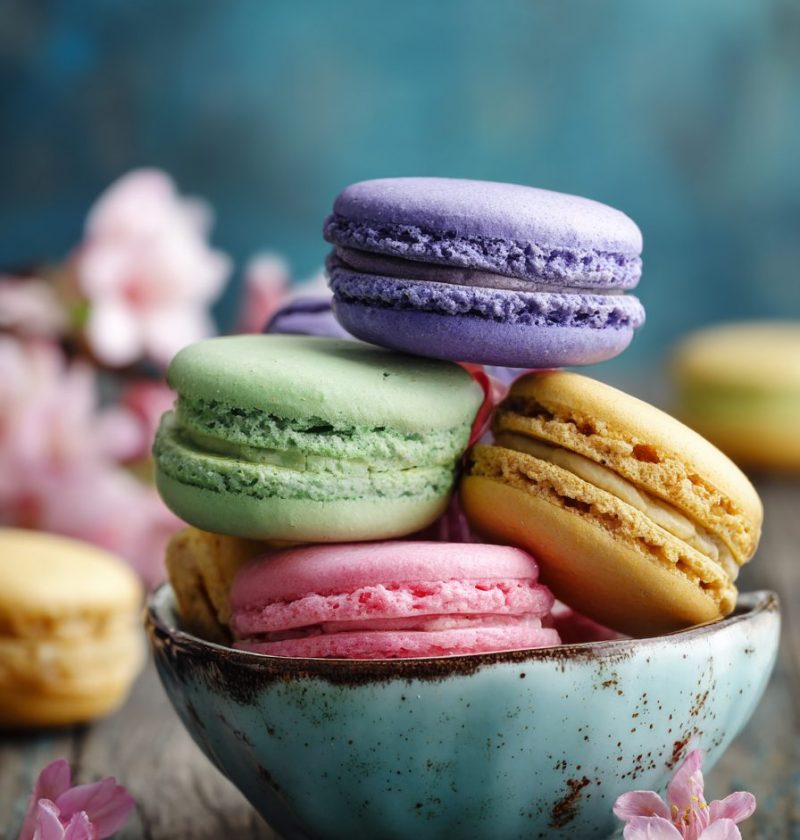
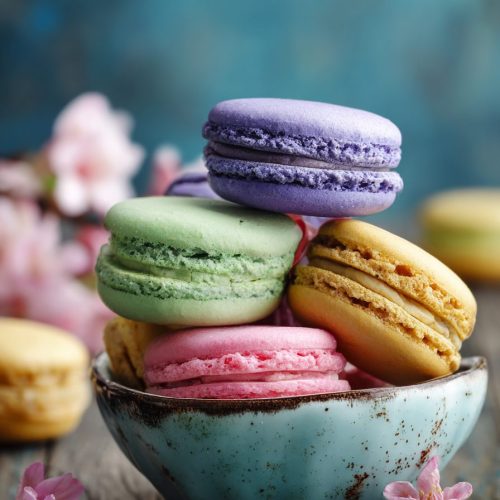
French macarons can seem a little fussy, but they’re also pure magic: smooth, shiny tops; frilly “feet” around the edges; and that perfect mix of crisp and chewy that makes you pause between bites. This classic French macarons recipe is my go-to for holidays, showers, birthdays, and any afternoon when I need a pretty little treat with my coffee.
I’m a 50-year-old mom who has baked her way through more school fundraisers than I can count, and I can tell you—when you show up with homemade French macarons, people notice. These colorful French macarons look like they came from a fancy Parisian bakery, but they’re absolutely doable at home if you follow a few simple rules.
This version uses almond flour, egg whites, and granulated sugar for a French Meringue macarons method (no hot sugar syrup required). I’ll also share how this compares to Italian meringue macarons and when you might choose one over the other. The shells themselves are naturally gluten free, so they’re a wonderful macaron dessert recipe for friends avoiding wheat.
You can keep it classic with a vanilla macaron recipe, go rich with chocolate, or brighten everything up with raspberry or coffee macaron flavors. I’ll walk you through the macaron shells recipe, plus macaron filling ideas, storage tips, and all the little tricks I’ve picked up after many—many—test batches.
You know what? Macarons aren’t hard; they’re just particular. Let me explain how to make those “particular” steps feel simple and even fun.
Why You’ll Love This French Macarons Recipe
- Bakery-style results at home – Get smooth, glossy shells and tall feet that look just like the fancy pastry case.
- Beginner-friendly method – Uses the easier French meringue macarons technique (no boiling sugar syrup like Italian meringue).
- Tested for home ovens – Timings and temps are written with real, slightly quirky home ovens in mind.
- Naturally gluten free – Almond flour macarons are perfect for gluten-sensitive friends (just watch your fillings).
- Customizable flavors and colors – One base recipe turns into vanilla, chocolate, raspberry, coffee, or any colorful French macarons you can dream up.
- Great for gifting and parties – They keep well, pack neatly, and look stunning in gift boxes or dessert platters.
- Small-batch friendly – Easy to cut in half if you’re baking for one or two.
- Make-ahead friendly – Macarons actually taste better after maturing in the fridge for a day or two.
- Clear troubleshooting help – I’ll flag the common problems (cracks, hollows, no feet) and how to fix them.
- Simple ingredients – Just egg whites, sugar, almond flour, and powdered sugar for the shells. That’s it.
Ingredients for Classic French Macarons
This French Macarons Recipe makes about 24–30 assembled macarons (48–60 shells), depending on size.
Shells
- 100 g egg whites (about 3 large egg whites), aged at least 24 hours if possible
- Separate eggs, store whites in a covered container in the fridge; bring to room temp before whipping.
- 90 g granulated sugar (about ⅓ cup plus 1 tablespoon)
- Standard white sugar is perfect here.
- 100 g fine almond flour (about 1 cup, lightly packed)
- Look for super-fine blanched almond flour; brands like Bob’s Red Mill work well.
- 100 g powdered sugar (about ¾ cup)
- Sifted; this helps with those smooth tops.
- ¼ teaspoon fine sea salt
- ½ teaspoon pure vanilla extract (for a basic vanilla macaron shell)
- Gel food coloring (optional)
- Use gel or powder, not liquid; liquid can throw off the batter.
Note on measurements: Macarons are sensitive. If you can, use a kitchen scale. It really is the difference between “pretty good” and “wow, these are bakery quality.”
Fillings (Choose 1–2)
You can mix and match macaron shells and filling flavors. Here are a few easy, classic options:
Vanilla Buttercream Filling
- ½ cup (1 stick) unsalted butter, softened
- 1½ cups powdered sugar
- 1 teaspoon vanilla extract
- 1–2 tablespoons heavy cream or milk
- Pinch of salt
Chocolate Ganache Filling
- 4 oz semi-sweet or dark chocolate, finely chopped
- ½ cup heavy cream
- 1 tablespoon unsalted butter (for extra shine, optional)
Raspberry Buttercream Filling
- ½ cup (1 stick) unsalted butter, softened
- 1½ cups powdered sugar
- 2–3 tablespoons seedless raspberry jam
- Pinch of salt
Coffee Buttercream Filling
- ½ cup (1 stick) unsalted butter, softened
- 1½ cups powdered sugar
- 1–2 teaspoons instant espresso powder dissolved in 1 tablespoon hot water
- Pinch of salt
Feel free to use store-bought fillings too—Nutella, Lemon curd, or good jam can be lifesavers on a busy day.

Step-by-Step Directions: How to Make French Macarons
1. Prepare Your Tools and Trays
Line 2 large baking sheets with parchment paper or silicone macaron mats. If you’re using parchment, you can trace 1½-inch circles on the underside as a guide.
Make sure your mixing bowl and whisk are clean, dry, and grease-free—any fat keeps egg whites from whipping properly. Wipe the bowl and whisk with a bit of vinegar or lemon juice if you want extra reassurance.
2. Sift the Dry Ingredients
In a medium bowl, combine almond flour and powdered sugar. Sift together 2–3 times, pressing any small clumps through the sieve.
This step feels fussy, but it gives you smooth macaron shells with that classic, elegant look. If you’re left with large grainy bits of almond, discard them.
3. Whip the Egg Whites
Place room-temperature egg whites and salt in the bowl of a stand mixer fitted with the whisk attachment (or use a hand mixer).
- Begin whipping on medium speed until the whites are foamy.
- Slowly sprinkle in the granulated sugar, about 1 tablespoon at a time.
Once all the sugar is in, increase to medium-high and whip until stiff, glossy peaks form. The meringue should hold its shape when you lift the whisk, and the peaks should stand up straight with just a tiny curl at the tip.
Add vanilla extract and a small amount of gel food coloring (if using), then mix for just a few seconds to combine. Go a little lighter than you think—colors deepen as they bake.
4. Macaronage: Fold the Batter
This is the part people stress over, but you’ll get the hang of it.
- Add half the almond flour–powdered sugar mixture to the meringue.
- Use a rubber spatula to fold gently, scraping around the bowl and through the center.
- Add the remaining dry ingredients and keep folding.
At first it will look too thick and dry. Keep folding in a slow, deliberate motion—press the batter against the side of the bowl, then scoop and turn.
You’re aiming for a lava-like consistency: the batter should flow slowly off the spatula in a ribbon that folds over itself and disappears back into the bowl in about 10–20 seconds.
- If it breaks off in chunks, you need a few more folds.
- If it runs like pancake batter, it’s overmixed and the macarons may spread or not form feet.
Take your time here. It’s more about feel than a specific number of folds, but many bakers land somewhere around 40–60 folds.
5. Pipe the Macaron Shells
Transfer the batter to a piping bag fitted with a round tip (about ½ inch opening; Wilton 2A or 12 works well). If you don’t have a piping bag, you can use a large zip-top bag with the corner snipped off, though the shapes will be a bit more rustic.
Pipe small circles about 1½ inches wide, holding the bag straight up and close to the tray. Stop squeezing, then give a quick twist of the wrist to finish each shell cleanly.
Try to keep them about the same size—they’ll be easier to pair later.
6. Tap and Rest
Once the trays are piped, firmly tap each tray on the counter 5–6 times. This brings air bubbles to the surface and helps prevent hollow shells.
If you see any obvious bubbles on top, you can gently pop them with a toothpick.
Let the macarons sit at room temperature for 30–60 minutes, or until the tops look dull and feel dry when you lightly touch them. This drying step is what helps that pretty “foot” form in the oven.
- In humid conditions, they may need closer to an hour.
- In very dry climates, 20–30 minutes can be enough.
7. Bake the Macarons
While the shells rest, preheat your oven to 300°F (150°C). I recommend an oven thermometer—many home ovens run hotter or cooler than the dial says.
Bake one tray at a time on the center rack:
- Bake for 14–17 minutes, rotating the tray halfway through if your oven has hot spots.
- The shells are done when they have risen with nice feet, the tops don’t jiggle if you gently nudge one, and they peel off the parchment cleanly once cooled.
If you see browning, your oven is likely too hot. Next batch, lower the temperature by 10–15 degrees.
Let the shells cool completely on the tray before removing.
8. Make Your Filling
While shells cool, prepare your chosen filling.
For buttercream fillings (vanilla, raspberry, coffee):
- Beat the softened butter with an electric mixer until creamy.
- Add powdered sugar, salt, and flavorings (vanilla, raspberry jam, or espresso mixture).
- Beat until light and fluffy, adding milk or cream a teaspoon at a time until you reach a smooth, pipeable consistency.
For chocolate ganache:
- Place chopped chocolate in a heat-safe bowl.
- Heat cream until steaming (not boiling), then pour over the chocolate. Let sit 1–2 minutes.
- Stir gently until smooth; add butter if using.
- Let cool until thickened but still spreadable.
You can chill ganache for a few minutes to speed it up, but stir every couple of minutes so it doesn’t firm up too much.
9. Match and Fill
Gently remove macaron shells from the parchment. Pair them up by size—one top shell, one bottom shell in each pair.
Pipe or spoon a small dollop of filling onto the flat side of one shell (about a teaspoon for standard-size macarons), then gently press the second shell on top, twisting slightly to spread the filling to the edges.
Don’t overfill—too much filling can cause the macaron to crack or ooze.
10. Mature the Macarons
Here’s the secret to truly chewy macaron cookies with perfect texture: they need time to rest.
Place filled macarons in a single layer in an airtight container. Refrigerate at least 24 hours, and up to 48 hours, before serving.
During this time, the shells absorb some moisture from the filling, becoming tender and chewy, while still holding that light, crisp shell.
Before serving, let macarons sit at room temperature for about 20–30 minutes so the flavors and textures can shine.
Servings & Timing
- Yield: About 24–30 assembled macarons (48–60 shells)
- Prep Time: 40–50 minutes (including mixing, piping, and prepping fillings)
- Rest Time (Shells): 30–60 minutes before baking
- Bake Time: 14–17 minutes per tray
- Maturing Time (Filled Macarons): 24 hours in the fridge (recommended)
- Total Time: About 1½ hours active time, plus resting and chilling
Variations: Fun Flavors and Color Ideas
Here’s where this French Macarons Recipe really turns into a creative playground.
- Chocolate Macaron Recipe – Add 1–2 tablespoons unsweetened cocoa powder to the almond flour/powdered sugar mixture and fill with chocolate ganache.
- Raspberry Macaron Recipe – Tint shells light pink with gel color and fill with raspberry buttercream or thick raspberry jam.
- Coffee Macaron Recipe – Stir 1 teaspoon espresso powder into the meringue and fill with coffee buttercream or mocha ganache.
- Lemon Macarons – Add a bit of yellow gel color to the shells and fill with lemon curd or lemon buttercream.
- Salted Caramel Macarons – Keep shells plain or lightly tinted, and fill with thick salted caramel plus a ring of vanilla buttercream to keep it from leaking.
- Holiday Macarons – Red and green shells, peppermint buttercream, or crushed candy canes sprinkled around the edges for Christmas; pastels for Easter or baby showers.
Storage & Reheating (Well…Thawing)
Macarons are a great make-ahead dessert recipe, which is one reason I love them for parties.
- Refrigerator: Store filled macarons in an airtight container for up to 5 days. They’re usually at their best between day 1 and day 3.
- Freezer (Shells): Unfilled macaron shells freeze very well. Layer them between sheets of parchment in an airtight container and freeze for up to 2 months.
- Freezer (Filled Macarons): Most macaron fillings freeze nicely, especially buttercreams and ganache. Freeze for up to 1 month.
- Thawing:
- For shells: thaw in the closed container in the fridge, then bring to room temp before filling.
- For filled macarons: thaw overnight in the fridge, then let sit at room temp for 20–30 minutes before serving.
There’s no real reheating here—if they’re warm, something has gone very wrong. Cool and gently chilled is their sweet spot.
Notes: What I’ve Learned After Many Batches
-
French vs. Italian meringue macarons:
This recipe uses French meringue (whipping raw egg whites with sugar). Italian meringue macarons use a hot sugar syrup poured into whipping egg whites—more stable but also more fussy. For home bakers, French meringue is simpler and works beautifully. -
Aging egg whites really helps:
Letting egg whites rest in the fridge for 1–3 days, then bringing them to room temp, helps them whip more consistently and reduces excess moisture. I resisted this step for years, but my success rate went up when I started doing it. -
Humidity is a quiet troublemaker:
If your kitchen is very humid (looking at you, summer in the South), shells may take longer to dry before baking. A small fan on low, not pointing directly at them but nearby, can help. -
Watch your oven temperature:
Every oven has a personality. Some run hot, some cool, some cook more on one side. An inexpensive oven thermometer tells the truth. If your macarons brown, your temp is too high. If they don’t get feet, sometimes turning the heat up just a touch helps. -
Don’t skip the parchment or mats:
Greasing the pan doesn’t work here; it changes how the macarons set. Parchment or silicone mats are your friends. -
Resting before serving isn’t optional:
I know it’s hard to wait, but freshly baked macarons can be a little dry. After 24 hours with the filling, they turn into that perfect chewy macaron cookie everyone loves.
FAQs: Troubleshooting and Common Questions
1. Why did my macarons crack on top?
Usually it’s trapped air or shells that didn’t dry enough before baking. Make sure to tap the trays firmly and let the shells rest until they’re dry to the touch.
2. My macarons have no feet—what happened?
Common causes are under-resting, an oven that’s too cool, or batter that was overmixed. Next time, check that the shells form a skin before baking and verify your oven temperature with a thermometer.
3. How do I keep my macaron shells from being hollow?
Hollow shells can come from over-whipped meringue, overbaking, or too high a temperature. Aim for glossy, stiff peaks (not dry or clumpy), and try baking a minute or two less or slightly lowering the oven temperature.
4. Can I make this French Macarons Recipe without almond flour?
Macarons are traditionally almond flour cookies. You can experiment with finely ground hazelnuts or pistachios, but results may differ. For nut-free “macarons,” you’d need a different recipe modeled more like meringue cookies.
5. Can I use liquid food coloring instead of gel?
I don’t recommend it. Liquid food coloring adds extra moisture and can throw off the macaron batter. Gel or powdered colors are much more reliable.
6. Do I really need a scale for this recipe?
Technically, you can use cups, but macarons are a bit fussy. A small digital scale (often under $20) makes a big difference in getting consistent results and the best macaron recipe experience every time.
7. Can I skip the 24-hour “maturing” in the fridge?
You can eat them the same day, but the texture won’t be as classic. Letting them rest with the filling makes them softer inside and deepens the flavor, like a good stew that’s even better the next day.
8. What fillings are safest for leaving at room temperature?
Buttercream and ganache are usually safe at cool room temp for a few hours while serving. Fillings made with cream cheese, whipped cream, or fresh fruit should be kept chilled as much as possible.
Conclusion: Your New Go-To French Macarons Recipe
This French Macarons Recipe gives you classic, Parisian-style shells with plenty of room to play—vanilla, chocolate, raspberry, coffee, and all the colorful French macarons your heart can handle. With a few careful steps and a little patience, you’ll get crisp shells, chewy centers, and fillings that make every bite feel special.
If you try this recipe, I’d love to hear how it went—tell me your favorite flavor combos, or which batch finally gave you those perfect little feet. And when you’re ready for your next baking project, have a look at other French pastry recipes on the blog, like eclairs, cream puffs, or simple meringue cookies.
French Macarons Recipe
Ingredients
- 100 g egg whites about 3 large egg whites, aged at least 24 hours if possible and brought to room temperature
- 90 g granulated sugar about 1/3 cup plus 1 tablespoon; standard white sugar
- 100 g fine almond flour about 1 cup lightly packed; super-fine blanched almond flour
- 100 g powdered sugar about 3/4 cup, sifted
- 1/4 teaspoon fine sea salt
- 1/2 teaspoon pure vanilla extract for a basic vanilla macaron shell
- gel food coloring optional; use gel or powder, not liquid
- 1/2 cup unsalted butter softened; for vanilla, raspberry, or coffee buttercream filling
- 1 1/2 cups powdered sugar for buttercream fillings
- 1 teaspoon vanilla extract for vanilla buttercream
- 1-2 tablespoons heavy cream or milk for loosening buttercream, as needed
- salt pinch, for buttercream fillings
- 4 oz semi-sweet or dark chocolate finely chopped; for ganache filling
- 1/2 cup heavy cream for ganache filling
- 1 tablespoon unsalted butter optional; for extra-shiny ganache
- 2-3 tablespoons seedless raspberry jam for raspberry buttercream
- 1-2 teaspoons instant espresso powder dissolved in 1 tablespoon hot water; for coffee buttercream
Instructions
- Line 2 large baking sheets with parchment paper or silicone macaron mats. If using parchment, you can trace 1½-inch circles on the underside as a piping guide. Make sure your mixing bowl and whisk are completely clean, dry, and grease-free; wipe with a bit of vinegar or lemon juice if desired.
- In a medium bowl, combine the almond flour and powdered sugar. Sift together 2–3 times, pressing any small clumps through the sieve. Discard any large grainy bits of almond that remain.100 g fine almond flour, 100 g powdered sugar
- Place the room-temperature egg whites and salt in the bowl of a stand mixer fitted with the whisk attachment (or use a hand mixer). Begin whipping on medium speed until foamy, then slowly sprinkle in the granulated sugar, about 1 tablespoon at a time. Once all the sugar is incorporated, increase to medium-high and whip until stiff, glossy peaks form. Add the vanilla extract and gel food coloring (if using) and mix just to combine.100 g egg whites, 90 g granulated sugar, 1/4 teaspoon fine sea salt, 1/2 teaspoon pure vanilla extract, gel food coloring
- Add half of the almond flour–powdered sugar mixture to the meringue. Using a rubber spatula, fold gently, scraping around the bowl and through the center. Add the remaining dry mixture and continue folding in a slow, deliberate motion, pressing the batter against the side of the bowl and then scooping and turning. Stop when the batter reaches a lava-like consistency and flows off the spatula in a ribbon that folds over itself and disappears back into the bowl in about 10–20 seconds.100 g egg whites, 90 g granulated sugar, 100 g fine almond flour, 100 g powdered sugar
- Transfer the batter to a piping bag fitted with a round tip (about 1/2 inch opening). Pipe 1½-inch rounds onto the prepared trays, holding the bag straight up and close to the tray. Stop squeezing, then give a small twist of the wrist to finish each shell. Try to keep the shells similar in size.
- Firmly tap each tray on the counter 5–6 times to release air bubbles. If you see any bubbles on the surface, pop them gently with a toothpick. Let the shells sit at room temperature for 30–60 minutes, or until the tops look dull and feel dry to the touch.
- While the shells rest, preheat the oven to 300°F (150°C). Bake one tray at a time on the center rack for 14–17 minutes, rotating the tray halfway through if your oven has hot spots. The shells are done when they have risen with nice feet, the tops don’t jiggle when gently nudged, and they peel off the parchment cleanly once cooled. Cool completely on the trays.
- For any buttercream filling, beat the softened butter with an electric mixer until creamy. Add powdered sugar, a pinch of salt, and flavorings (vanilla extract for vanilla buttercream; raspberry jam for raspberry buttercream; or the dissolved espresso mixture for coffee buttercream). Beat until light and fluffy, adding heavy cream or milk 1 teaspoon at a time until you reach a smooth, pipeable consistency.1/2 cup unsalted butter, 1 1/2 cups powdered sugar, 1 teaspoon vanilla extract, 1-2 tablespoons heavy cream or milk, salt, 2-3 tablespoons seedless raspberry jam, 1-2 teaspoons instant espresso powder
- Place the chopped chocolate in a heat-safe bowl. Heat the heavy cream until steaming but not boiling, then pour it over the chocolate. Let sit for 1–2 minutes, then stir gently until smooth. Stir in the butter if using. Let cool until thickened but still spreadable, stirring occasionally as it cools.4 oz semi-sweet or dark chocolate, 1/2 cup heavy cream, 1 tablespoon unsalted butter
- Carefully remove the cooled macaron shells from the parchment. Pair them by size. Pipe or spoon a small dollop of your chosen filling onto the flat side of one shell (about 1 teaspoon for standard-size macarons), then gently press a second shell on top, twisting slightly so the filling just reaches the edges. Avoid overfilling.
- Place the filled macarons in a single layer in an airtight container. Refrigerate for at least 24 hours (up to 48 hours) to allow the shells to absorb some moisture from the filling and develop a chewy interior. Before serving, let the macarons sit at room temperature for 20–30 minutes.