Would you like to save this?
Soft Molasses Cookies Recipe
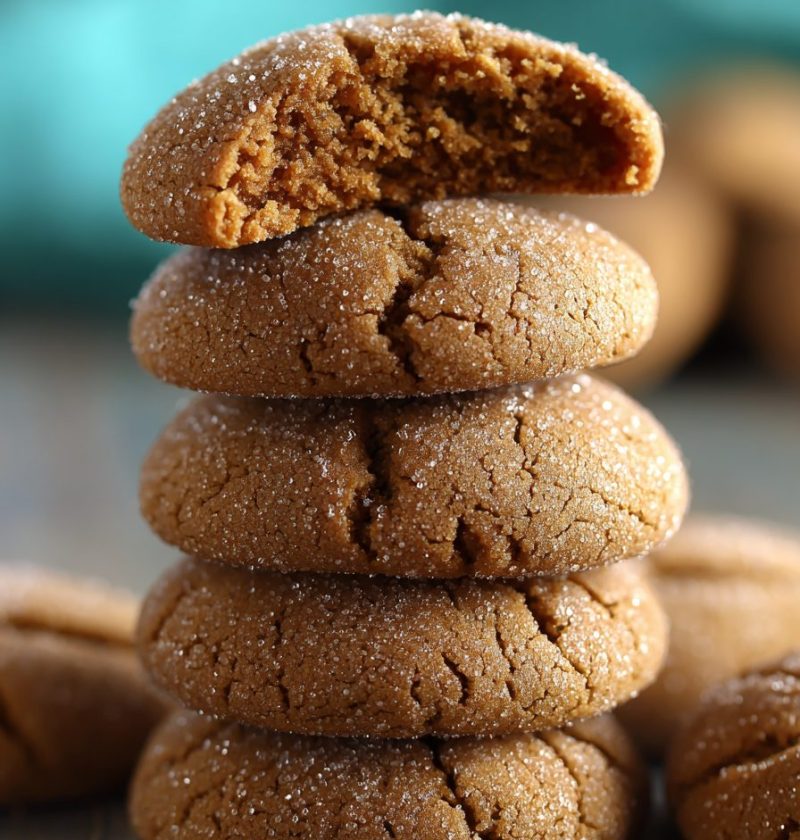
If you love soft, chewy, cozy cookies that taste like a hug in December, this Soft Molasses Cookies Recipe is going to be your new favorite—full of warm spices, deep molasses flavor, and that classic crinkly top.
These are the kind of soft molasses cookies that stay tender for days, pack beautifully into holiday tins, and make the whole house smell like Christmas. This is my go-to soft and chewy molasses cookies recipe when I want something that feels old-fashioned and homemade, but is still easy enough for a busy weeknight or a last-minute cookie exchange.
What Makes These Soft Molasses Cookies So Special?
This Soft Molasses Cookies Recipe is my modern riff on the old fashioned molasses cookies I grew up with in the Midwest. My mother kept a jar of blackstrap molasses in the pantry year-round, but it really came out to play around Thanksgiving and Christmas. These soft and chewy molasses cookies were always first on the baking list.
What makes them special?
They’re thick, but not heavy. Chewy in the center with just a tiny crisp edge. The flavor is a balance of brown sugar and molasses, layered with cinnamon, ginger, and a little clove for that traditional molasses cookies recipe taste we all expect around the holidays.
I also use a mix of butter and oil for texture—this might sound fussy, but it’s not. The butter gives flavor, and the oil helps keep the cookies soft for days. A little cornstarch and the right ratio of flour help them bake up plush and tender instead of dry.
You can bake these as Christmas molasses cookies for your holiday cookie trays, or as an anytime treat with a cup of coffee (strongly recommended, speaking as a 50-year-old who loves her morning mug). They’re simple, nostalgic, and downright cozy.
Why You’ll Love This Soft Molasses Cookies Recipe
- They’re truly soft and chewy, not crunchy or Cakey.
- Classic molasses flavor with cozy spices—perfect for holiday molasses cookies.
- No mixer required—just a bowl, whisk, and a sturdy spoon.
- Uses pantry staples: flour, brown sugar, butter, oil, molasses, and a few spices.
- Easy molasses cookies recipe for beginners but still impressive for gifting.
- Dough chills quickly, so you can bake same day.
- Amazing for Christmas cookie boxes and neighbor gifts (they travel well).
- The cookies stay soft for 4–5 days when stored correctly.
- Easy to customize: add chocolate chips, orange zest, or roll in coarse sugar.
- Works for small batches or doubling for holiday baking marathons.
Ingredients for the Best Soft Molasses Cookies
Here’s everything you’ll need for this homemade soft molasses cookies recipe, plus some helpful notes and substitutions. This makes about 24 medium cookies.
Dry Ingredients
-
2 ¼ cups (270 g) all-purpose flour
Use regular all-purpose flour, spooned and leveled. Too much flour will make the cookies dry, so avoid packing it into the cup. -
2 teaspoons ground ginger
This gives that signature gingerbread-adjacent flavor without going overboard. -
1 ½ teaspoons ground cinnamon
I like Saigon cinnamon for stronger flavor, but any good grocery-store brand works. -
¼ teaspoon ground cloves
A little goes a long way; this is what makes the cookies taste like classic molasses cookies. -
¼ teaspoon ground nutmeg (optional but lovely)
Adds warmth and depth. -
1 teaspoon baking soda
Helps the cookies spread slightly and develop those beautiful cracks. -
½ teaspoon fine sea salt
Balances all the sweetness and molasses.
Wet Ingredients
-
½ cup (1 stick / 113 g) unsalted butter, melted and slightly cooled
If you use salted butter, reduce added salt to a pinch. Melting the butter makes mixing easy and helps the cookies stay chewy. -
¼ cup (60 ml) neutral oil (canola, vegetable, or light-tasting olive oil)
This helps create very soft and chewy molasses cookies that stay tender even on day three. -
¾ cup (150 g) packed dark brown sugar
Dark brown sugar gives a deeper, more caramel-like flavor. Light brown sugar works in a pinch. -
¼ cup (50 g) granulated sugar
Added sweetness and a little structure. -
⅓ cup (80 ml) unsulphured molasses
Use regular baking molasses like Grandma’s or Brer Rabbit (mild or original). Blackstrap molasses is too bitter and will make the cookies harsh. -
1 large egg, at room temperature
A room-temperature egg mixes in more easily and helps the dough come together smoothly. -
1 teaspoon pure vanilla extract
For flavor and aroma; it helps everything taste “rounder.”
For Rolling
- ¼ cup (about 50 g) granulated sugar
For coating the dough balls. You can swap in coarse sugar or sparkling sugar for extra crunch and sparkle—especially pretty for Christmas molasses cookies.
You know what? If you only keep one kind of molasses cookie in your holiday rotation, let it be this one. It covers that old fashioned molasses cookies recipe box while still feeling a bit modern.

Step-by-Step Directions for Soft and Chewy Molasses Cookies
Follow these steps and pay attention to the little sensory cues. That’s the real secret to homemade molasses cookies that come out just right every time.
-
Mix the dry ingredients
In a medium bowl, whisk together the flour, ginger, cinnamon, cloves, nutmeg (if using), baking soda, and salt. Make sure there are no streaks of baking soda—this helps avoid uneven spreading and strange spots in your cookies. -
Combine the melted butter, oil, and sugars
In a large mixing bowl, whisk the melted (but not hot) butter, neutral oil, dark brown sugar, and granulated sugar until the mixture looks thick, glossy, and slightly lighter in color. This takes about 1 minute by hand and helps dissolve the sugar crystals a bit, which leads to a smoother texture. -
Add molasses, egg, and vanilla
Whisk in the molasses, egg, and vanilla extract until the mixture is smooth and well combined. The batter will look dark, shiny, and almost like a thick caramel. This is when your kitchen starts to smell like a bakery. -
Combine wet and dry ingredients
Add the dry ingredient mixture to the wet ingredients in two additions, stirring with a sturdy spatula or wooden spoon. Stir just until no dry flour remains. The dough will be soft, slightly sticky, and thick but not dry. If it seems very loose, let it sit for 5 minutes; the flour will hydrate and it’ll firm up a bit. -
Chill the dough
Cover the bowl with plastic wrap or a reusable lid and refrigerate for at least 45 minutes and up to 24 hours. Chilling the dough helps control spreading and deepens the flavors. For thicker, bakery-style chewy molasses cookies, leaning closer to 2–4 hours is wonderful. -
Preheat the oven and prepare pans
When you’re ready to bake, preheat your oven to 350°F (175°C). Line two baking sheets with parchment paper or silicone baking mats. This helps prevent sticking and also promotes even baking. -
Shape and sugar-coat the dough balls
Scoop the chilled dough into 1 ½ tablespoon portions (a medium cookie scoop works nicely). Roll each portion into a ball with your hands, then roll in the granulated sugar so they’re evenly coated. Place dough balls on the prepared baking sheets, spacing them about 2 inches apart. They will spread, but not wildly. -
Bake the cookies
Bake one sheet at a time on the middle rack for 9–11 minutes, depending on your oven. The cookies should be set around the edges, puffed in the center, and just starting to show cracks on top. The centers will look slightly underbaked—that’s what you want for soft and chewy molasses cookies. -
Cool and let them set
Remove the pan from the oven and let the cookies cool on the baking sheet for 5–7 minutes. They’ll continue to cook a bit and the tops will crinkle as they settle. After that, transfer them carefully to a wire rack to cool completely. -
Serve, share, or stash for later
Once cool, these homemade molasses cookies are ready to eat, gift, or tuck into a cookie jar. If you’re making them as a holiday molasses cookies recipe, you can package them in tins with wax paper between layers so they stay pretty and soft.
Servings, Prep Time, and Baking Schedule
Let me break down the timing, because that’s usually what I’m checking while planning holiday baking.
- Yield: About 24 medium cookies
- Prep Time: 15–20 minutes
- Chill Time: 45–120 minutes (longer is fine, up to 24 hours)
- Bake Time: 9–11 minutes per tray
- Total Time: About 1 hour 15 minutes (including Minimum chill time and baking one batch after another)
If you’re planning these for a busy holiday weekend, it works well to mix the dough in the evening, chill overnight, and bake the cookies the next morning. The flavors get even deeper, which I love for an old fashioned molasses cookies recipe.
Tasty Variations on Classic Molasses Cookies
One of my favorite things about this soft molasses cookies recipe is how easy it is to tweak. Here are some fun ways to make it your own:
- Ginger-Lovers’ Version – Add an extra ½ teaspoon ground ginger and 2–3 tablespoons finely chopped crystallized ginger for a more spiced molasses cookies experience.
- Orange-Spice Molasses Cookies – Stir in 1 tablespoon freshly grated orange zest with the wet ingredients for a bright, citrusy twist that pairs beautifully with the molasses.
- Chocolate Chip Molasses Cookies – Fold ¾ cup dark or semi-sweet chocolate chips into the dough for a richer, almost brownie-like chewy molasses cookies recipe.
- Glazed Holiday Molasses Cookies – After baking and cooling, drizzle the cookies with a simple glaze made from powdered sugar, milk, and vanilla for a bakery-style finish.
- Extra-Crunch Sugar Tops – Roll dough balls in coarse or turbinado sugar instead of regular granulated sugar for sparkle and a delicate crunch—gorgeous for Christmas cookie plates.
- Bigger Bakery-Style Cookies – Scoop the dough into 3-tablespoon balls, bake a little longer (11–13 minutes), and enjoy jumbo, soft center cookies that are perfect for gifting.
How to Store, Freeze, and Make Ahead
These homemade soft molasses cookies are wonderful for planning ahead, which makes them a dream holiday molasses cookies recipe.
Room Temperature Storage
- Store fully cooled cookies in an airtight container at room temperature.
- They stay soft and chewy for 4–5 days, especially if you add a piece of parchment between layers.
- For extra softness, you can tuck a small piece of bread into the container; it helps maintain moisture (just replace it every day or two).
Freezing Baked Cookies
- Arrange cooled cookies in a single layer on a baking sheet and freeze until firm.
- Transfer to a freezer bag or airtight container with parchment between layers.
- Freeze for up to 2 months.
- To serve, thaw at room temperature for 20–30 minutes. No reheating needed, though a 5-minute rest on a warm (but off) oven is lovely if you like them just slightly warm.
Freezing Cookie Dough Balls
This is my secret weapon for “I need cookies right now” moments.
- Scoop and roll dough balls as directed, then freeze unbaked dough balls on a sheet until solid.
- Store in a freezer bag for up to 2 months.
- Bake straight from frozen at 350°F (175°C), adding 1–2 minutes to the bake time. They may spread a little less but will still be wonderfully chewy.
Make-Ahead Tips
- You can mix the dough up to 24 hours ahead and keep it covered in the fridge.
- If the dough feels very firm from the fridge, let it sit on the counter for 10–15 minutes before scooping.
Personal Notes and Cookie-Baking Tips
After testing this soft molasses cookies recipe more times than I’ll admit, here’s what I’ve learned:
- Molasses type matters. Regular unsulphured molasses gives you that classic, slightly sweet, slightly bitter taste. Blackstrap is stronger and lower in sugar; it tends to make the cookies harsh and dry.
- Watch the bake time closely. The most common reason molasses cookies turn out hard is overbaking. Pull them as soon as the edges look set but the centers still look soft and puffy.
- Chill for thicker cookies. If you skip chilling, the cookies will still taste great, but they’ll spread more and bake thinner. For soft and chewy molasses cookies, that chill time really helps.
- Use parchment or silicone mats. Dark, unlined pans can cause the bottoms to brown too quickly. Parchment gives you a more even bake (and easier clean-up—always a win).
- Spice levels are personal. If you’re baking for kids or spice-sensitive folks, you can slightly reduce the ginger and cloves. If you love heavily spiced molasses cookies, bump up the ginger by ½ teaspoon.
- Baking sheets matter. Lighter-colored, heavy-duty sheets (like Nordic Ware) usually give the most even results. Thin, dark pans tend to brown the bottoms too fast.
Honestly, once you bake these a couple of times, you’ll know exactly how they should look in your own oven. Every oven has a “personality”—I always tell people to get to know theirs like they would a friend.
Frequently Asked Questions About Soft and Chewy Molasses Cookies
1. How do I keep my molasses cookies soft and not hard?
Bake them only until the edges are set and the centers still look a little underdone, then let them finish setting on the baking sheet. Don’t overbake, and store them in an airtight container once completely cool.
2. Can I use blackstrap molasses in this recipe?
I don’t recommend it. Blackstrap molasses is more bitter and less sweet, which can make your old fashioned molasses cookies taste harsh and dry. Regular unsulphured molasses is best for this recipe.
3. Why did my cookies spread too much?
Most often, the dough was too warm or there wasn’t quite enough flour. Make sure you chill the dough and measure flour carefully by spooning and leveling, not scooping straight from the bag.
4. Can I make these cookies without eggs?
You can try replacing the egg with 3 tablespoons of unsweetened applesauce or a flax egg (1 tablespoon ground flax + 3 tablespoons water, rested for 5–10 minutes). The texture will be slightly different, but they’ll still be soft and tasty.
5. Do I have to roll the dough in sugar?
You don’t have to, but that sugar coating adds a lovely sparkle and a light crust that contrasts the soft center. For a less-sweet version, you can skip it or roll very lightly.
6. Can I reduce the sugar in this recipe?
You can reduce the total sugar by about 2–3 tablespoons, but going much lower may affect texture and spread. Sugar doesn’t just sweeten—it also helps keep the cookies soft and chewy.
7. How do I know when the cookies are done?
Look for set, slightly darker edges and puffy centers with small cracks. If the entire surface looks dry and set, they’re probably overbaked.
8. Are these good for gifting and shipping?
Yes—this soft molasses cookies recipe is great for holiday cookie boxes and shipping. They’re sturdy enough to handle travel but stay soft, especially if you package them in layers with parchment or wax paper.
Final Thoughts on This Soft Molasses Cookies Recipe
This Soft Molasses Cookies Recipe brings together everything I love about holiday baking: simple ingredients, cozy spices, and a soft, chewy texture that feels nostalgic and comforting. Whether you call them classic molasses cookies, old fashioned molasses cookies, or just “those really good brown sugar molasses cookies,” they’re the kind of treat people remember.
If you bake a batch, I’d love to hear how they turned out for you—tell me if you tried any variations, or how they went over at your cookie exchange. And if you’re in a baking mood, pair these with a tray of gingerbread cookies or sugar cookies for a beautiful holiday spread.
Soft Molasses Cookies
Ingredients
- 2 1/4 cups all-purpose flour 270 g, spooned and leveled
- 2 teaspoons ground ginger
- 1 1/2 teaspoons ground cinnamon
- 1/4 teaspoon ground cloves
- 1/4 teaspoon ground nutmeg optional
- 1 teaspoon baking soda
- 1/2 teaspoon fine sea salt
- 1/2 cup unsalted butter 1 stick / 113 g, melted and slightly cooled
- 1/4 cup neutral oil canola, vegetable, or light-tasting olive oil
- 3/4 cup dark brown sugar 150 g, packed; light brown sugar okay in a pinch
- 1/4 cup granulated sugar 50 g
- 1/3 cup unsulphured molasses 80 ml; regular baking molasses such as Grandma’s or Brer Rabbit (mild or original), not blackstrap
- 1 large egg at room temperature
- 1 teaspoon pure vanilla extract
- 1/4 cup granulated sugar about 50 g, for rolling the dough balls
Instructions
- In a medium bowl, whisk together the flour, ground ginger, ground cinnamon, ground cloves, ground nutmeg (if using), baking soda, and fine sea salt until well combined and no streaks of baking soda remain.2 1/4 cups all-purpose flour, 2 teaspoons ground ginger, 1 1/2 teaspoons ground cinnamon, 1/4 teaspoon ground cloves, 1/4 teaspoon ground nutmeg, 1 teaspoon baking soda, 1/2 teaspoon fine sea salt
- In a large mixing bowl, whisk the melted (but not hot) unsalted butter, neutral oil, dark brown sugar, and 1/4 cup granulated sugar until thick, glossy, and slightly lighter in color, about 1 minute by hand.1/2 cup unsalted butter, 1/4 cup neutral oil, 3/4 cup dark brown sugar, 1/4 cup granulated sugar
- Whisk in the molasses, egg, and vanilla extract until the mixture is smooth, dark, and shiny, with no streaks of egg remaining.1/3 cup unsulphured molasses, 1 large egg, 1 teaspoon pure vanilla extract
- Add the dry ingredients to the wet ingredients in two additions, stirring with a sturdy spatula or wooden spoon just until no dry flour remains. The dough should be soft, thick, and slightly sticky. If it seems very loose, let it rest for 5 minutes so the flour can hydrate.2 1/4 cups all-purpose flour, 2 teaspoons ground ginger, 1 1/2 teaspoons ground cinnamon, 1/4 teaspoon ground cloves, 1/4 teaspoon ground nutmeg, 1 teaspoon baking soda, 1/2 teaspoon fine sea salt
- Cover the bowl tightly and refrigerate the dough for at least 45 minutes and up to 24 hours. For thicker, bakery-style cookies, chill 2–4 hours.
- When ready to bake, preheat the oven to 350°F (175°C). Line two baking sheets with parchment paper or silicone baking mats.
- Scoop the chilled dough into 1 1/2-tablespoon portions (a medium cookie scoop works well). Roll each portion into a smooth ball, then roll in the remaining 1/4 cup granulated sugar to coat. Place the dough balls on the prepared baking sheets about 2 inches apart.1/4 cup granulated sugar
- Bake one sheet at a time on the middle rack for 9–11 minutes. The cookies should be set around the edges, puffed in the centers, and just starting to crack on top. The centers should still look slightly underbaked for a soft, chewy texture.
- Remove the baking sheet from the oven and let the cookies cool on the pan for 5–7 minutes so they can finish setting and develop more crinkles. Then transfer carefully to a wire rack to cool completely.
- Once completely cool, serve the cookies right away, package for gifting, or store in an airtight container at room temperature.