Would you like to save this?
Muscadine Jelly Recipe
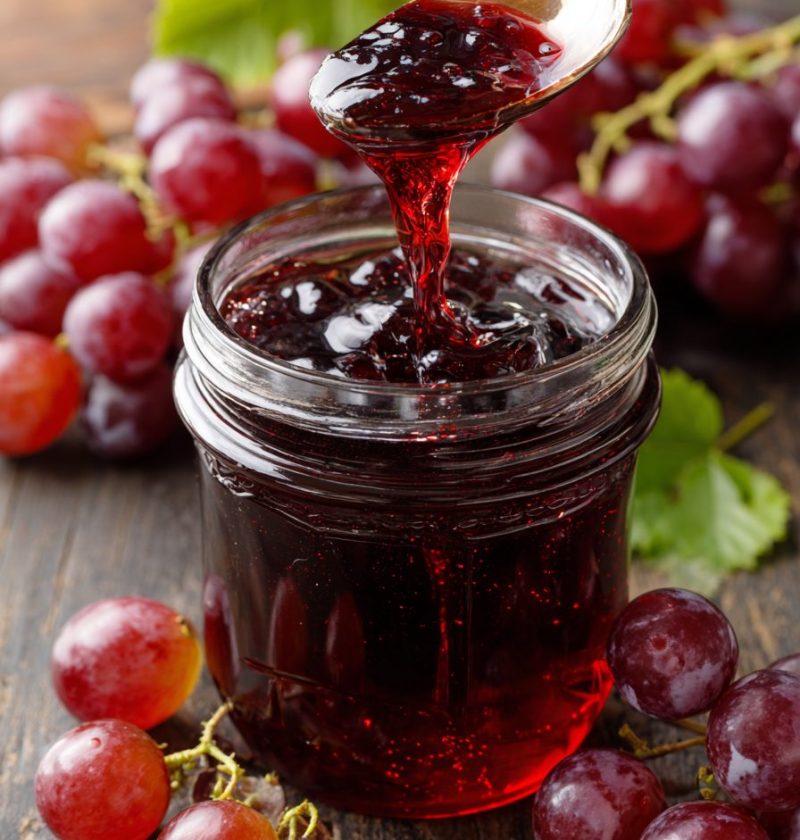
If you’ve got a basket of fresh muscadines and a soft spot for old-fashioned Southern flavors, this Muscadine Jelly Recipe will give you a jewel-toned, sweet-tart jelly that’s perfect for biscuits, toast, or gifting to friends.
What Is Muscadine Jelly, Anyway?
Muscadine jelly is a classic Southern preserve made from muscadine grapes—a thick-skinned, fragrant grape native to the American South. This homemade muscadine jelly has a deep, almost wine-like flavor with a beautiful ruby or garnet color, depending on your grapes.
I grew up in North Carolina, and every late summer, muscadines meant two things: purple-stained fingers and jelly simmering on the stove. These days, I still make this traditional muscadine jelly recipe in small batches, usually when a neighbor drops off a bag of grapes or I find them at the farmers’ market.
What makes this recipe special?
- It’s a traditional, old fashioned muscadine jelly, but written with very clear, modern instructions.
- We’re using added pectin so the jelly sets reliably and you don’t have to fuss too much with testing.
- It’s water bath canning friendly, but I’ll also show you how to make a small batch muscadine jelly that just lives in the fridge if you’d rather skip canning.
- And yes—this is muscadine jelly without seeds or skins, so it’s silky and spreadable.
If you’ve been wondering how to make muscadine jelly that tastes like your grandma’s but with foolproof, step-by-step guidance, you’re exactly where you need to be.
Why You’ll Love This Muscadine Jelly Recipe
- Big Southern flavor in a small jar – Muscadine grape jelly has a rich, winey sweetness you just can’t get from store-bought grape jelly.
- Clear, step-by-step muscadine jelly instructions – No guesswork; I walk you through every stage with visual and sensory cues.
- Perfect for beginners – If you’re new to muscadine jelly canning, this recipe uses water bath canning jelly basics that are easy to follow.
- Great for gifting – A few jars of homemade muscadine jelly in a basket look downright charming for holidays or hostess gifts.
- Uses simple pantry ingredients – Just fruit, sugar, pectin, and lemon—no weird additives.
- Flexible batch size – Make a full canner load or a small batch muscadine jelly that you keep in the fridge.
- Old fashioned, but not fussy – Same traditional muscadine jelly flavor, with modern timing and measurements.
- Works with mixed grapes – You can use red, purple, or bronze muscadines (or a mix) and still get a lovely, flavorful jelly.
Ingredients for Homemade Muscadine Jelly
This is a classic, easy muscadine jelly recipe using powdered pectin. I’ll list the muscadine jelly ingredients first, then note a few substitutions and tips.
-
4 pounds fresh muscadine grapes
(Red, purple, or bronze; rinsed and drained. Choose fully ripe, fragrant fruit—wrinkled or underripe grapes will dull the flavor.) -
4 cups muscadine juice
(You’ll extract this from the grapes; exact yield can vary, but 4 pounds usually gives around 4 cups of juice.) -
1 box (1.75 oz) powdered fruit pectin
(Such as Sure-Jell or Ball Classic; this recipe is written for powdered pectin—liquid pectin behaves differently.) -
5 cups granulated sugar
(Regular white sugar; don’t reduce it the first time you make the recipe, or the jelly may not set properly.) -
2 tablespoons bottled lemon juice
(Bottled is recommended for consistent acidity, important for safe water bath canning.) -
1 teaspoon unsalted butter (optional)
(Helps reduce foam; a classic “grandma trick” that still works.)
Ingredient Tips & Notes
- Choosing muscadines: Look for firm, plump grapes with smooth skins and a strong grape aroma. Avoid shriveled or cracked fruit. Muscadines don’t behave like regular table grapes—they’re tougher, with seeds and thicker skins, but that’s where a lot of their flavor lives.
- Sugar: Traditional muscadine jelly leans sweet, but it’s balanced by the fruit’s natural tang. If you want a lower-sugar version, use a low- or no-sugar pectin and follow that package’s sugar guidelines.
- Pectin: Stick with one brand and type at first; different pectins have different instructions. Once you’re comfortable, experiment.

Step-by-Step Directions: How to Make Muscadine Jelly
Let’s walk through this slowly, like we’re in my kitchen together. Making muscadine jelly with pectin isn’t hard, but timing matters.
1. Prep your canning gear (or just your jars)
If you’re doing muscadine jelly canning:
- Wash 6–7 half-pint (8-ounce) canning jars in hot, soapy water, then rinse well.
- Place jars in a large canner or deep pot, cover with water, and bring to a simmer. Keep them hot—not boiling—while you cook the jelly.
- Put new lids in a small pan of hot (not boiling) water. Rings can just be washed and dried; no need to heat them.
If you’re making small batch muscadine jelly for the fridge, you just need clean, dry jars—no water bath needed unless you want shelf-stable jars.
2. Extract the muscadine juice
2.1 Cook the grapes
- Rinse your muscadines well and discard stems and any soft or moldy fruit.
- Add the grapes to a large, heavy pot.
- Add just enough water to barely cover the bottom of the pot (about 1/2 cup) so they don’t scorch before they release their juice.
- Bring to a simmer over medium heat. As the grapes heat, use a potato masher to crush them gently—this helps release juice from those thick skins.
- Simmer 10–15 minutes, stirring often, until the grapes are soft, skins are burst, and the mixture is juicy and fragrant.
You’ll know it’s ready when the kitchen smells like a grape orchard and the grapes look slumped and broken.
3. Strain the juice (for muscadine jelly without seeds)
3.1 First strain
- Set a large bowl on the counter.
- Place a fine-mesh sieve or a colander lined with cheesecloth over the bowl.
- Carefully pour the hot grape mixture into the sieve.
- Let it drain for at least 30 minutes. Resist the urge to mash the pulp; pressing it too hard can make the jelly cloudy.
3.2 Optional second strain for extra clear jelly
If you want that beautifully clear traditional muscadine jelly:
- Strain the collected juice again through a clean piece of cheesecloth or a jelly bag.
- Let it drip undisturbed—gravity is your friend here.
Measure out 4 cups of juice for the jelly. If you’re a little short, you can top it off with a bit of water or apple juice, but if you can, stick with pure muscadine juice for the best flavor.
4. Combine juice, pectin, and lemon
- Pour the 4 cups of muscadine juice into a clean, large pot—choose one that’s taller than you think you need; jelly foams up when it boils.
- Stir in the bottled lemon juice.
- Sprinkle the powdered pectin over the juice and whisk well so it dissolves.
- Add the optional teaspoon of butter to help control foam.
Turn the heat to medium-high and bring the mixture to a full rolling boil—one that doesn’t stop bubbling when you stir.
5. Add sugar and boil hard
- Once the juice-pectin mix is at a rolling boil, add all 5 cups of sugar at once.
- Stir constantly until the sugar dissolves completely—no grainy feeling on the bottom of the pot.
- Bring the mixture back to a full rolling boil.
- Boil hard for 1 minute, stirring the whole time.
Set a timer; that one minute matters. Boiling too long can turn your jelly syrupy and dark, and too short can make it runny.
After 1 minute, remove the pot from the heat. Skim off any foam from the surface with a spoon if you like a very clear jelly.
6. Check for set (optional but reassuring)
If you’re nervous about whether your muscadine grape jelly will set, you can use one of these simple tests:
- Spoon test: Dip a cold metal spoon in the hot jelly. Let it cool for a few seconds, then tilt. If the jelly runs off in a thin stream, it’s still loose. If it sheets or drips off in thicker drops, you’re close.
- Freezer test: Place a small saucer in the freezer before you start. Spoon a bit of jelly onto the cold plate and return it to the freezer for 1–2 minutes. Push the edge with your finger—if it wrinkles, you’re good.
Keep in mind: jelly also thickens as it cools in the jars, so don’t panic if it still seems thin in the pot.
7. Fill the jars
- Use a jar lifter to remove hot jars from the canner and place them on a towel-lined counter.
- Using a funnel, ladle the hot jelly into the jars, leaving 1/4 inch headspace at the top.
- Wipe rims with a clean, damp cloth—any sticky jelly can interfere with sealing.
- Center warm lids on jars and screw on bands until fingertip-tight (snug, but not cranked down).
8. Water bath canning (for shelf-stable jelly)
- Place filled jars back into the canner, making sure they’re covered by at least 1–2 inches of water.
- Bring the water to a gentle boil.
- Process 10 minutes (adjusting for altitude if needed, per current USDA canning guidelines).
- Turn off heat, remove the lid, and let jars rest in the hot water for 5 minutes.
- Lift jars out carefully and place them on a towel—don’t tilt or shake. Let them cool undisturbed for 12–24 hours.
As the jars cool, you’ll (hopefully) hear that happy little “ping” of the seals setting. It never gets old.
If you’re skipping canning: Let jars cool at room temperature, then refrigerate.
Servings & Timing
- Yield: About 6–7 half-pint (8 oz) jars of muscadine jelly
- Prep Time: 25–30 minutes (washing grapes, extracting juice setup)
- Cook Time: 30–40 minutes (cooking grapes, boiling jelly, canning)
- Total Time: About 1 hour 15 minutes–1 hour 30 minutes (plus 12–24 hours for full set and cooling)
Fun Variations on Traditional Muscadine Jelly
Once you’ve made this classic Southern muscadine jelly, you can play a bit:
- Spiced Muscadine Jelly: Add 1 small cinnamon stick and 2–3 whole cloves while heating the juice; remove before adding pectin.
- Muscadine & Apple Jelly: Use 3 cups muscadine juice and 1 cup unsweetened apple juice for a lighter, gently fruity jelly.
- Low-Sugar Muscadine Jelly: Use a low-sugar pectin and follow its sugar guidelines; expect a softer set but brighter fruit flavor.
- Muscadine Jalapeño Jelly: Add 1–2 finely minced, deseeded jalapeños to the boiling jelly for a sweet-heat spread that’s wonderful over cream cheese.
- Bronze Muscadine Jelly: Use only bronze muscadines for a golden, honey-colored jelly with a slightly milder flavor.
Storage & Make-Ahead Tips
- Pantry storage (canned): Properly processed jars of muscadine jelly can be stored in a cool, dark place for up to 12–18 months.
- Refrigerator storage (uncanned or opened jars): Keep in the fridge and use within 3–4 weeks for best flavor and texture.
- Freezer option: You can freeze jelly in freezer-safe containers, leaving some headspace, for up to 6–8 months. Thaw overnight in the fridge.
- Make-ahead: This muscadine jelly recipe is perfect for making ahead of the holidays—do a batch in late summer or early fall and stash the jars for Thanksgiving and Christmas gift baskets.
No reheating is needed—just bring chilled jelly to room temperature for 10–15 minutes if you want it a bit softer for spreading.
Notes From My Kitchen to Yours
- On set and patience: Muscadine jelly with pectin usually thickens as it cools and continues to firm up over 24 hours. If it looks a little wobbly at first, give it time.
- If your jelly doesn’t set: You’re not alone—it happens to experienced canners, too. You can reprocess with a bit more pectin following package directions, or just call it muscadine syrup and serve over pancakes, yogurt, or ice cream. No one complains.
- Flavor intensity: The quality of your grapes matters more than anything. Very ripe, fragrant muscadines make the best jelly. If your grapes taste bland, the jelly will, too.
- Foam control: That teaspoon of butter really does help. If you’re strictly avoiding dairy, you can just skim the foam more thoroughly.
- Jar size: Half-pint jars are perfect for gifting, but you can also use 4-ounce “mini jars” if you want smaller portions for holiday samplers.
Honestly, after many batches through the years, the biggest thing I’ve learned is: don’t rush. Let the grapes cook properly, let the juice strain on its own, and let the jars cool undisturbed. Jelly rewards patience.
FAQs About Muscadine Jelly
1. Can I make this muscadine jelly recipe without pectin?
Yes, but you’ll need a different process, longer cooking time, and more precise monitoring for natural pectin. This particular recipe is written for muscadine jelly with pectin, so follow a no-pectin recipe if you want to go that route.
2. Can I use Concord grapes or other grapes instead of muscadines?
You can use other grapes, but the flavor won’t be the same. Muscadine grape jelly has a distinct Southern taste; for Concords, look for a recipe specifically for Concord jelly.
3. Why is my jelly cloudy instead of clear?
Usually it’s from pressing the pulp too hard during straining or from a bit of foam getting into the jars. The jelly is still safe and delicious—it’s just more rustic-looking.
4. My muscadine jelly didn’t set. What can I do?
Let it sit 24 hours first. If it’s still runny, you can re-cook the jelly with a little more pectin following your pectin brand’s “remake” directions, or use it as syrup.
5. Can I cut down on the sugar?
Not with this exact formula. Reducing sugar here can lead to a soft or runny jelly and can affect safety. If you want lower sugar, use a low- or no-sugar pectin and follow those directions.
6. Do I have to water bath can the jelly?
No—if you’re making small batch muscadine jelly for immediate use, you can skip canning and just refrigerate the jars, using them within a month. Canning simply makes them shelf-stable.
7. How do I know my jars are sealed?
After 12–24 hours, press the center of each lid. If it doesn’t flex up and down, it’s sealed. If it pops, refrigerate that jar and use it first.
8. Can I double this muscadine jelly recipe?
I don’t recommend doubling jelly recipes—larger batches can have trouble setting and may cook unevenly. It’s better to make two separate batches back-to-back.
A Sweet Southern Finish
This Muscadine Jelly Recipe brings a little taste of the South right to your breakfast table—rich, jewel-like jelly with that unmistakable muscadine perfume. It’s simple enough for a beginner but classic enough to make any Southern grandma nod in approval.
If you try this homemade muscadine jelly, I’d love to hear how it turned out—tell me in the comments what color your grapes were and how you’re serving it (I’m partial to hot buttered biscuits). And if you’re in a preserving mood, you might also enjoy exploring more small batch jams and jellies to fill your pantry shelves.
Muscadine Jelly
Ingredients
- 4 pounds fresh muscadine grapes red, purple, or bronze; rinsed and drained, fully ripe and fragrant
- 4 cups muscadine juice extracted from the grapes; strained to remove skins and seeds
- 1 box powdered fruit pectin 1.75 oz, such as Sure-Jell or Ball Classic
- 5 cups granulated sugar do not reduce for reliable set and safe canning
- 2 tablespoons bottled lemon juice bottled recommended for consistent acidity
- 1 teaspoon unsalted butter optional, helps reduce foam
- Water about 1/2 cup to keep grapes from scorching, plus more for water bath canner
Instructions
- Wash 6–7 half-pint (8 oz) canning jars, lids, and rings in hot, soapy water; rinse well. Place jars in a large canner or deep pot, cover with water, and bring to a simmer. Keep jars hot but not boiling while you make the jelly. Place new lids in a small pan of hot (not boiling) water; wash and dry rings. If you are not canning, simply wash and dry 6–7 small jars and set aside.
- Rinse muscadine grapes thoroughly, discarding stems and any soft, shriveled, or moldy fruit. Add grapes to a large, heavy pot and add just enough water to barely cover the bottom of the pot (about 1/2 cup) to prevent scorching. Bring to a simmer over medium heat. As the grapes heat, use a potato masher to gently crush them. Simmer 10–15 minutes, stirring often, until the skins are burst, the grapes are soft, and the mixture is juicy and fragrant.
- Set a large bowl on the counter. Place a fine-mesh sieve or cheesecloth-lined colander over the bowl. Carefully pour the hot grape mixture into the strainer. Let it drain for at least 30 minutes without pressing the pulp to keep the juice clear. For extra-clear jelly, strain the collected juice a second time through clean cheesecloth or a jelly bag, letting it drip undisturbed. Measure out 4 cups of strained juice. If slightly short, top off with a little water or apple juice, but pure muscadine juice is preferred for best flavor.
- Pour the 4 cups of muscadine juice into a clean, large pot with high sides to allow for foaming. Stir in the bottled lemon juice. Sprinkle the powdered fruit pectin over the juice and whisk well to dissolve. Add the optional teaspoon of butter to help control foam. Set over medium-high heat and bring to a full rolling boil that does not stop bubbling when stirred.
- Once the juice-pectin mixture reaches a full rolling boil, add all 5 cups of granulated sugar at once. Stir constantly until the sugar is completely dissolved and you feel no graininess on the bottom of the pot. Return the mixture to a full rolling boil. Boil hard for 1 full minute, stirring constantly. Remove from heat and skim off any foam from the surface for a clearer jelly.
- To check for set, use one of these tests. Spoon test: Dip a cold metal spoon into the hot jelly. Let it cool briefly, then tilt. If it runs in a thin stream, it is still loose; if it falls in thick drops or sheets slightly, it is close to ready. Freezer test: Place a small saucer in the freezer before starting. Spoon a little hot jelly onto the cold plate and chill for 1–2 minutes. Push the edge with your finger; if it wrinkles, it has reached the gel stage. Remember the jelly will thicken more as it cools in the jars.
- Using a jar lifter, remove hot jars from the canner and place them on a towel-lined counter. Using a canning funnel, ladle the hot jelly into the jars, leaving 1/4 inch headspace at the top. Wipe jar rims with a clean, damp cloth to remove any spills. Center warm lids on jars and screw on bands until fingertip-tight (snug but not overly tight).
- Place filled jars into the canner, ensuring they are covered by 1–2 inches of water. Bring the water to a gentle boil. Process for 10 minutes, adjusting time for altitude according to current USDA canning guidelines. Turn off heat, remove the lid, and let jars rest in the hot water for 5 minutes. Carefully lift jars out and place on a towel-lined surface. Do not tilt or shake. Let cool undisturbed for 12–24 hours.
- After 12–24 hours, check seals by pressing the center of each lid. If it does not flex up and down, the jar is sealed. Any unsealed jars should be refrigerated and used first. Label sealed jars and store in a cool, dark place for 12–18 months. For small, non-canned batches, let jars cool to room temperature and refrigerate, using within 3–4 weeks.
Notes
- Spiced Muscadine Jelly: Simmer 1 small cinnamon stick and 2–3 whole cloves in the juice, then remove before adding pectin.
- Muscadine & Apple Jelly: Use 3 cups muscadine juice and 1 cup unsweetened apple juice.
- Low-Sugar Muscadine Jelly: Use low- or no-sugar pectin and follow the package for sugar amounts (expect a softer set).
- Muscadine Jalapeño Jelly: Stir in 1–2 finely minced, deseeded jalapeños with the jelly for a sweet-heat spread (especially good over cream cheese).
- Bronze Muscadine Jelly: Use only bronze muscadines for a golden jelly. Tips: Let strained juice drip without pressing for the clearest jelly. Jelly often takes up to 24 hours to fully set. If it does not set, follow your pectin brand’s directions for remaking, or enjoy it as a syrup over pancakes, yogurt, or ice cream.