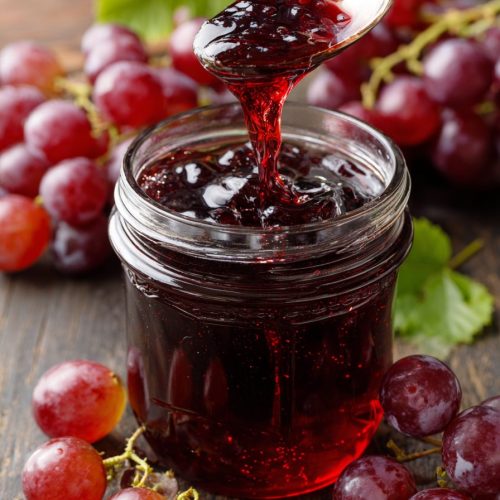
Muscadine Jelly
Old-fashioned Southern muscadine jelly made with fresh muscadine grapes, sugar, powdered pectin, and lemon juice. Clear, jewel-toned, and perfect for canning, gifting, or keeping as a small fridge batch.
Ingredients
- 4 pounds fresh muscadine grapes red, purple, or bronze; rinsed and drained, fully ripe and fragrant
- 4 cups muscadine juice extracted from the grapes; strained to remove skins and seeds
- 1 box powdered fruit pectin 1.75 oz, such as Sure-Jell or Ball Classic
- 5 cups granulated sugar do not reduce for reliable set and safe canning
- 2 tablespoons bottled lemon juice bottled recommended for consistent acidity
- 1 teaspoon unsalted butter optional, helps reduce foam
- Water about 1/2 cup to keep grapes from scorching, plus more for water bath canner
Instructions
- Wash 6–7 half-pint (8 oz) canning jars, lids, and rings in hot, soapy water; rinse well. Place jars in a large canner or deep pot, cover with water, and bring to a simmer. Keep jars hot but not boiling while you make the jelly. Place new lids in a small pan of hot (not boiling) water; wash and dry rings. If you are not canning, simply wash and dry 6–7 small jars and set aside.
- Rinse muscadine grapes thoroughly, discarding stems and any soft, shriveled, or moldy fruit. Add grapes to a large, heavy pot and add just enough water to barely cover the bottom of the pot (about 1/2 cup) to prevent scorching. Bring to a simmer over medium heat. As the grapes heat, use a potato masher to gently crush them. Simmer 10–15 minutes, stirring often, until the skins are burst, the grapes are soft, and the mixture is juicy and fragrant.
- Set a large bowl on the counter. Place a fine-mesh sieve or cheesecloth-lined colander over the bowl. Carefully pour the hot grape mixture into the strainer. Let it drain for at least 30 minutes without pressing the pulp to keep the juice clear. For extra-clear jelly, strain the collected juice a second time through clean cheesecloth or a jelly bag, letting it drip undisturbed. Measure out 4 cups of strained juice. If slightly short, top off with a little water or apple juice, but pure muscadine juice is preferred for best flavor.
- Pour the 4 cups of muscadine juice into a clean, large pot with high sides to allow for foaming. Stir in the bottled lemon juice. Sprinkle the powdered fruit pectin over the juice and whisk well to dissolve. Add the optional teaspoon of butter to help control foam. Set over medium-high heat and bring to a full rolling boil that does not stop bubbling when stirred.
- Once the juice-pectin mixture reaches a full rolling boil, add all 5 cups of granulated sugar at once. Stir constantly until the sugar is completely dissolved and you feel no graininess on the bottom of the pot. Return the mixture to a full rolling boil. Boil hard for 1 full minute, stirring constantly. Remove from heat and skim off any foam from the surface for a clearer jelly.
- To check for set, use one of these tests. Spoon test: Dip a cold metal spoon into the hot jelly. Let it cool briefly, then tilt. If it runs in a thin stream, it is still loose; if it falls in thick drops or sheets slightly, it is close to ready. Freezer test: Place a small saucer in the freezer before starting. Spoon a little hot jelly onto the cold plate and chill for 1–2 minutes. Push the edge with your finger; if it wrinkles, it has reached the gel stage. Remember the jelly will thicken more as it cools in the jars.
- Using a jar lifter, remove hot jars from the canner and place them on a towel-lined counter. Using a canning funnel, ladle the hot jelly into the jars, leaving 1/4 inch headspace at the top. Wipe jar rims with a clean, damp cloth to remove any spills. Center warm lids on jars and screw on bands until fingertip-tight (snug but not overly tight).
- Place filled jars into the canner, ensuring they are covered by 1–2 inches of water. Bring the water to a gentle boil. Process for 10 minutes, adjusting time for altitude according to current USDA canning guidelines. Turn off heat, remove the lid, and let jars rest in the hot water for 5 minutes. Carefully lift jars out and place on a towel-lined surface. Do not tilt or shake. Let cool undisturbed for 12–24 hours.
- After 12–24 hours, check seals by pressing the center of each lid. If it does not flex up and down, the jar is sealed. Any unsealed jars should be refrigerated and used first. Label sealed jars and store in a cool, dark place for 12–18 months. For small, non-canned batches, let jars cool to room temperature and refrigerate, using within 3–4 weeks.
Notes
Yield: about 6–7 half-pint jars. Pantry (canned) storage: 12–18 months in a cool, dark place. Refrigerated (opened or uncanned jars): use within 3–4 weeks. For freezing, pack in freezer-safe containers with headspace and freeze up to 6–8 months.
Variations:
- Spiced Muscadine Jelly: Simmer 1 small cinnamon stick and 2–3 whole cloves in the juice, then remove before adding pectin.
- Muscadine & Apple Jelly: Use 3 cups muscadine juice and 1 cup unsweetened apple juice.
- Low-Sugar Muscadine Jelly: Use low- or no-sugar pectin and follow the package for sugar amounts (expect a softer set).
- Muscadine Jalapeño Jelly: Stir in 1–2 finely minced, deseeded jalapeños with the jelly for a sweet-heat spread (especially good over cream cheese).
- Bronze Muscadine Jelly: Use only bronze muscadines for a golden jelly. Tips: Let strained juice drip without pressing for the clearest jelly. Jelly often takes up to 24 hours to fully set. If it does not set, follow your pectin brand’s directions for remaking, or enjoy it as a syrup over pancakes, yogurt, or ice cream.
- Spiced Muscadine Jelly: Simmer 1 small cinnamon stick and 2–3 whole cloves in the juice, then remove before adding pectin.
- Muscadine & Apple Jelly: Use 3 cups muscadine juice and 1 cup unsweetened apple juice.
- Low-Sugar Muscadine Jelly: Use low- or no-sugar pectin and follow the package for sugar amounts (expect a softer set).
- Muscadine Jalapeño Jelly: Stir in 1–2 finely minced, deseeded jalapeños with the jelly for a sweet-heat spread (especially good over cream cheese).
- Bronze Muscadine Jelly: Use only bronze muscadines for a golden jelly. Tips: Let strained juice drip without pressing for the clearest jelly. Jelly often takes up to 24 hours to fully set. If it does not set, follow your pectin brand’s directions for remaking, or enjoy it as a syrup over pancakes, yogurt, or ice cream.
Nutrition
Calories: 50kcal
Love this recipe?Follow us at @Recipecs for more