Would you like to save this?
Texas Style Smoked Brisket Recipe
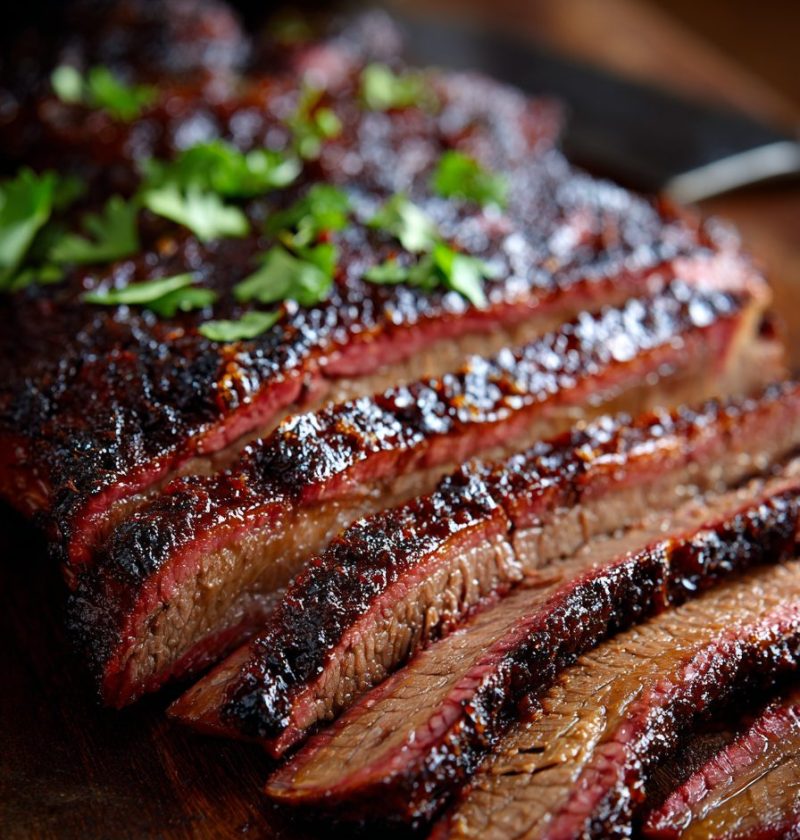
If you’ve been craving a true Texas Style Smoked Brisket Recipe with a dark bark, juicy slices, and that deep wood-smoked flavor, this one is for you—simple seasoning, patient cooking, and big backyard BBQ payoff.
A classic Texas brisket worth the wait
There’s something almost magical about a proper Texas Style Smoked Brisket Recipe. It’s humble, really—just a beautiful cut of beef brisket, salt, pepper, smoke, and time. But when you treat it right, that tough cut turns into tender, buttery, juicy brisket with a peppery crust and rich beef flavor that feels like the heart of Texas BBQ itself.
I’ve made a lot of barbecue over the years, and I can tell you this: brisket isn’t hard because it needs fancy ingredients. It’s hard because it asks you to slow down. It’s a low and slow kind of recipe, the sort that starts early in the morning with coffee in hand and ends with friends hovering near the cutting board, waiting for the first slice. That’s my favorite kind of cooking, honestly. It feels generous. It feels old-fashioned in the best way.
What makes this brisket recipe special is its simplicity. Traditional Texas brisket relies on smoke, meat quality, and technique rather than sugary sauces or heavy marinades. The result is classic BBQ brisket with a balanced bark, pronounced smoke ring, and moist interior. If you’re using an offset smoker, pellet smoker, Kamado, or even a well-managed charcoal smoker, you can make this work beautifully.
And if you’re serving a crowd for a holiday weekend, game day, Father’s Day cookout, or simple Sunday backyard BBQ, this is the kind of smoked meat centerpiece people talk about for days.
Why you’ll love this recipe
- Big, bold Texas Style flavor with very few ingredients
- Creates a deeply seasoned bark without complicated steps
- Perfect for feeding a crowd at a backyard BBQ
- Works with several smoker styles
- Uses a classic salt-and-pepper brisket rub
- Gives you tender slices with rich, beefy flavor
- Great make-ahead option for parties and holidays
- Leftovers are wonderful in tacos, sandwiches, and baked beans
- Teaches the essential low and slow method for smoked beef
- Delivers that iconic pit smoked look and taste right at home
Ingredients
For one whole Texas brisket:
- 1 whole packer beef brisket, 12 to 16 pounds
- 1/4 cup coarse kosher salt
- 1/4 cup 16-mesh coarse black pepper
- 2 teaspoons garlic powder (optional, not always traditional, but lovely)
- 1 teaspoon seasoned salt or Lawry’s (optional for a slightly more backyard-style profile)
- 2 to 4 tablespoons yellow mustard or beef tallow, as a binder (optional)
- 10 to 12 cups wood chunks, logs, or pellets for smoking (post oak is classic; hickory works well too)
- 1 cup beef broth or apple cider vinegar mixed with water, for spritzing if needed
Ingredient tips that make a real difference
- Whole packer brisket: Look for good marbling in both the flat and the point. USDA Choice is great; Prime is even better if your budget allows. Flexible briskets usually cook up more tender.
- Kosher salt: Diamond Crystal and Morton work a bit differently by volume, so if using Morton, go a touch lighter.
- Coarse black pepper: This is one of the signatures of a classic brisket. Fine pepper won’t give you the same bark texture.
- Garlic powder: Optional, yes, but plenty of home pitmasters use it for a slightly fuller flavor.
- Mustard binder: You won’t really taste it. It simply helps the rub cling to the meat.
- Wood: Post oak is the gold standard for wood smoked brisket in Central Texas. If you can’t find it, a blend of oak and hickory gives a lovely result without overpowering the beef.

Directions
-
Trim the brisket.
Start with a cold brisket straight from the fridge—it’s much easier to trim neatly. Remove any hard exterior fat that won’t render, and trim the fat cap down to about 1/4 inch. Square up thin edges if needed so they don’t dry out. Don’t fuss too much; brisket is rustic. -
Season it simply and generously.
Mix the kosher salt, coarse black pepper, and garlic powder if using. Lightly coat the brisket with yellow mustard or beef tallow if you want a binder, then apply the rub evenly over all sides. Press it on rather than rubbing it in. Let the brisket sit at room temperature for 30 to 45 minutes while the smoker settles in. -
Preheat your smoker.
Bring your smoker to 225°F to 250°F. That’s the sweet spot for slow smoked brisket. Clean smoke matters more than heavy smoke, so aim for a thin blue stream rather than thick white clouds. If your smoker runs hot in one corner—and many do—keep that in mind when placing the meat. -
Place the brisket on the grate.
Put the brisket fat side up or down depending on your heat source. If heat comes mainly from below, fat side down helps shield the meat. If heat rolls over the top, fat side up can work well. Place the thicker point toward the hotter part of the smoker. -
Smoke the brisket low and slow.
Let it cook undisturbed for the first 3 to 4 hours so the bark can begin to form. Maintain a steady temperature and add wood as needed. After that, if the surface looks dry, spritz lightly every hour with beef broth or a vinegar-water mix. Don’t soak it—just a little moisture is plenty. -
Watch for the stall.
Around 160°F to 170°F internal temperature, your smoked brisket may seem to stop cooking. That’s normal. Moisture is evaporating from the surface, almost like the meat is sweating. You can either ride it out for a firmer bark or wrap it once the bark is dark and set. -
Wrap when the bark looks right.
Wrap the brisket tightly in unwaxed butcher paper for a traditional Texas finish, or use foil if you want a slightly softer bark and faster cook. Butcher paper helps preserve that pit smoked texture while still pushing through the stall. Return the wrapped brisket to the smoker. -
Cook until probe tender.
Keep smoking until the internal temperature reaches about 195°F to 205°F, but don’t rely on numbers alone. The real test is feel. A thermometer probe should slide into the flat and point with very little resistance, like warm butter. That’s when you know you’ve got tender brisket. -
Rest it—really rest it.
Remove the brisket from the smoker and let it rest for at least 1 hour, ideally 2 to 4 hours, wrapped and tucked into a dry cooler or warm holding oven around 150°F to 170°F. This step is where a lot of folks get impatient, and I get it—but a proper rest keeps the juicy brisket juicy. -
Slice and serve the right way.
Unwrap the brisket and save any juices. Slice the flat against the grain in pencil-thick slices. When you get to the point, rotate it because the grain changes direction. Drizzle reserved juices over the slices if you like. Serve warm with pickles, onions, white bread, potato salad, or your favorite barbecue recipe sides.
Servings & timing
- Yield: 10 to 14 servings, depending on brisket size and how heavily you trim
- Prep Time: 30 to 45 minutes
- Smoking Time: 10 to 14 hours, depending on size, marbling, smoker type, and weather
- Rest Time: 1 to 4 hours
- Total Time: About 12 to 18 hours from start to finish
A helpful rule of thumb: many briskets take around 1 to 1.25 hours per pound at 225°F, but every brisket has its own temperament. That sounds funny, but it’s true.
Variations
- Add 1 tablespoon paprika to the rub for a deeper red bark and a touch of sweetness.
- Use beef tallow instead of mustard as the binder for a richer, more old-school finish.
- Try a coffee-pepper rub for a darker crust and deeper earthy flavor.
- Smoke with pecan wood for a slightly sweeter, softer smoke profile.
- Make it spicy by adding 1 to 2 teaspoons cayenne to the brisket rub.
- Finish chopped leftover brisket in sauce for sandwiches if you like a saucier BBQ brisket style.
Storage & reheating
Store leftover brisket in an airtight container in the refrigerator for up to 4 days. Keep slices with a bit of the cooking juices or beef broth so they stay moist.
For longer storage, wrap portions tightly in plastic wrap and foil, then freeze for up to 3 months. Vacuum-sealing works especially well if you have the equipment.
To reheat, place sliced brisket in a baking dish with a splash of broth, cover tightly with foil, and warm at 300°F until heated through—usually 20 to 30 minutes. You can also reheat sealed portions gently in simmering water if they’re vacuum-packed.
Make-ahead tip: brisket actually does very well when cooked the day before. Rest it, chill it whole or in large pieces, then reheat gently before slicing for a party. That can make hosting so much easier.
Notes
One thing I learned after testing brisket over and over is that temperature matters, but texture matters more. Folks can get very fixed on hitting 203°F exactly, and sometimes that works. Sometimes it doesn’t. Brisket is a little stubborn like that.
Another thing: bark formation depends on airflow, moisture, seasoning size, and patience. If your bark looks pale at 160°F, it’s not ready to wrap yet. Give it more time. On the other hand, if the edges are getting too dark, wrapping sooner can save the day.
And let me say this because it’s important—don’t slice the whole brisket at once unless you’re serving it all right away. Sliced brisket loses heat and moisture faster than you’d think. Slice what you need, then keep the rest wrapped.
If you’re new to smoking, a digital leave-in thermometer from ThermoWorks or MEATER can really help. It takes some of the guesswork out, and with a cut this pricey, I think that’s money well spent.
FAQs
What is the best cut for a Texas Style Smoked Brisket Recipe?
A whole packer brisket is best because it includes both the flat and the point, giving you a mix of lean and richly marbled meat.
Do I have to wrap the brisket?
No, but wrapping helps push through the stall and keeps the meat from drying out. Butcher paper is ideal for that classic Texas Style finish.
What wood is best for smoked brisket?
Post oak is the most traditional choice for Texas BBQ, but oak, hickory, and pecan are all excellent for smoked beef.
Why is my brisket tough?
Usually it needs more cooking time or a longer rest. Tough brisket often hasn’t reached that probe-tender stage yet.
Can I make brisket in a pellet smoker?
Absolutely. A pellet smoker is a great smoker recipe tool for brisket because it keeps steady heat so well. You may want a smoke tube if you prefer a stronger smoke profile.
Should I spritz the brisket?
Only if it looks dry. Too much spritzing can slow bark development, so use a light hand.
How do I keep brisket juicy?
Don’t over-trim, don’t slice too early, and give it a proper rest. Those three things make a huge difference in getting a juicy brisket.
Can I cook brisket faster at 275°F?
Yes, you can, and many pitmasters do. You may lose a bit of the extra-slow bark development, but it’s still a solid method when time is tight.
Conclusion
This Texas Style Smoked Brisket Recipe is all about simple seasoning, patient smoking, and letting the beef shine. It’s hearty, deeply flavorful, and perfect for anyone who loves real Texas brisket with a beautiful bark and tender bite.
If you make it, I’d love to hear how it turned out for your family table or backyard BBQ. Leave a comment, share your smoker setup, and don’t forget to check out more barbecue recipe favorites for ribs, smoked chicken, and classic summer sides.