Would you like to save this?
Smoked Brisket Recipe
If you’ve been craving a Smoked Brisket Recipe that turns out deeply smoky, beautifully barked, and slice-after-slice tender, you’re in the right place. This slow smoked brisket is rich, juicy, and surprisingly doable at home, whether you’re cooking for a backyard barbecue, a holiday weekend, or simply because good BBQ brisket makes people very happy.
A backyard classic that’s worth the wait
There’s something almost magical about a proper smoked brisket. It starts as a tough cut of beef and, with patience, low heat, and a little kitchen confidence, becomes one of the most rewarding things you’ll ever pull off a smoker. That’s the charm of a true smoked beef brisket—it’s humble, hearty, and packed with flavor.
I’ve been making brisket for family gatherings for years, and I’ll tell you this: when a Texas brisket comes to the table, folks gather fast. It has that old-school barbecue feel, the kind that makes the whole yard smell wonderful and gets everybody peeking under the lid long before it’s time. I love serving this homemade brisket for summer cookouts, game days, and even cooler fall weekends when standing near the smoker feels like a treat.
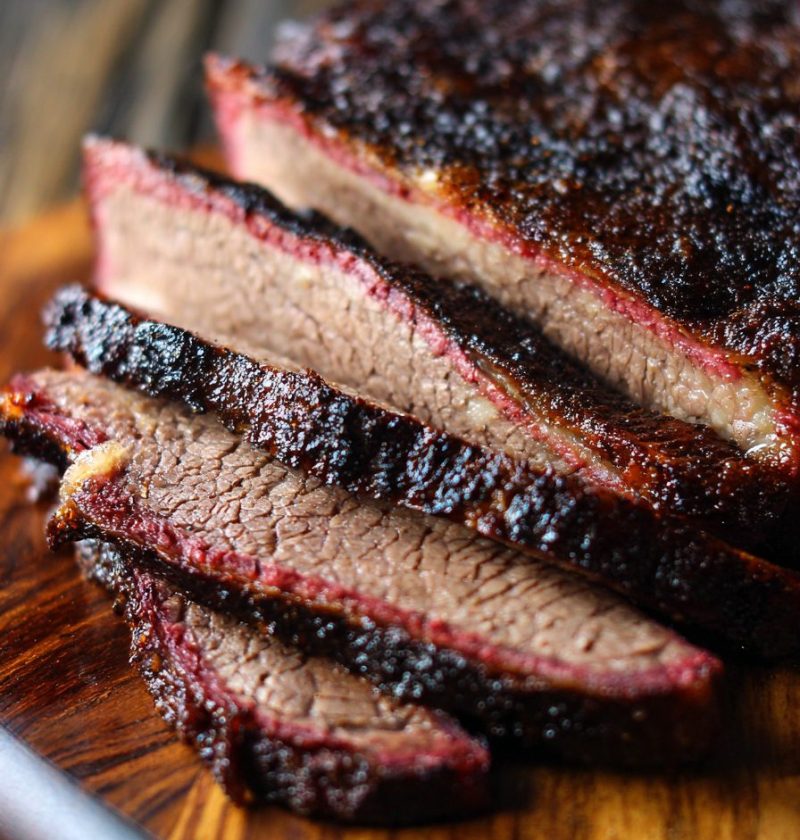
What makes this beef brisket recipe special is the balance. We’re using a simple brisket rub, a steady smoking temperature, and a smart wrap-and-rest method so the meat stays moist. The result is a tender smoked brisket with a peppery crust, a rosy smoke ring, and all the rich flavor you want from a proper pit smoked brisket. It’s not a rushed recipe, no ma’am—but it is an easy one if you take it one step at a time.
Why you’ll love this recipe
- Delivers that classic wood smoked brisket flavor at home
- Makes a juicy brisket with a beautiful bark
- Uses simple pantry spices for the brisket rub
- Great for feeding a crowd without fancy ingredients
- Works well for backyard BBQs, holidays, and meal prep
- Includes clear timing and temperature cues
- Easy to customize with different woods and seasonings
- Resting method helps keep the brisket moist and sliceable
- Leftovers are fantastic in sandwiches, tacos, and baked potatoes
- Gives you that authentic barbecue brisket feel without needing to live in Texas
Ingredients
For this Smoked Brisket Recipe, you’ll need:
- 1 whole packer brisket, 10 to 14 pounds (look for USDA Choice or Prime for better marbling)
- 3 tablespoons kosher salt
- 3 tablespoons coarse black pepper
- 2 tablespoons garlic powder
- 1 tablespoon onion powder
- 2 teaspoons smoked paprika
- 1 teaspoon mustard powder (optional, but lovely for depth)
- 2 tablespoons yellow mustard or olive oil (for binding the rub; either works fine)
- 1 cup beef broth or apple juice (for spritzing, optional)
- Wood chunks or pellets, such as oak, hickory, or post oak (oak is classic for Texas brisket)
Ingredient tips
- Whole packer brisket: Choose one with flexible bend and even thickness if you can; that usually means better fat distribution.
- Kosher salt: Diamond Crystal is lighter by volume than Morton, so if using Morton, reduce a bit.
- Black pepper: Coarse pepper gives that classic BBQ brisket bark; finely ground pepper won’t feel quite the same.
- Yellow mustard: You won’t taste it much—it simply helps the rub cling to the meat.
- Beef broth or apple juice: This is optional for spritzing. Beef broth keeps it savory; apple juice adds a tiny touch of sweetness.
- Wood: Post oak is the gold standard for Texas brisket, but hickory and oak both give excellent results. Mesquite is stronger, so use it lightly.

Directions
-
Trim the brisket.
Start with a cold brisket straight from the fridge—it’s much easier to trim that way. Remove any hard surface fat and trim the fat cap down to about 1/4 inch. Don’t go overboard; a little fat protects the meat during the long smoke. -
Mix the brisket rub.
In a small bowl, combine the kosher salt, coarse black pepper, garlic powder, onion powder, smoked paprika, and mustard powder. This simple rub lets the beef shine while still building a flavorful crust. -
Season the brisket well.
Pat the brisket dry with paper towels, then rub it lightly with yellow mustard or olive oil. Sprinkle the rub evenly over every side, pressing gently so it sticks. Be generous—this is a large cut, and that seasoning helps create the bark. -
Let it rest while you heat the smoker.
Set the seasoned brisket on a tray and let it sit at room temperature for 30 to 45 minutes while the smoker preheats to 225°F. This gives the rub time to adhere and takes a little chill off the meat. -
Prepare your smoker.
Heat your smoker to 225°F and add your wood. Oak, post oak, or hickory are all great choices for a classic smoked meat recipe. Make sure the smoke is thin and light blue, not thick and white—that cleaner smoke gives better flavor. -
Smoke the brisket low and slow.
Place the brisket on the smoker fat-side up if your heat source comes from below, or fat-side down if the heat comes from above. Smoke until the internal temperature reaches around 165°F to 170°F, which usually takes 6 to 8 hours. If the surface looks dry, spritz lightly with beef broth or apple juice every 60 to 90 minutes after the first few hours. -
Wrap when the bark is set.
Once the brisket has a deep mahogany color and the bark doesn’t rub off when touched, wrap it tightly in butcher paper. You can use foil if needed, though butcher paper helps preserve the bark better. This step helps push through the stall and keeps the juicy brisket from drying out. -
Finish smoking until tender.
Return the wrapped brisket to the smoker and continue cooking until the internal temperature reaches 195°F to 203°F. More important than the number, though, is feel: a probe or thermometer should slide into the flat with very little resistance, like softened butter. -
Rest the brisket properly.
Remove the brisket from the smoker and let it rest, still wrapped, for at least 1 hour. Two hours is even better. You can place it in a cooler lined with towels to hold it warm. Honestly, this rest is where a lot of the magic happens. -
Slice and serve.
Unwrap the brisket and save any juices. Slice the flat across the grain into pencil-thick slices. For the point, turn it and slice against the grain as well, or cube it for burnt ends if you like. Spoon a little of the reserved juice over the top before serving.
Servings & Timing
- Yield: 10 to 14 servings, depending on brisket size and how hungry your crowd is
- Prep Time: 30 minutes
- Rest Time before smoking: 30 to 45 minutes
- Cook Time: 10 to 14 hours
- Final Rest Time: 1 to 2 hours
- Total Time: About 12 to 16 hours, depending on brisket size, smoker stability, and the stall
A good rule of thumb is about 1 to 1.25 hours per pound at 225°F, but every brisket has its own personality. Some are stubborn. Some cruise right through.
Variations
- Texas-style classic: Use only kosher salt and coarse black pepper for a purist Texas brisket approach.
- Sweet heat brisket: Add 2 tablespoons brown sugar and 1 teaspoon cayenne to the rub for a sweet-spicy crust.
- Coffee rub brisket: Mix in 1 tablespoon finely ground coffee for a deeper, slightly earthy flavor.
- Garlic-heavy version: Increase garlic powder to 1 tablespoon for a bolder savory profile.
- Smokier profile: Use a blend of oak and a little mesquite for a stronger smoke flavor.
- Brisket burnt ends: Cube the point after smoking, sauce lightly, and return to the smoker until sticky and caramelized.
Storage & Reheating
If you have leftovers, and that’s a big if, let the brisket cool slightly before storing.
- Refrigerator: Store sliced or whole leftover brisket in an airtight container for up to 4 days. Add a few spoonfuls of reserved juices or beef broth to help keep it moist.
- Freezer: Wrap tightly in plastic wrap and foil, or vacuum-seal it, for up to 3 months.
- Reheating: Reheat covered in a 300°F oven with a splash of broth until warmed through. For sliced brisket, 20 to 30 minutes usually does it. Avoid overheating or the meat can dry out.
- Thawing: Thaw overnight in the refrigerator before reheating.
- Make-ahead tip: Smoke the brisket a day ahead, chill it whole, then reheat it covered the next day before slicing. This is actually very practical for holidays and big gatherings.
Notes
A few personal lessons from my own brisket testing—and, believe me, I’ve had a few “well, that could’ve gone better” moments:
- Don’t chase time; chase tenderness. Internal temperature matters, yes, but a brisket is done when the probe slides in easily.
- If your brisket seems dry, it may be overcooked, under-rested, or sliced the wrong direction. Brisket can be fussy that way.
- Butcher paper gives a better bark than foil, though foil cooks a bit faster. That’s the tradeoff.
- A steady smoker temperature matters more than constantly opening the lid. Peek less, trust more.
- Prime brisket usually gives a richer, more forgiving result than Select because of the extra marbling.
- If the flat is cooking too fast, a light foil shield over that area can help protect it.
- Slice only what you plan to serve right away. A whole brisket holds moisture better than pre-sliced meat.
FAQs
Can I make this brisket recipe on a pellet smoker?
Yes, absolutely. A pellet smoker works very well for a slow smoked brisket, especially if it holds temperature consistently.
What is the best wood for smoked beef brisket?
Post oak is the traditional favorite for Texas brisket, but oak and hickory are also excellent choices for balanced smoke flavor.
Do I have to wrap the brisket?
No, but wrapping helps the brisket move through the stall faster and stay more moist. If you skip it, expect a firmer bark and a longer cook.
Why is my brisket tough?
Usually it needs more time. Brisket often feels tough when undercooked because the connective tissue hasn’t fully broken down yet.
Can I make this smoked brisket recipe ahead of time?
Yes. In fact, brisket is one of my favorite make-ahead barbecue dishes because it reheats beautifully when stored with its juices.
How do I keep brisket juicy?
Trim properly, cook low and slow, wrap once the bark is set, and give it a long rest before slicing. Those four things make a big difference.
Should I slice the brisket right away?
No—let it rest first. Slicing too soon lets the juices run out, and that can leave you with dry barbecue brisket.
What can I serve with brisket?
Classic sides include coleslaw, baked beans, potato salad, cornbread, pickles, and mac and cheese. A simple cucumber salad is awfully nice too, especially in hot weather.
Conclusion
This Smoked Brisket Recipe gives you everything you want in a memorable backyard meal: bold bark, rich smoky flavor, and slices of tender smoked brisket that stay beautifully juicy. It takes time, yes, but the method is simple, reliable, and absolutely worth it.
Give this brisket recipe a try for your next cookout, and if you make it, I’d love to hear how it turned out. Leave a comment, share your favorite wood and rub combo, and be sure to check out more smoked meat recipes and barbecue classics for your next weekend feast.