Would you like to save this?
Coffee Rubbed Smoked Brisket Recipe
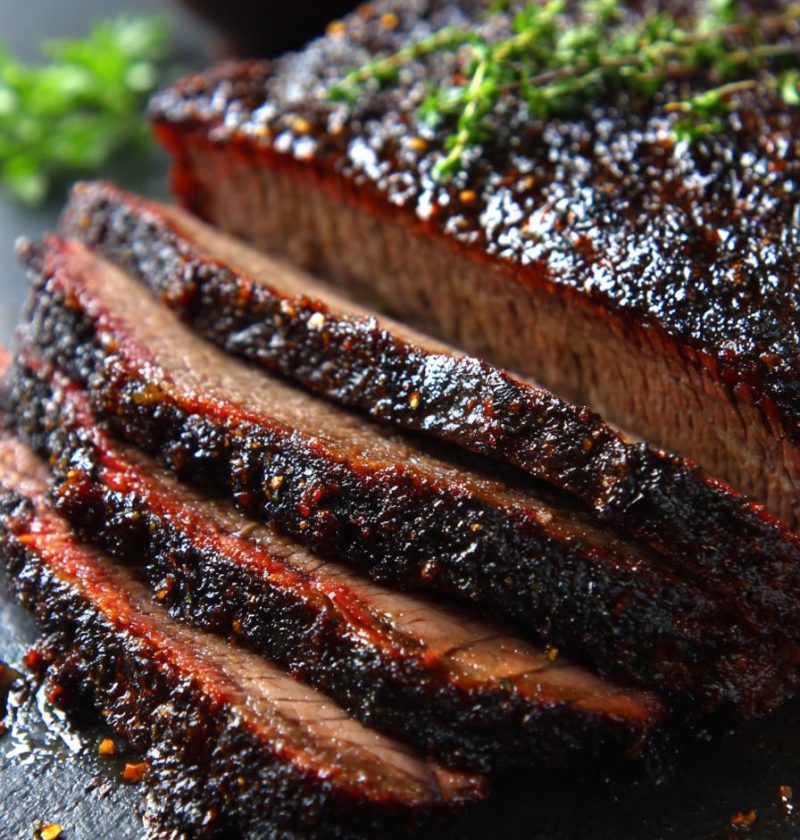
This Coffee Rubbed Smoked Brisket Recipe gives you a deep, savory bark, tender slices, and that slow-smoked backyard BBQ flavor that makes people hover near the cutting board before dinner is even served.
A smoky brisket with a bold, cozy twist
If you love a classic smoked brisket recipe but want something with a little extra character, this one is such a treat. A good coffee rubbed brisket doesn’t taste like your morning cup of coffee, not exactly. Instead, the coffee works like a flavor booster. It adds bitterness in the best way, balances the richness of the beef, and helps create that dark, gorgeous smoked brisket bark everybody fights over.
I’ve made brisket a lot of ways over the years—simple salt and pepper, spicy barbecue brisket recipe versions, and even a sweet-leaning rub once or twice—but this coffee rub brisket keeps pulling me back. It feels a little special without being fussy. The coffee spice rub mingles with paprika, brown sugar, garlic, and black pepper, and as the brisket cooks low and slow, the whole thing turns into something rich, savory, and downright memorable.
This is the kind of smoked beef brisket I like to serve for summer cookouts, football weekends, Father’s Day, or any time the family’s coming over hungry. And while brisket certainly isn’t “health food” in the salad sense, it is naturally high in protein, deeply satisfying, and perfect for feeding a crowd without a lot of side-by-side babysitting once it’s on the smoker. That’s my kind of cooking these days—big flavor, steady method, and plenty of leftovers if you’re lucky.
Why you’ll love this recipe
- It creates a bold, flavorful brisket dry rub with pantry staples.
- The coffee adds depth without making the meat taste bitter.
- You get a beautiful, dark bark and juicy slices.
- It works well on pellet grills, offset smokers, and charcoal smokers.
- This homemade brisket rub is easy to mix in five minutes.
- It’s ideal for holidays, game day, and backyard BBQ brisket nights.
- The recipe follows a reliable low and slow brisket method.
- Leftovers make amazing sandwiches, tacos, and hash.
- It tastes like a restaurant-quality texas style brisket with a subtle twist.
- You can prep the brisket the night before, which lowers stress the next day.
Ingredients
Here’s what you’ll need for this Coffee Rubbed Smoked Brisket Recipe.
For the brisket
- 1 whole beef brisket, 10 to 12 pounds (packer brisket, trimmed)
- 2 tablespoons yellow mustard or Worcestershire sauce (for binding; optional)
- 1 cup beef broth or water (for spritzing, optional)
For the coffee rub
- 3 tablespoons finely ground dark coffee
- 2 tablespoons kosher salt
- 2 tablespoons coarse black pepper
- 2 tablespoons smoked paprika
- 1 tablespoon garlic powder
- 1 tablespoon onion powder
- 1 tablespoon brown sugar
- 2 teaspoons chili powder
- 1 teaspoon ground cumin
- 1 teaspoon dry mustard
- 1/2 teaspoon cayenne pepper (optional, for heat)
Optional for wrapping
- Unwaxed butcher paper or heavy-duty foil
- 1/4 cup beef tallow, melted (optional, but lovely for moisture)
Ingredient tips
- Brisket: Look for a packer brisket with flexible bend and good marbling in the flat and point. USDA Choice works well; Prime gives you a bit more insurance on tenderness.
- Coffee: Use finely ground dark roast for the richest savoriness. Espresso grind works beautifully. Avoid flavored coffee.
- Kosher salt: Diamond Crystal and Morton measure differently by volume, so if you use Morton, slightly reduce the amount.
- Black pepper: Coarse pepper helps build that classic brisket seasoning blend texture.
- Brown sugar: Just enough helps balance the coffee and supports bark formation without turning the rub too sweet.
- Smoked paprika: This layers in that smoky warmth even before the brisket hits the smoker.
- Cayenne: Leave it out if you want a milder coffee seasoned brisket.

Directions
-
Trim the brisket.
Place the brisket on a large cutting board while it’s still cold—it’s much easier to trim that way. Remove any hard fat that won’t render, and trim the fat cap to about 1/4 inch. Square up thin edges if needed so they don’t dry out too fast. -
Mix the rub.
In a medium bowl, stir together the coffee, kosher salt, black pepper, smoked paprika, garlic powder, onion powder, brown sugar, chili powder, cumin, dry mustard, and cayenne if using. This savory coffee rub should smell earthy, peppery, and just a little sweet. -
Season the brisket generously.
Pat the brisket dry with paper towels. If you like, spread a thin layer of yellow mustard or Worcestershire sauce over the surface to help the rub stick. Sprinkle the rub all over the brisket, pressing gently so it adheres. Don’t rub it in like you’re polishing silver—just press and coat well. -
Let it rest before smoking.
Let the seasoned brisket sit at room temperature for 30 to 45 minutes while you preheat your smoker to 225°F to 250°F. If you’ve got time, refrigerate it overnight uncovered for even better flavor and bark. Honestly, that overnight rest does make a difference. -
Prepare the smoker.
Preheat your smoker and add your wood. Oak is a terrific choice for a texas style brisket feel, while hickory gives a stronger punch. Pellet smoker, offset, or kettle setup—it all works, as long as you can hold steady heat. A reliable probe thermometer is your best friend here. -
Smoke the brisket low and slow.
Place the brisket fat-side up or down depending on your heat source; if heat comes from below, fat-side down helps protect the meat. Smoke until the bark is well set and the internal temp reaches about 165°F to 175°F. This usually takes 6 to 8 hours, but brisket has its own personality, so time is a guide, not a law. -
Spritz if needed.
If the surface looks dry after the first few hours, lightly spritz with beef broth or water every 45 to 60 minutes. Don’t soak it. A little moisture helps smoke cling and keeps the bark from getting too hard too soon. -
Wrap and keep cooking.
Once the bark is dark and firm, wrap the brisket in butcher paper or foil. If you like, drizzle in a little melted beef tallow before closing it up. Return it to the smoker and continue cooking until the thickest part probes tender, usually around 200°F to 205°F. The magic word is tender, not just “done.” -
Rest the brisket properly.
Remove the brisket from the smoker and let it rest for at least 1 hour, though 2 to 3 hours in a dry cooler or warm oven is even better. This step matters more than folks think. Resting helps those juices settle back into the meat so your tender smoked brisket stays juicy when sliced. -
Slice and serve.
Separate the flat and point if desired, then slice against the grain. For the point, you may need to turn the meat before slicing because the grain changes direction. Serve warm with pickles, onions, white bread, BBQ sauce on the side, or nothing at all if you want the brisket to speak for itself.
Servings & timing
- Yield: 12 to 16 servings
- Prep Time: 25 minutes
- Resting Time Before Smoking: 30 to 45 minutes
- Cook Time: 10 to 14 hours, depending on size and smoker temperature
- Wrap + Final Cook: About 3 to 5 additional hours within total cook time
- Rest Time After Smoking: 1 to 3 hours
- Total Time: About 12 to 18 hours from start to serving
A little real-life context here: most 12-pound briskets smoked at 225°F finish somewhere around 14 to 16 hours, including resting. If you’re hosting, plan for it to finish early rather than late. Brisket holds beautifully in a warm cooler.
Variations
- Spicier brisket: Add 1 to 2 extra teaspoons cayenne or chipotle powder for a bolder finish.
- Sweeter bark: Increase the brown sugar slightly and add a teaspoon of cinnamon for a warmer, Southern-style note.
- Espresso rub version: Use espresso powder for a more intense coffee spice rub flavor.
- No-sugar rub: Skip the brown sugar if you want a more traditional savory brisket dry rub.
- Grilled finish: After smoking and resting, briefly sear slices over high heat for a smoky grilled brisket recipe twist.
- Burnt ends style: Cube the point, sauce lightly, and smoke again for sticky, caramelized bites.
Storage & reheating
Store leftover brisket in an airtight container in the refrigerator for up to 4 days. Keep a little of the cooking juice or broth with it so the slices stay moist.
For longer storage, wrap portions tightly and freeze for up to 3 months. I like to freeze brisket in meal-size packs because thawing a giant block of meat on a Tuesday is nobody’s idea of fun.
To reheat, place slices in a baking dish with a spoonful or two of broth, cover tightly with foil, and warm at 300°F until heated through. You can also reheat sealed portions in simmering water if they’re vacuum packed. For frozen brisket, thaw overnight in the fridge before reheating.
Make-ahead tip: smoke the brisket a day before serving, refrigerate it whole, then reheat covered the next day. Sometimes it slices even better then, which feels like a little kitchen miracle.
Notes
A few things I learned while testing this smoked meat recipe, because brisket loves to keep us humble:
First, coffee is strong, but it shouldn’t overpower the beef. Three tablespoons in a full rub for a 10- to 12-pound brisket hits that sweet spot. It supports the bark and rounds out the flavor rather than shouting over everybody else.
Second, bark texture depends on airflow, moisture, and patience. If you wrap too early, the bark softens. If you wait for that dark mahogany crust to really form, you’ll get a much better finish. Not burnt—just beautifully deep and firm.
Third, internal temperature is helpful, but probe feel is the real test. A brisket can be 203°F and still need more time, or it can be ready at 198°F. When the thermometer slides in like room-temperature butter, that’s your sign.
And one more thing: if your brisket stalls around 160°F and seems stuck forever, don’t panic. That stall is normal. Every brisket cook has had that moment where they stare at the thermometer like it owes them money.
FAQs
Can I make this Coffee Rubbed Smoked Brisket Recipe without a smoker?
Yes, though the flavor will be different. You can cook it in the oven at a low temperature and add a little liquid smoke to the rub or braising liquid if you like.
Does the brisket taste like coffee?
Not in a strong or sweet way. The coffee adds depth and helps create a rich, savory crust on the outside.
What’s the best wood for coffee rubbed brisket?
Oak is a classic for smoked beef brisket, especially if you want that texas style brisket profile. Hickory and pecan are also excellent.
Should I use butcher paper or foil?
Butcher paper helps preserve bark better, while foil traps more moisture and cooks a bit faster. Both work; it depends on the texture you want.
How do I know when brisket is done?
Go by tenderness more than temperature. When a probe slides into the flat and point with very little resistance, it’s ready.
Can I season the brisket the night before?
Absolutely. Overnight seasoning helps the homemade brisket rub settle in and can improve bark development.
Why is my brisket dry?
Usually it’s from undercooking, overtrimming, slicing with the grain, or not resting long enough. Brisket needs time—more than people think.
What should I serve with this barbecue brisket recipe?
Try coleslaw, baked beans, potato salad, mac and cheese, pickles, onions, or simple cornbread. If you ask me, something crisp and tangy always helps balance rich brisket.
Conclusion
This Coffee Rubbed Smoked Brisket Recipe brings together bold bark, rich beef flavor, and a warm, savory coffee rub that makes the whole brisket feel a little extra special. It’s steady, unfussy cooking with a payoff that’s absolutely worth the wait.
If you give it a try, I’d love to hear how it turned out for you. Leave a comment, share your favorite wood and smoker setup, or browse more BBQ classics and smoked meat recipes for your next cookout.