Would you like to save this?
Lawrence Bakery New Orleans Recipe (Beignets-Style Sweet Dough at Home)
If you’ve ever wished you could bring a little New Orleans magic into your own kitchen, this Lawrence Bakery New Orleans Recipe for tender, pillowy beignets-style sweet dough is going to make your heart (and your sweet tooth) very, very happy.
We’re talking warm, golden New Orleans bakery–style beignets, made at home, with a classic New Orleans dessert recipe that’s easy enough for a weeknight and special enough for holidays.
A Little New Orleans In Your Kitchen
Let me explain why this Lawrence Bakery New Orleans Recipe has such a special place in my heart.
I grew up in the South, and by the time I hit my 40s, I’d made more trips to New Orleans than I can count. My husband jokes that I know the French Quarter by smell: coffee, fried dough, powdered sugar, and that faint hint of vanilla that seems to float out of every little bakery door. Lawrence Bakery–style beignets capture that exact feeling—soft, yeasty, just sweet enough, with powdered sugar that somehow ends up on your shirt, your nose, and the floor.
This recipe isn’t from a single bakery’s secret file—I’m not claiming that. It’s my carefully tested, home-kitchen version inspired by classic Lawrence Bakery New Orleans recipes and traditional New Orleans pastries you’d find in the French Quarter. Think of it as a love letter to New Orleans bakeries, re-created for the home cook.
Here’s what makes it extra special:
- A soft, New Orleans style sweet dough enriched with eggs and butter
- Light, airy beignets that puff beautifully when fried
- A flexible dough you can use for beignets, little doughnuts, or even filled pastries
- Clear, step-by-step directions so you never feel lost
If you’ve ever felt intimidated by yeast or frying, stay with me. If a 50-year-old mom who wears reading glasses and listens to jazz while she cooks can nail this, you absolutely can too.
Why You’ll Love This Lawrence Bakery New Orleans Recipe
You know what? Sometimes you just need a list of reasons before you pull out the mixing bowl. Here’s why this Lawrence Bakery New Orleans Recipe is worth your time:
- Real French Quarter vibes at home – It tastes like you’re standing in line at a New Orleans bakery, without the airfare.
- Beginner-friendly yeast dough – Clear steps, visual cues, and no fancy equipment required.
- Make-ahead friendly – You can let the dough rest in the fridge overnight, then fry fresh in the morning.
- Light, fluffy texture – The sweet dough fries up airy inside and crisp outside, just like authentic New Orleans bakery treats.
- Versatile base dough – Use it for Lawrence Bakery style beignets, mini donuts, or even sweet rolls.
- Family-pleasing treat – Kids, grandparents, neighbors—everyone goes back for “just one more.”
- Great for holidays and brunch – Ideal for Mardi Gras, Christmas morning, or any lazy Sunday.
- Simple pantry ingredients – Flour, yeast, sugar, milk—you probably have almost everything on hand already.
Ingredients For Lawrence Bakery–Style Beignets
Before we jump into mixing, let’s get our ingredients set up. This New Orleans bakery beignet recipe makes about 20–24 medium beignets.
For the Sweet Dough
- 3 ½ cups (420 g) all-purpose flour, plus more for dusting
- Use a good-quality unbleached flour if you can; it gives better flavor.
- 2 ¼ teaspoons (1 packet, 7 g) active dry yeast
- You can use instant yeast; just skip the “proofing” step and add it straight to the flour.
- ½ cup (120 ml) warm whole milk, about 105–110°F
- Warm to the temperature of a hot bath—comfortable on your finger, not hot.
- ¼ cup (60 ml) warm water, about 105–110°F
- ¼ cup (50 g) granulated sugar
- 2 large eggs, room temperature
- 4 tablespoons (56 g) unsalted butter, melted and slightly cooled
- Don’t add it hot or it can slow Down the yeast.
- 1 teaspoon fine sea salt
- 1 teaspoon pure vanilla extract
- This is subtle but gives that bakery aroma.
For Frying and Finishing
- Vegetable oil or canola oil, for frying (about 6–8 cups, depending on pot size)
- Use a neutral oil with a high smoke point.
- 1 ½–2 cups powdered sugar, for dusting
- Sift it if it’s clumpy; that gives you the “bakery snow” effect.
- Optional: pinch of Cinnamon mixed into the powdered sugar for a cozy twist
Visual Inspiration

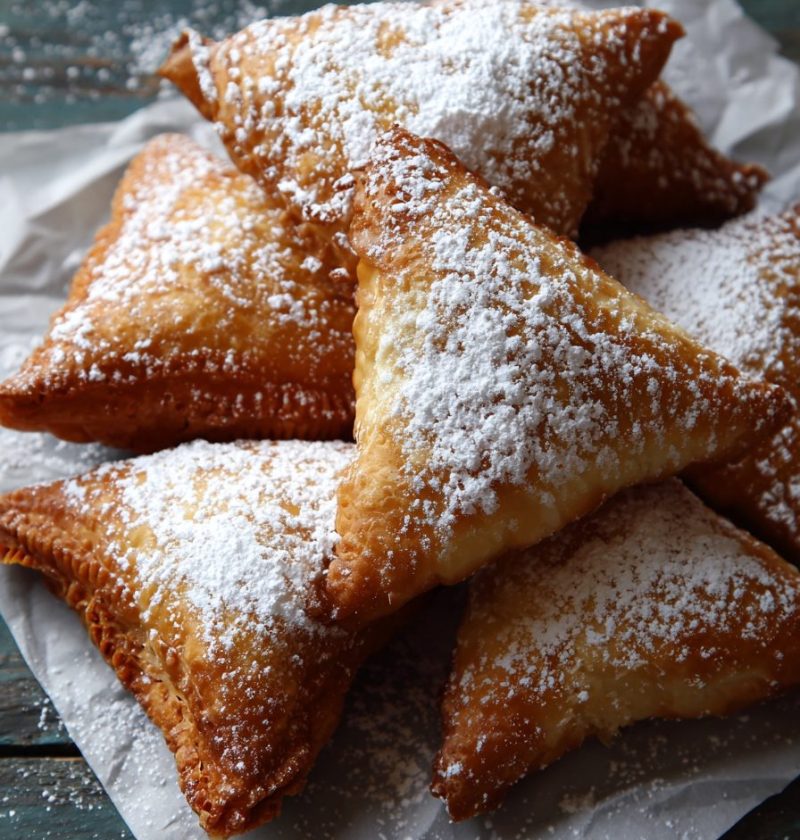
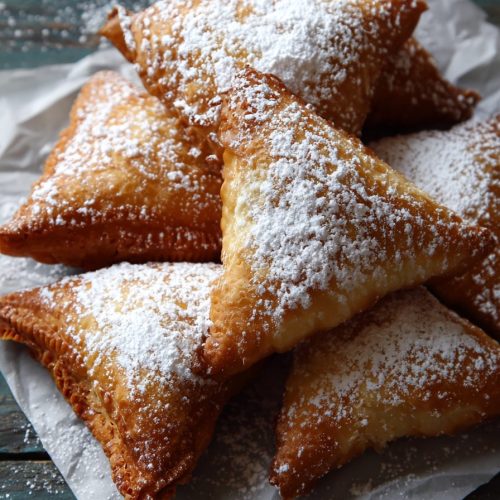
Just picture it: a plate of warm, golden beignets, piled high and absolutely buried in powdered sugar. That’s where we’re headed.
Step-by-Step Directions (New Orleans Bakery Beignet Recipe)
1. Proof the Yeast (Wake It Up Gently)
- In a small bowl, stir together the warm water, 1 teaspoon of the sugar (from the ¼ cup), and the active dry yeast.
- Let it stand for 5–10 minutes, until it’s foamy and creamy on top.
If it doesn’t foam, your yeast might be old or the liquid was too hot or too cold. Toss it and try again—this one step makes or breaks any New Orleans bakery recipes that use yeast.
2. Mix the Wet Ingredients
- In a large mixing bowl (or the bowl of a stand mixer), whisk together:
- Warm milk
- Remaining sugar
- Eggs
- Melted butter
- Vanilla
- Salt
It should look like a slightly thick, pale yellow mixture. The sugar should be mostly dissolved.
3. Bring the Dough Together
- Add the foamy yeast mixture to the bowl and stir to combine.
- Add 2 cups of flour and stir with a wooden spoon or the paddle attachment on low speed until smooth.
- Gradually add the remaining 1 ½ cups flour, about ½ cup at a time, mixing until a soft dough forms.
You’re looking for a dough that’s a little sticky but pulls away from the sides of the bowl. If it’s extremely sticky and more like batter, sprinkle in an extra tablespoon or two of flour. Try not to add too much—this is where that tender Lawrence Bakery style crumb comes from.
4. Knead Until Smooth and Elastic
- Turn the dough out onto a lightly floured surface, or switch to a dough hook on your stand mixer.
- Knead by hand for 6–8 minutes, or with the mixer on medium-low for 5–6 minutes, until the dough is smooth, stretchy, and elastic.
It should feel soft, a bit tacky, but not gluey. When you press it, it should slowly bounce back—like a little dough pillow.
5. First Rise (Let It Puff Up)
- Lightly oil a clean bowl and place the dough inside, turning it once so it’s coated in a thin layer of oil.
- Cover the bowl with plastic wrap or a clean kitchen towel.
- Let the dough rise in a warm, draft-free spot for 1 to 1 ½ hours, or until about doubled in size.
If your kitchen runs cool, you can set the bowl in a turned-off oven with just the oven light on. Classic trick from every grandma I’ve ever known.
6. Shape the Beignets
- Gently punch down the dough to release excess gas—don’t beat it up; just a gentle press.
- Turn the dough out onto a lightly floured surface and roll it into a rectangle about ¼-inch thick.
- Using a pizza cutter or sharp knife, cut into 2–2 ½ inch squares.
For that authentic French Quarter bakery style recipe look, don’t worry if your squares aren’t perfect. Slightly uneven edges feel homey and charming.
7. Second Rise (Short Rest Before Frying)
- Transfer the dough squares to a lightly floured baking sheet or parchment-lined tray, leaving a little space between them.
- Cover loosely with a kitchen towel and let them rest for 20–30 minutes, until slightly puffy.
This short rise helps them puff dramatically when they hit the hot oil—this is the key to those classic New Orleans pastries.
8. Heat the Oil
- In a heavy-bottomed pot or Dutch oven, pour in 2–3 inches of oil.
- Heat the oil to 360–370°F. Use a deep-fry thermometer if you have one.
No thermometer? Drop a tiny scrap of dough into the oil—it should sizzle immediately and float to the top in about 5 seconds, turning golden in about 45–60 seconds. If it browns in 10 seconds, the oil’s too hot.
9. Fry the Beignets
- Carefully place 3–5 dough squares into the hot oil at a time—don’t overcrowd the pot.
- Fry for 1–2 minutes per side, turning once, until puffed and deep golden brown.
- Use a slotted spoon to transfer the beignets to a paper towel–lined plate or cooling rack.
They should look noticeably puffed, almost like little pillows. If they’re dark but flat, your oil’s too hot and not giving them time to rise.
10. Shower With Powdered Sugar (The Best Part)
- While the beignets are still warm, use a fine-mesh sieve to generously dust them with powdered sugar.
- Serve immediately, with extra powdered sugar on the side.
Traditional New Orleans bakery recipes don’t skimp on powdered sugar, and neither should you. It’s a snowfall, not a sprinkle.
Servings & Timing
- Yield: About 20–24 medium beignets
- Prep Time: 25 minutes active
- Rise Time: 1 ½–2 hours (first and second rise combined)
- Fry Time: 20–25 minutes
- Total Time: Around 2 ½ hours (most of it hands-off)
For a weekend brunch, I like to mix the dough the night before (see variations) and have hot beignets on the table by the time the coffee’s brewed.
Variations On This New Orleans Style Sweet Dough
Once you’ve made this Lawrence Bakery New Orleans Recipe a couple of times, feel free to play a little:
- Overnight Beignets: After kneading, cover the dough and refrigerate up to 24 hours. Let it sit at room temp for 45–60 minutes before rolling and shaping.
- Café au Lait Beignets: Add 1 tablespoon espresso powder to the dough and serve with strong coffee—very French Quarter.
- Cinnamon Sugar Beignets: Toss the hot beignets in a mixture of ½ cup granulated sugar + 1 teaspoon cinnamon before dusting with a little powdered sugar.
- Filled Bakery Treats: Pipe thick jam or pastry cream into the center of each beignet using a piping bag and small round tip—instant filled New Orleans bakery treats.
- Citrus Twist: Add 1 teaspoon grated lemon or orange zest to the dough for a bright, subtle flavor that pairs beautifully with powdered sugar.
- Glazed Beignets: Skip the powdered sugar and dip warm beignets in a simple vanilla glaze (powdered sugar + milk + vanilla) for a doughnut-style finish.
Storage, Reheating & Make-Ahead Tips
Traditional Louisiana bakery dessert recipes are best fresh, and beignets are no exception—but you do have options.
- Room Temperature: Keep leftover beignets in an airtight container at room temperature for up to 1 day. They will lose some crispness but still taste lovely.
- Fridge: I don’t usually refrigerate finished beignets because they dry out, but you can chill the dough before frying (up to 24 hours).
- Freezer (Dough): Shape the dough squares, freeze on a tray, then store in a freezer bag for up to 1 month. Thaw in the fridge overnight, then let rise at room temp until puffy before frying.
- Reheating: Warm leftover beignets on a baking sheet in a 300°F oven for about 5–8 minutes, then dust again with a bit of fresh powdered sugar.
- Make-Ahead: For company or holidays, I like to make the dough the night before, refrigerate it, and shape/fry in the morning—this gives great flavor and saves morning chaos.
Notes From My Kitchen (What I Learned Testing This Recipe)
- Flour matters: Too much flour gives you dense beignets. Start on the lower end and only add more if the dough is truly unworkable. A slightly sticky dough yields that tender, classic New Orleans bakery crumb.
- Temperature is everything: Warm—not hot—liquids for the yeast, and a steady 360–370°F oil for frying. It’s like a little traffic light system for beignets.
- Shape relaxed: Don’t stress about perfect squares. The charm of authentic New Orleans bakery recipes is in their slightly rustic look.
- Powdered sugar timing: Dust while they’re still warm so it clings nicely. If they cool completely, the sugar just slides off.
- Test batch first: Fry one beignet first to test oil temperature and timing. Adjust before you commit a whole tray. It’s like a dress rehearsal.
- Serve right away: These really shine in the first 15–20 minutes after frying. If you’re hosting, fry in small batches as people arrive so everyone gets a hot one.
FAQs About Lawrence Bakery New Orleans Recipe
1. Can I bake these instead of frying?
You’ll get a decent sweet roll, but it won’t be a true beignet. For baked, brush the shaped dough with melted butter and bake at 350°F for 12–15 minutes, then dust with powdered sugar.
2. What’s the best oil for frying beignets?
Use a neutral oil like vegetable, canola, or peanut oil. They can handle higher heat and won’t compete with the flavor of the dough.
3. My dough didn’t rise—what went wrong?
Most likely the yeast was inactive (too old) or your liquids were too hot or too cold. Always proof the yeast and aim for warm, bath-like temperature.
4. Why are my beignets greasy?
Greasy beignets usually mean the oil was too cool, so the dough soaked it up. Make sure the oil is at 360–370°F and let it return to temperature between batches.
5. Can I make this recipe with bread flour?
You can, but they’ll be a little chewier. If you like that, go for it—otherwise, stick with all-purpose for a more tender bite.
6. How do I keep powdered sugar from clumping?
Sift the powdered sugar before using and dust through a fine-mesh sieve. If you’re serving later, dust right before serving.
7. Are these beignets very sweet?
The dough itself is lightly sweet, more like a classic New Orleans style sweet dough. Most of the sweetness comes from the powdered sugar on top.
8. Can I halve the recipe?
Yes, this Lawrence Bakery New Orleans Recipe halves beautifully. Just cut all ingredients in half and watch the dough texture as you go.
Wrapping It Up (And Pouring Another Coffee)
These Lawrence Bakery style beignets bring that New Orleans bakery magic straight to your table—soft, airy, and showered in powdered sugar. They’re simple enough for a lazy Sunday, but feel special enough for Mardi Gras, holidays, or whenever you’re craving authentic New Orleans bakery treats.
If you try this Lawrence Bakery New Orleans Recipe, I’d really love to hear how it turned out for you—tell me in the comments, share your tweaks, or let me know if your family now insists you open a little French Quarter bakery in your own kitchen. And if you’re in the mood for more New Orleans bakery recipes, stick around—I’ve got a praline bread pudding and a chicory Coffee Cake you’re going to want next.
Lawrence Bakery New Orleans Beignets-Style Sweet Dough
Ingredients
- 3 1/2 cups all-purpose flour about 420 g, plus more for dusting; use unbleached if possible
- 2 1/4 teaspoons active dry yeast one 7 g packet; instant yeast can be used, skip proofing step
- 1/2 cup whole milk warm, about 105–110°F (120 ml)
- 1/4 cup water warm, about 105–110°F (60 ml)
- 1/4 cup granulated sugar divided; 1 teaspoon used for proofing yeast
- 2 large eggs room temperature
- 4 tablespoons unsalted butter melted and slightly cooled (56 g)
- 1 teaspoon fine sea salt
- 1 teaspoon pure vanilla extract
- vegetable oil or canola oil for frying, about 6–8 cups depending on pot size; use neutral oil with high smoke point
- 1 1/2–2 cups powdered sugar for dusting; sift if clumpy
- pinch ground cinnamon optional; mix into powdered sugar for a twist
Instructions
- In a small bowl, stir together the warm water, 1 teaspoon of the granulated sugar (taken from the 1/4 cup), and the active dry yeast. Let it stand for 5–10 minutes, until the mixture is foamy and creamy on top. If it does not foam, discard and start again with fresh yeast and correctly warmed liquids.2 1/4 teaspoons active dry yeast, 1/4 cup water, 1/4 cup granulated sugar
- In a large mixing bowl or the bowl of a stand mixer, whisk together the warm milk, remaining granulated sugar, eggs, melted and slightly cooled butter, vanilla, and salt until well combined. The mixture should be pale yellow and the sugar mostly dissolved.1/2 cup whole milk, 1/4 cup granulated sugar, 2 large eggs, 4 tablespoons unsalted butter, 1 teaspoon pure vanilla extract, 1 teaspoon fine sea salt
- Add the foamy yeast mixture to the bowl with the wet ingredients and stir to combine. Add 2 cups of the flour and mix with a wooden spoon or the paddle attachment on low speed until smooth. Gradually add the remaining 1 1/2 cups flour, about 1/2 cup at a time, mixing until a soft dough forms that is slightly sticky but pulls away from the sides of the bowl. If extremely sticky, add 1–2 tablespoons more flour, but avoid adding too much to keep the dough tender.3 1/2 cups all-purpose flour, 2 1/4 teaspoons active dry yeast
- Turn the dough out onto a lightly floured surface or switch to a dough hook on your stand mixer. Knead by hand for 6–8 minutes, or with the mixer on medium-low for 5–6 minutes, until the dough is smooth, stretchy, and elastic. It should feel soft and a bit tacky but not gluey, and should slowly bounce back when pressed.3 1/2 cups all-purpose flour
- Lightly oil a clean bowl and place the dough inside, turning once to coat it in a thin layer of oil. Cover the bowl with plastic wrap or a clean kitchen towel and let the dough rise in a warm, draft-free spot for 1 to 1 1/2 hours, or until about doubled in size. If your kitchen is cool, you can place the bowl in a turned-off oven with the light on.
- Gently punch down the risen dough to release excess gas. Turn it out onto a lightly floured surface and roll it into a rectangle about 1/4 inch thick. Using a pizza cutter or sharp knife, cut the dough into 2–2 1/2 inch squares. They do not need to be perfectly even.
- Transfer the dough squares to a lightly floured baking sheet or parchment-lined tray, leaving a little space between them. Cover loosely with a kitchen towel and let rest for 20–30 minutes, until slightly puffy.
- In a heavy-bottomed pot or Dutch oven, pour in 2–3 inches of vegetable or canola oil. Heat the oil to 360–370°F, using a deep-fry thermometer if possible. Without a thermometer, test by dropping in a small scrap of dough: it should sizzle immediately, float in about 5 seconds, and turn golden in about 45–60 seconds. If it browns in about 10 seconds, the oil is too hot.vegetable oil or canola oil
- Working in batches, carefully place 3–5 dough squares into the hot oil at a time, avoiding overcrowding. Fry for 1–2 minutes per side, turning once, until puffed and deep golden brown. Use a slotted spoon to transfer the fried beignets to a paper towel–lined plate or cooling rack to drain. If they are dark but flat, reduce the oil temperature slightly.
- While the beignets are still warm, place powdered sugar in a fine-mesh sieve (optionally mixed with a pinch of cinnamon) and generously dust the tops and sides until well coated. Serve immediately with extra powdered sugar on the side. Beignets are best within 15–20 minutes of frying.1 1/2–2 cups powdered sugar, pinch ground cinnamon