Would you like to save this?
Einbecker Mai Urbock Homebrew Recipe (A Golden German Maibock for Spring)
If you’ve been craving a rich, malty German lager with a beautiful golden glow, this Einbecker Mai Urbock Homebrew Recipe is my cozy, homebrew-loving answer to spring in a glass.
What Is Einbecker Mai Urbock – And Why Brew It at Home?
Einbecker Mai Urbock is a classic German Maibock (or Mai Bock) – a strong spring lager that’s lighter in color than a traditional dark bock, but every bit as malty, smooth, and satisfying. Think deep golden color, firm but clean bitterness, fresh bread and honey malt character, and a dry finish that keeps you coming back for another sip.
When we talk about an Einbecker Mai Urbock homebrew or a traditional Mai Bock clone, we’re really talking about capturing that old German brewing soul in our own kettles:
- A strong, pale bock beer clone
- Clean lager fermentation
- Elegant German hops
- A touch of celebration in every pint
I love this style because it’s the perfect bridge between winter and summer. You still get that warming, malty backbone you want when the evenings are chilly, but the bright gold color and firm hop bitterness make it ideal for sunny afternoons on the patio. At 50, with grown kids and a quieter house, I adore recipes like this that feel a little “special occasion” but still approachable for a dedicated homebrewer.
This Einbecker Mai Urbock Homebrew Recipe is built as an authentic German bock homebrew: high-quality pilsner malt, a bit of specialty malt to mimic that Einbecker profile, and noble hops that stay out of the way while still giving enough bitterness to balance the malt sweetness.
Why You’ll Love This Einbecker Mai Urbock Homebrew Recipe
- Authentic German vibe at home – It’s a classic Einbecker style Maibock clone with ingredients you can actually find in U.S. homebrew shops.
- Perfect spring seasonal bock – Brew it in late winter and you’ll have a strong spring lager recipe ready right as flowers and grills start waking up.
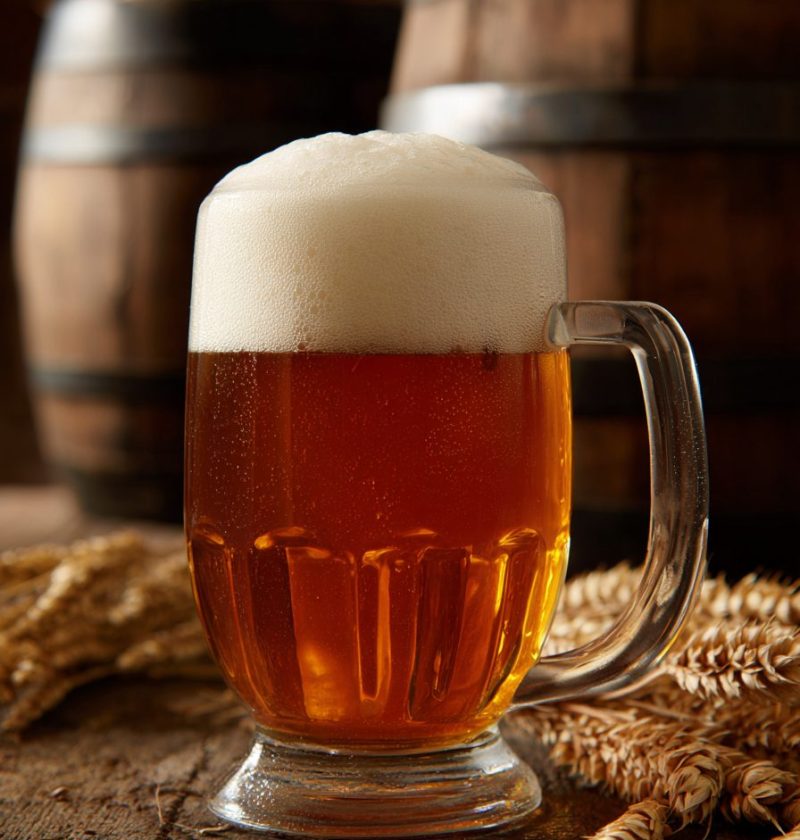
- Beautiful golden color – Deep straw to golden, crystal clear (with patience), and just gorgeous in a tall lager glass.
- Malty but not cloying – This is a malty German lager recipe with a clean, dry finish; no sticky sweetness here.
- Crowd-pleasing strength – At around 6.8–7.2% ABV, it’s a “one or two and I’m good” beer that still Drinks dangerously smooth.
- Great for lagering practice – If you’re newer to lagers, this is an excellent training recipe for fermentation control and extended cold conditioning.
- Flexible for gear – Works well on traditional 5-gallon all-grain systems, Brew-In-A-Bag (BIAB), and there’s an extract version below if you’re not mashing yet.
- Food-friendly pairing – Pairs beautifully with sausages, roast chicken, pretzels, and even that simple cheese board you throw together on a weeknight.
Ingredients for Einbecker Mai Urbock (5 Gallons / 19 L All-Grain)
This Einbecker inspired homebrew recipe is built for a typical homebrew setup with about 70–75% brewhouse efficiency. If yours is very different, tweak the base malt a bit to hit your target gravity.
Grain Bill
- 10.5 lb (4.76 kg) German Pilsner malt
- The backbone of this pale bock beer clone. Use a good German brand (Weyermann, Bestmalz) for that clean, soft malt flavor.
- 2.0 lb (0.9 kg) Munich Malt (8–10L)
- Adds rich bread crust and light toast – key for that classic Einbecker Bock style malt profile.
- 0.75 lb (0.34 kg) Vienna Malt
- Rounds out the malt character with a gentle biscuit note and a touch of sweetness.
- 0.5 lb (0.23 kg) CaraHell or Light Caramel Malt (8–10L)
- Adds subtle honey notes, body, and color, without turning it into a caramel bomb.
- 0.25 lb (0.11 kg) Melanoidin Malt (optional but recommended)
- Mimics a long decoction mash, enhancing malty depth and breadiness. Use lightly; it’s powerful.
Targets (approximate):
- Original Gravity (OG): 1.066–1.070
- Final Gravity (FG): 1.012–1.014
- ABV: 6.8–7.2%
- IBUs: 32–36
- SRM (color): 6–8 (deep gold)
Hop Schedule
We’ll lean on noble hops for a clean, spicy, herbal bitterness that suits a strong spring lager recipe.
- 1.25 oz (35 g) Hallertau Mittelfrüh (4% AA) – 60 minutes
- Primary bittering charge; adjust amount slightly based on your actual alpha acids.
- 0.5 oz (14 g) Hallertau Mittelfrüh – 30 minutes
- Layers in moderate hop flavor to support the malt.
- 0.5 oz (14 g) Tettnang or Spalt – 10 minutes
- Adds elegant aromatic notes (herbal, floral) without getting “hoppy.”
You can use all Hallertau if that’s what you have—Tettnang or Spalt just bring a nice twist.
Yeast
For an authentic German strong lager clone, choose a clean, traditional bock or lager strain:
- Wyeast 2206 Bavarian Lager
or - WLP833 German Bock Lager
or - Lallemand Diamond Lager (dry) – great dry option for clean lagers.
Aim for 250–300 billion cells. For liquid yeast, that usually means a large 2–3 liter starter for a 1.068 lager. For dry yeast, use 2 packs rehydrated.
Fermentation temperature: 48–52°F (9–11°C) for primary, then a diacetyl rest around 60°F (15–16°C).
Water Profile
A classic malty German lager recipe benefits from soft, chloride-leaning water:
- Calcium: 40–60 ppm
- Chloride: 50–70 ppm
- Sulfate: 30–40 ppm
If your tap water is hard or heavily chlorinated, start with RO or distilled and build up, or at least treat with a Campden tablet.
Other
- 1 Whirlfloc tablet or 1 tsp Irish moss – 10–15 minutes (for clarity)
- Yeast nutrient – per manufacturer instructions (helps with strong, clean fermentation)
Extract Version (Pale Bock Beer Clone)
Don’t worry if you’re not all-grain yet. You can still brew this Einbecker Mai Urbock recipe using malt extract:
- 6.6 lb (3 kg) Light or Pilsner Liquid Malt Extract (LME)
- 1.5 lb (0.68 kg) Munich LME or DME
- 0.5 lb (0.23 kg) CaraHell (steeping grains)
- 0.25 lb (0.11 kg) Vienna Malt (steeping grains)
Steep the grains in 150–155°F (65–68°C) water for 30 minutes, remove, then add extract off heat. Follow the same hop schedule and yeast/fermentation guidelines.
Directions: Step-by-Step Einbecker Mai Urbock Homebrew Recipe
1. Mash the Grains
- Heat 3.75–4 gallons (14–15 L) of water to about 162°F (72°C).
- Add crushed grains while stirring to avoid clumps, aiming for a mash temperature of 150–152°F (65–67°C).
- Hold this temperature for 60 minutes.
- You’re looking for good fermentability but still enough body. If you like a slightly richer, fuller Maibock, lean toward 152°F.
Tip: Give your mash a gentle stir at the 30-minute mark to prevent hot/cold pockets and keep your efficiency consistent.
2. Mash Out and Sparge
- Raise mash to 168°F (76°C) for about 10 minutes (mash out) to help with runoff.
- Vorlauf (recirculate) a few quarts until the wort runs relatively clear.
- Sparge with 168°F (76°C) water until you collect about 6.5–6.75 gallons (25–26 L) in the kettle, depending on your boil-off rate.
You want enough pre-boil volume to finish with around 5.25–5.5 gallons in the fermenter.
3. Boil and Add Hops
- Bring the wort to a strong rolling boil. Set a 60-minute timer.
- At 60 minutes remaining, add 1.25 oz Hallertau Mittelfrüh.
- At 30 minutes remaining, add 0.5 oz Hallertau Mittelfrüh.
- At 15 minutes remaining, add Whirlfloc (or Irish moss) and yeast nutrient.
- At 10 minutes remaining, add 0.5 oz Tettnang or Spalt.
Keep an eye out for boil-overs, especially during the first 10–15 minutes. Maibock wort is rich and foamy.
4. Chill the Wort
- After 60 minutes, turn off the heat and begin chilling immediately with your immersion chiller, plate chiller, or counterflow system.
- Chill to 46–48°F (8–9°C) if you can; slightly warmer is okay, but cooler pitching reduces off-flavors.
Try to get below 70°F (21°C) quickly—within 20–30 minutes—to keep the wort safe from wild microbes.
5. Transfer and Oxygenate
- Transfer the cooled wort to a sanitized fermenter, aiming for about 5.25 gallons (20 L).
- Aerate well: vigorous shaking for 2–3 minutes, or use pure oxygen with a stone for 60 seconds.
Lagers, especially traditional bock beer homebrew, really benefit from proper oxygenation. It helps the yeast handle the higher gravity and low temps.
6. Pitch the Yeast
- Pitch your well-prepared lager yeast at 46–50°F (8–10°C).
- Set your fermentation chamber (or temperature control) to 48–50°F (9–10°C).
If you don’t have a formal chamber, use a water bath with frozen bottles in a cool basement; it doesn’t need to be fancy, just relatively stable.
7. Primary Fermentation
- Let the beer ferment at 48–52°F (9–11°C) for 10–14 days.
- You should see activity within 24–48 hours.
- Once the krausen starts to fall and gravity is within 4–6 points of your target FG, you’re ready for the next step.
8. Diacetyl Rest
- Raise the temperature gradually to 60–62°F (15–16°C) over 1–2 days.
- Hold at this temperature for 2–3 days.
This “diacetyl rest” cleans up buttery flavors and other fermentation byproducts—crucial for a clean, crisp golden Maibock lager.
9. Lagering (Cold Conditioning)
- After the diacetyl rest, cool the beer down slowly 2–4°F (1–2°C) per day until you reach around 32–36°F (0–2°C).
- Lager at that temperature for 4–8 weeks.
You know what? This is the hardest part—waiting. But the flavor rewards are huge: smoother malt, crisper finish, and gorgeous clarity.
10. Package: Kegging or Bottling
- For kegging:
- Transfer to a sanitized keg, avoiding oxygen exposure as much as possible.
- Force carbonate to 2.4–2.6 volumes of CO₂.
- For bottling:
- Add priming sugar for about 2.4–2.5 volumes CO₂, bottle, and condition at 65–70°F (18–21°C) for 2–3 weeks, then chill.
Servings & Timing
- Batch Size: 5 gallons (about 48–52 12-oz servings)
- Prep / Brew Day: 5–6 hours (mash, boil, and cleanup)
- Primary Fermentation: 2 weeks
- Diacetyl Rest: 2–3 days
- Lagering / Cold Conditioning: 4–8 weeks
- Total Time: Around 6–10 weeks, depending on how long you choose to lager.
This is a “brew now, reward yourself later” type of spring seasonal bock recipe.
Variations: Fun Twists on Your Einbecker Style Maibock
- Stronger “Urbock+” Version – Increase Pilsner malt by 1–1.5 lb for a bigger 7.5–8% ABV birthday or holiday bock.
- Slightly Darker Maibock – Add 0.25 lb CaraMunich I and 0.25 lb Munich II for a deeper amber tone and richer caramel notes.
- Spicier Hop Profile – Swap the late Tettnang addition with Perle or Saphir for a more noticeable spicy and citrus-floral edge.
- Single-Decoction Mash – Pull a thick portion of the mash, boil it, and return it; this boosts malt complexity and mimics traditional German techniques.
- Session “Mini-Bock” – Scale the entire grain bill down targeting OG 1.054–1.056 for a more drinkable, “one-more-glass” version.
- Dry Lager Yeast Only – Use two packs of Diamond or SafLager 34/70 to keep things simple but still produce a clean, reliable German Maibock homebrew.
Storage & Serving
-
Storage:
- Keep kegged beer at 34–38°F (1–3°C).
- Bottles store well at cellar temps (50–55°F / 10–13°C) once carbonated, but refrigerate after a few weeks for best stability.
-
Shelf Life:
- Taste is best within 3–4 months of packaging, but a well-made Maibock can stay delightful up to 6 months if kept cold and dark.
-
Make-Ahead Advice:
- Brew 6–10 weeks before your target event (like a May party, graduation, or Mother’s Day barbecue) so the beer has time to fully mature.
-
Serving:
- Serve in a tall lager glass, Willi becher, or stemmed tulip at 42–46°F (6–8°C) to show off aroma and malt complexity.
Notes from My Test Batches
- Mash temp really matters. My first test batch at 154°F was a bit too full and sweet. Dropping to 150–152°F brought this traditional bock beer homebrew right into that balanced, drinkable zone.
- Don’t rush the lagering. The beer tasted fine at 2 weeks cold…but hit its stride around week 5. If you can, let it chill a bit longer.
- Yeast health is non-negotiable. A big, healthy pitch and oxygen make the difference between a clean, elegant Maibock and a fusel-heavy headache beer.
- Watch your boil-off. A vigorous 90-minute boil (instead of 60) can help drive off DMS if you’re using a lot of pilsner malt, especially with older burners or partially covered kettles.
- Small sample tastings help. I like to pull a 4-oz sample every week during lagering; it’s a fun way to learn how the beer evolves and keeps the excitement going while you wait.
FAQs: Einbecker Mai Urbock Homebrew Recipe
1. Can I brew this Einbecker Mai Urbock Homebrew Recipe without temperature control?
You can try with a cool basement and a water bath, but for a truly clean Einbecker Mai Urbock homebrew you’ll get much better results keeping fermentation in the 48–52°F range.
2. What if I don’t have German malt?
You can use high-quality North American 2-row plus a little extra Munich, but for the most authentic Einbecker style Maibock flavor, I strongly recommend German Pilsner and Munich malt.
3. Can I shorten the lagering time?
Yes, you can drink it after 2–3 weeks of cold conditioning, but the flavor won’t be as smooth and refined as a longer lagering period.
4. Is a decoction mash required for an authentic German bock homebrew?
No, it’s not required—our recipe with a touch of melanoidin malt mimics some of that character—but if you’re up for the challenge, decoction adds extra depth.
5. How do I avoid the beer being too sweet?
Keep mash temps at 150–152°F, hit your target attenuation with healthy yeast, and don’t under-bitter; those 32–36 IBUs are there to balance the rich malt.
6. Can I use a different lager yeast like 34/70?
Absolutely; 34/70 or Diamond Lager both make an excellent German strong lager clone, as long as you pitch enough and ferment cool.
7. My Maibock is hazy—did I do something wrong?
Not necessarily. Haze often clears up with more cold time; if it tastes good, just let it lager another couple of weeks and it will usually drop bright.
8. Can I scale this up for a 10-gallon batch?
Yes, simply double all ingredients and make sure you scale your yeast pitch and boil volume appropriately.
Wrapping It Up: A Golden Toast to Spring
This Einbecker Mai Urbock Homebrew Recipe brings that classic German Maibock character—golden, malty, strong, and clean—right into your own brewery, whether that’s a fancy setup in the garage or a humble kettle on the patio burner. It’s a little bit of patience, a little bit of planning, and a whole lot of reward in every glass.
If you brew this strong spring lager recipe, I’d love to hear how it turns out—tell me your tweaks, your yeast choice, and what you served it with. And if you enjoyed this, you might like exploring more malty German lager recipes like traditional bock or festbier next. Cheers to good beer, good company, and something beautiful to sip when the first warm breeze rolls through.
Einbecker Mai Urbock Homebrew (Golden German Maibock for Spring)
Ingredients
- 10.5 lb German Pilsner malt high-quality, such as Weyermann or Bestmalz
- 2 lb Munich malt 8–10L
- 0.75 lb Vienna malt
- 0.5 lb CaraHell or light caramel malt 8–10L
- 0.25 lb Melanoidin malt optional but recommended; use lightly
- 1.25 oz Hallertau Mittelfrüh hops 4% AA, 60 minute addition
- 0.5 oz Hallertau Mittelfrüh hops 30 minute addition
- 0.5 oz Tettnang or Spalt hops 10 minute addition; Hallertau can be substituted
- 1 tablet Whirlfloc or 1 tsp Irish moss, at 10–15 minutes left in boil
- Yeast nutrient per manufacturer’s instructions, at 10–15 minutes left in boil
- Lager yeast Wyeast 2206 Bavarian Lager, WLP833 German Bock Lager, or Lallemand Diamond Lager (use ~250–300 billion cells; 2 rehydrated packs if dry)
- Brewing water aim for Ca 40–60 ppm, Cl 50–70 ppm, SO4 30–40 ppm; start with RO/distilled if needed and treat chlorine/chloramine
- Sanitizer for all post-boil equipment
- 6.6 lb Light or Pilsner liquid malt extract (LME) for extract version (optional)
- 1.5 lb Munich LME or DME for extract version (optional)
- 0.5 lb CaraHell steeping grains for extract version (optional)
- 0.25 lb Vienna malt steeping grains for extract version (optional)
Instructions
- Heat 3.75–4 gallons (14–15 L) of water to about 162°F (72°C). Add the crushed all-grain bill (German Pilsner, Munich, Vienna, CaraHell/light caramel, and optional Melanoidin malt) while stirring to avoid clumps, targeting a mash temperature of 150–152°F (65–67°C). Hold this temperature for 60 minutes, stirring gently once around the 30-minute mark.10.5 lb German Pilsner malt, 2 lb Munich malt, 0.75 lb Vienna malt, 0.5 lb CaraHell or light caramel malt, 0.25 lb Melanoidin malt, Brewing water
- Raise the mash temperature to 168°F (76°C) and hold for about 10 minutes for mash out. Vorlauf (recirculate) until the wort runs relatively clear, then sparge with 168°F (76°C) water until you collect about 6.5–6.75 gallons (25–26 L) of wort in the kettle, depending on your system’s boil-off rate.Brewing water
- Bring the wort to a strong rolling boil and boil for 60 minutes. At 60 minutes remaining, add 1.25 oz Hallertau Mittelfrüh hops for bittering. At 30 minutes remaining, add 0.5 oz Hallertau Mittelfrüh for flavor. At 15 minutes remaining, add Whirlfloc (or Irish moss) and yeast nutrient. At 10 minutes remaining, add 0.5 oz Tettnang or Spalt hops (or substitute Hallertau) for aroma. Watch for boil-overs, especially early in the boil.1.25 oz Hallertau Mittelfrüh hops, 0.5 oz Hallertau Mittelfrüh hops, 0.5 oz Tettnang or Spalt hops, 1 tablet Whirlfloc, Yeast nutrient
- At the end of the 60-minute boil, turn off the heat and chill the wort as quickly as possible using your chiller. Aim to reduce the temperature to 46–48°F (8–9°C); slightly warmer is acceptable, but cooler pitching helps reduce off-flavors. Try to get the wort below 70°F (21°C) within 20–30 minutes.
- Transfer the cooled wort to a thoroughly sanitized fermenter, targeting a post-boil volume of about 5.25 gallons (20 L). Aerate the wort well by shaking vigorously for 2–3 minutes or using pure oxygen through a diffusion stone for about 60 seconds.Brewing water, Sanitizer
- Pitch a large, healthy dose of lager yeast (approximately 250–300 billion cells; for dry yeast, use 2 properly rehydrated packs). Pitch at 46–50°F (8–10°C) and set your fermentation chamber or temperature control to maintain 48–50°F (9–10°C).Lager yeast
- Allow the beer to ferment at 48–52°F (9–11°C) for about 10–14 days. Visible activity should begin within 24–48 hours. When the krausen starts to fall and the gravity is within 4–6 points of your expected final gravity (around 1.012–1.014), prepare for the diacetyl rest.
- Gradually raise the fermentation temperature to 60–62°F (15–16°C) over 1–2 days and hold at that temperature for 2–3 days. This diacetyl rest allows the yeast to clean up buttery and other fermentation byproducts, resulting in a cleaner-tasting Maibock.
- After the diacetyl rest, cool the beer down slowly by 2–4°F (1–2°C) per day until you reach 32–36°F (0–2°C). Lager at this temperature for 4–8 weeks. The extended cold conditioning will smooth the malt character, refine the finish, and improve clarity.
- For kegging, transfer the finished beer to a sanitized keg, minimizing oxygen exposure, and force carbonate to 2.4–2.6 volumes of CO₂. For bottling, add priming sugar calculated for about 2.4–2.5 volumes of CO₂, bottle, and condition at 65–70°F (18–21°C) for 2–3 weeks, then chill before serving.Sanitizer
- Serve the Einbecker-style Maibock cold but not icy, at about 42–46°F (6–8°C), in a tall lager glass, Willi becher, or stemmed tulip to showcase its deep golden color, malt aroma, and elegant noble hop character.
- For the extract version, steep 0.5 lb (0.23 kg) CaraHell and 0.25 lb (0.11 kg) Vienna malt in 150–155°F (65–68°C) water for 30 minutes, then remove the grains. Take the kettle off heat and add 6.6 lb (3 kg) light or Pilsner LME and 1.5 lb (0.68 kg) Munich LME or DME, stirring to dissolve. Return to heat, bring to a boil, and follow the same hop schedule, boil time, chilling, fermentation, and lagering steps as in the all-grain version.6.6 lb Light or Pilsner liquid malt extract (LME), 1.5 lb Munich LME or DME, 0.5 lb CaraHell, 0.25 lb Vienna malt, 1.25 oz Hallertau Mittelfrüh hops, 0.5 oz Hallertau Mittelfrüh hops, 0.5 oz Tettnang or Spalt hops, 1 tablet Whirlfloc, Yeast nutrient, Lager yeast