Would you like to save this?
German Chocolate Cake Recipe
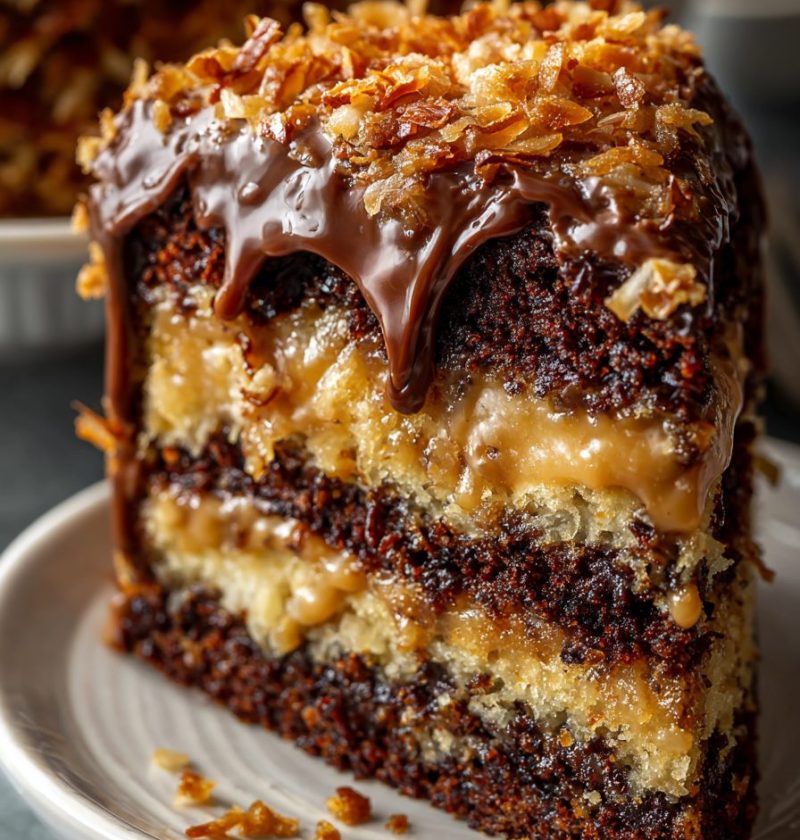
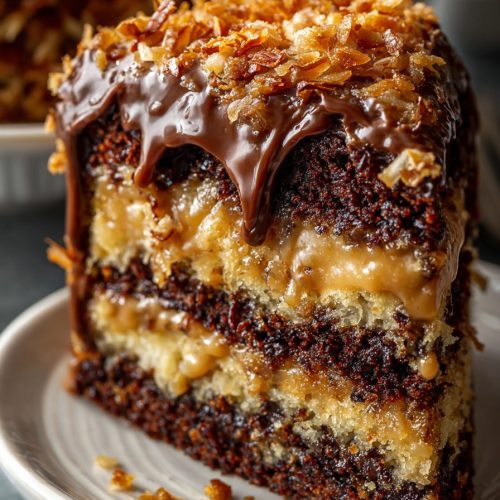
If you’re craving a rich, moist chocolate layer cake with luscious coconut pecan frosting, this German Chocolate Cake Recipe will taste like it came straight from a small-town bakery—only better, because you made it at home.
Meet Your New Favorite German Chocolate Cake
Let me explain why this cake is such a keeper.
Despite the name, a classic German chocolate cake is actually an American recipe, named after Samuel German, the chocolatier who created the mild, sweet baking chocolate used in the original cake. What makes an authentic German chocolate cake special isn’t just the chocolate layers; it’s that thick, buttery coconut pecan frosting that clings to every slice and makes people close their eyes when they take a bite.
This homemade German chocolate cake is a true celebration cake. It’s the kind of special occasion cake I bring out for big birthdays, holidays like Christmas and Easter, and those Sunday dinners when the whole family actually manages to sit at the same table. It’s rich, but it’s not heavy like some dense chocolate tortes; instead, you get a moist, tender crumb with a gentle, almost caramel-like chocolate flavor.
You know what I love? This recipe feels old-fashioned and cozy, but the method is straightforward enough that you can absolutely pull it off on a busy weekend. We’re talking a from scratch German chocolate cake that feels bakery-style, but still very doable for the average home baker with a hand mixer, a couple of cake pans, and a little patience.
If you’ve ever been disappointed by a dry or bland “German chocolate” cake from a store, stay with me. This version gives you:
- Real German chocolate in the batter
- A moist crumb that holds together but melts in your mouth
- A glossy, decadent coconut pecan frosting that’s cooked on the stove
It’s a classic German chocolate cake with a few smart, modern tweaks for consistency and flavor, plus some flexibility for different diets and tastes.
Let’s talk about why this one belongs in your regular celebration rotation.
Why You’ll Love This German Chocolate Cake Recipe
- Truly moist crumb – Buttermilk, egg yolks, and melted German chocolate team up for a soft, moist German chocolate cake that doesn’t dry out by day two.
- Authentic coconut pecan frosting – This is the real deal: a cooked, custard-style coconut pecan frosting that tastes like caramel, coconut candy, and toasted nuts in one spoonful.
- Bakery-style look at home – Tall layers, pretty frosting swirls, and a shiny coconut topping give you that bakery style German chocolate cake appearance without fancy tools.
- Perfect for celebrations – This rich chocolate cake makes a gorgeous birthday chocolate cake or holiday chocolate cake centerpiece for Thanksgiving, Christmas, Easter, or Father’s Day.
- Make-ahead friendly – Both the cake layers and the German chocolate frosting can be made ahead and assembled later, which is a lifesaver during busy weeks.
- Foolproof method – Clear, step-by-step directions with visual cues help newer bakers feel confident (and seasoned bakers work faster).
- Flexible flavors – You can add a chocolate buttercream around the sides, extra pecans, or a splash of coffee for a deeper, richer chocolate flavor.
- Crowd-pleasing sweetness – It’s sweet, yes, but balanced—more like a decadent chocolate dessert recipe than a sugar bomb.
- Simple pantry ingredients – Aside from the German chocolate bar and evaporated milk, most of the ingredients are basic baking staples you likely already have.
Ingredients for a Classic, Moist German Chocolate Cake
I’ll break this down into three parts: the cake layers, the traditional coconut pecan frosting, and an optional thin chocolate frosting for filling and decorating the sides. The chocolate frosting isn’t mandatory for a traditional German chocolate cake, but it makes everything look a little more “bakery fancy.”
Ingredients for the German Chocolate Cake Layers
- 4 oz (113 g) sweet baking German chocolate, chopped
- (Look for Baker’s or Ghirardelli German’s sweet chocolate; this is key for that authentic flavor.)
- 1/2 cup (120 ml) boiling water
- 1 cup (226 g) unsalted butter, softened
- (Room temperature butter should gently indent when pressed with a finger.)
- 2 cups (400 g) granulated sugar
- 4 large eggs, separated, at room temperature
- 2 teaspoons pure vanilla extract
- 2 1/2 cups (300 g) cake flour, spooned and leveled
- (You can use all-purpose flour, but cake flour gives a softer crumb.)
- 1 teaspoon baking soda
- 1/2 teaspoon fine sea salt
- 1 cup (240 ml) buttermilk, at room temperature
- (Full-fat buttermilk makes the cake extra tender. You can use a buttermilk substitute: 1 cup milk + 1 tablespoon vinegar or lemon juice, rest 5 minutes.)
Ingredients for Coconut Pecan Frosting (German Chocolate Frosting)
This is the classic coconut pecan frosting that makes German chocolate cake so iconic.
- 1 cup (240 ml) evaporated milk
- 1 cup (200 g) granulated sugar
- 3 large egg yolks
- 1/2 cup (113 g) unsalted butter, cut into pieces
- 1 teaspoon pure vanilla extract
- 1 1/3 cups (100 g) sweetened shredded coconut
- 1 cup (110 g) chopped pecans, lightly toasted if possible
- (Toasting pecans in a dry skillet over low heat for 5–7 minutes brings out a deeper nutty flavor.)
Optional Chocolate Frosting for Filling & Sides
If you like a more “finished” look with frosted sides and a little extra chocolate layer between the cake and coconut topping, make this simple chocolate buttercream:
- 1/2 cup (113 g) unsalted butter, softened
- 2 1/2 cups (300 g) powdered sugar, sifted
- 1/3 cup (30 g) unsweetened cocoa powder
- 1/4 teaspoon fine sea salt
- 3–4 tablespoons heavy cream or milk
- 1 teaspoon pure vanilla extract
Use whole milk or heavy cream for a creamier, richer frosting. You can swap Dutch-process cocoa for a darker, more intense chocolate flavor.

Step-by-Step Directions
Let’s walk through this German Chocolate Cake Recipe from start to finish. It looks long on paper, but the rhythm is simple: melt chocolate, mix batter, bake layers, cook frosting, assemble.
1. Prepare the pans and oven
- Preheat your oven to 350°F (175°C).
- Grease three 8-inch round cake pans with butter or nonstick spray.
- Line the bottoms with parchment rounds and lightly flour the sides.
- This extra parchment step helps keep the cake from sticking and makes your layers easier to flip out and stack.
2. Melt the German chocolate
- Place the chopped German chocolate in a heatproof bowl.
- Pour the boiling water over the chocolate and let it sit for 1–2 minutes.
- Stir until smooth and glossy, then set aside to cool slightly.
- It should be warm but not hot when you add it to the batter.
3. Cream butter, sugar, and yolks
- In a large mixing bowl, beat the softened butter and sugar with a hand mixer or stand mixer on medium-high speed for 3–4 minutes, until pale and fluffy.
- Add the egg yolks one at a time, beating well after each addition.
- Mix in the vanilla and the melted German chocolate until fully combined.
You’re building air and structure here, so don’t rush this part—this is the foundation of that light, tender crumb.
4. Whisk dry ingredients and add buttermilk
- In a separate bowl, whisk together the cake flour, baking soda, and salt.
- With the mixer on low, add the dry ingredients in three parts, alternating with the buttermilk (beginning and ending with the flour).
- So: flour – buttermilk – flour – buttermilk – flour.
- Mix until just combined and no dry flour pockets remain.
- Overmixing here can make the cake tough, so stop as soon as the batter looks smooth.
5. Beat egg whites and fold in
- In a clean bowl, beat the egg whites on medium-high speed until stiff peaks form.
- The whites should stand up straight when you lift the beaters.
- Gently fold the beaten egg whites into the batter in two additions, using a spatula and light motions.
- This step makes the cake lighter and helps it bake up tall and soft.
6. Bake the cake layers
- Divide the batter evenly among the three prepared pans—about 2 1/2 to 3 cups of batter per pan.
- Smooth the tops with an offset spatula or the back of a spoon.
- Bake for 25–30 minutes, or until a toothpick inserted in the center comes out clean or with a few moist crumbs.
- Let the cakes cool in the pans on a wire rack for 10–15 minutes.
- Run a knife around the edges, then flip the cakes out onto cooling racks, remove parchment, and let them cool completely.
- The layers must be fully cool before frosting, or the coconut pecan frosting will slide right off.
7. Cook the coconut pecan frosting
While the cakes are cooling, make the German chocolate frosting.
- In a medium Saucepan, whisk together the evaporated milk, sugar, and egg yolks until smooth.
- Add the butter pieces and cook over medium heat, stirring constantly with a spatula or wooden spoon.
- Continue cooking and stirring for 8–12 minutes, until the mixture thickens and coats the back of a spoon.
- You’re looking for a thick, pudding-like consistency; it will thicken more as it cools.
- Remove from heat and stir in the vanilla, shredded coconut, and chopped pecans.
- Transfer the frosting to a bowl and let it cool to room temperature, stirring now and then.
- If you’re in a hurry, you can cool it faster by setting the bowl over an ice bath, but keep stirring so it stays smooth.
8. Make the optional chocolate frosting
If you’re frosting the sides or adding a chocolate layer under the coconut topping:
- In a mixing bowl, beat the softened butter on medium speed until creamy.
- Add the powdered sugar, cocoa powder, and salt, and mix on low until combined.
- Add 3 tablespoons cream or milk and the vanilla; beat on medium-high for 2–3 minutes until light and fluffy.
- If the frosting is too thick, add the remaining tablespoon of cream; if it’s too thin, add a bit more powdered sugar.
9. Assemble the cake
This is the fun part—don’t worry if it’s not picture-perfect. Half the charm of a homemade German chocolate cake is that it looks homemade.
- Place one cake layer on your serving plate or cake stand.
- If using chocolate frosting, spread a thin layer over the top.
- Spoon about 3/4 to 1 cup of the coconut pecan frosting over the layer and spread almost to the edges.
- Repeat with the second layer: cake, optional chocolate frosting, coconut pecan frosting.
- Place the final cake layer on top.
- Spread any remaining chocolate frosting over the sides of the cake, if using, and smooth it out.
- Pile the remaining coconut pecan frosting on top of the cake, spreading to the edges and swirling with the back of a spoon.
If you want a “finished” bakery look, you can press extra chopped pecans around the bottom edge of the sides. It looks fancy with almost no extra effort.
Servings & Timing
- Yield: 12–16 generous slices
- Prep Time: 35–45 minutes (mixing batter, cooking frosting, basic prep)
- Bake Time: 25–30 minutes
- Cooling & Assembly Time: 1 1/2–2 hours (cooling layers and frosting, then stacking)
- Total Time: About 3–3 1/2 hours, much of it hands-off cooling time
This German Chocolate Cake Recipe is perfect for making ahead. I usually bake the layers the day before, wrap them well, then make the frosting and assemble the next day. It spreads out the work and makes entertaining so much easier.
Easy Variations and Twists
- Extra-chocolate version: Add 1–2 teaspoons of espresso powder to the cake batter to deepen the chocolate flavor without making it taste like coffee.
- Nut-free German chocolate cake: Skip the pecans and use toasted unsweetened coconut or toasted Pumpkin seeds for crunch.
- Gluten-free twist: Use a 1:1 gluten-free baking flour blend labeled for cakes; keep an eye on bake time, as gluten-free layers can brown a bit faster.
- Smaller batch cake: Bake the recipe in two 9-inch pans for slightly thinner layers and adjust the baking time down by 3–5 minutes.
- Sheet cake version: Pour the batter into a greased 9×13-inch pan and bake 35–40 minutes; spread the coconut pecan frosting over the top once cool.
- Lighter frosting choice: If you’re not a huge coconut fan, use chocolate buttercream between layers and add a thin layer of coconut pecan frosting only on top.
How to Store, Freeze, and Reheat This Cake
A rich, traditional German chocolate cake keeps surprisingly well, which is great if you’re feeding a smaller group or like a slice with coffee over several days (guilty).
Room temperature
- If your kitchen is cool, the assembled cake can sit at room temperature for up to 24 hours, lightly covered with a cake dome or loose foil.
- This helps keep the texture soft and the flavors mellow and blend.
Refrigerator
- After the first day, store covered in the refrigerator for up to 4–5 days.
- Let slices sit at room temperature for 20–30 minutes before serving so the frosting softens and the chocolate flavor blooms again.
Freezer
- You can freeze un-frosted cake layers for up to 2 months: wrap each cooled layer tightly in plastic wrap, then in foil, and label with the date.
- The coconut pecan frosting also freezes fairly well for about 1 month; thaw it in the fridge overnight, then let it come to room temp and stir well before using.
- I don’t suggest freezing a fully assembled cake unless you’re very comfortable working with frozen baked goods; the texture of the frosting is a little nicer when it hasn’t been frozen as a whole.
Make-ahead tips
- Day 1: Bake cake layers, cool completely, wrap, and refrigerate.
- Day 2: Make coconut pecan frosting and chocolate frosting (if using), then assemble.
- This schedule works beautifully for holidays when you’re juggling side dishes, turkey, ham, or any other main course.
Notes from My Kitchen
After making some version of this German chocolate cake recipe for over 25 years, here’s what I’ve learned:
- Don’t skip the egg white step. Folding in beaten egg whites feels old-fashioned, but it truly gives this classic German chocolate cake its lovely lightness.
- Toast the pecans. That 5–7 minutes of toasting makes the whole cake taste more “grown-up” and complex. You’ll smell when they’re ready—nutty and fragrant, not burnt.
- Use real German chocolate. Regular semi-sweet chocolate will work in a pinch, but you won’t get the exact nostalgic flavor of an authentic German chocolate cake.
- Watch the frosting closely. The coconut pecan frosting can go from perfect to scrambled if you walk away. Stir gently and often; once it coats the back of your spoon, pull it from the heat.
- Level the layers if you like. If your layers dome a bit, you can trim the tops with a serrated knife. I usually save those trimmings as a baker’s treat with a little leftover frosting.
- Don’t frost a warm cake. I know it’s tempting when you’re in a hurry, but warm layers will melt and thin out the frosting, and things start sliding around like a landslide.
And one more thing: this is a decadent chocolate cake. It’s not a “light dessert,” and it’s not trying to be. If you serve smaller slices with fresh berries or a little unsweetened whipped cream, it feels very balanced and satisfying.
German Chocolate Cake Recipe FAQs
Can I make this German chocolate cake recipe without German chocolate?
Yes, you can use semi-sweet chocolate instead, but the flavor will be a bit stronger and less classic; add an extra tablespoon of sugar to the batter if you like a slightly sweeter taste.
Why is my German chocolate cake dry?
Most often, it’s from overbaking or using too much flour; be sure to spoon and level your flour rather than packing it, and check your cake a few minutes before the suggested time.
Can I use all-purpose flour instead of cake flour?
Yes, use the same amount by weight (300 g), and if you measure by cups, just be careful not to pack the flour; the cake will be very nice, just a touch less tender.
Is this coconut pecan frosting supposed to be thick?
Yes, it should be thick and scoopable, not runny; it will firm up as it cools, so if it seems a bit loose while warm, give it time and stir now and then.
Can I make this as a two-layer cake?
You can bake it in two 9-inch pans for slightly thicker layers; increase the bake time by a few minutes and check with a toothpick.
How do I toast pecans for German chocolate cake?
Place them in a dry skillet over medium-low heat, stirring often, for 5–7 minutes, until fragrant, or toast them in a 350°F oven on a baking sheet for 6–8 minutes.
Can I halve the recipe?
Yes, halve all the ingredients and bake in two 6-inch pans or a single 8-inch pan (you may need to reduce the bake time slightly).
Is this cake very sweet?
It is definitely a sweet cake—most traditional German chocolate cakes are—but the mild chocolate and nutty frosting keep it from feeling cloying when you slice it reasonably.
Wrapping Up
This German Chocolate Cake Recipe gives you everything you want in a special occasion dessert: tender chocolate layers, a nostalgic coconut pecan frosting, and that “wow” moment when you set it on the table. It’s a homemade German chocolate cake that tastes like it came from a beloved neighborhood bakery, but with all the comfort of something baked in your own oven.
If you make this cake, I’d love to hear how it turned out—tell me if you served it as a birthday chocolate cake, a holiday chocolate cake, or just because it was a Tuesday and you wanted something special. And if you’re as much of a chocolate lover as I am, try this alongside other chocolate layer cakes or sheet cakes in your baking rotation; your friends and family won’t complain.
German Chocolate Cake
Ingredients
- 4 oz sweet baking German chocolate chopped; such as Baker’s or Ghirardelli German’s sweet chocolate
- 1/2 cup boiling water
- 1 cup unsalted butter softened to room temperature
- 2 cups granulated sugar
- 4 large eggs separated, at room temperature
- 2 teaspoons pure vanilla extract
- 2 1/2 cups cake flour 300 g, spooned and leveled; all-purpose flour can be used by weight
- 1 teaspoon baking soda
- 1/2 teaspoon fine sea salt
- 1 cup buttermilk at room temperature; full-fat preferred
- 1 cup evaporated milk
- 1 cup granulated sugar for coconut pecan frosting
- 3 large egg yolks for coconut pecan frosting
- 1/2 cup unsalted butter cut into pieces, for coconut pecan frosting
- 1 teaspoon pure vanilla extract for coconut pecan frosting
- 1 1/3 cups sweetened shredded coconut
- 1 cup chopped pecans lightly toasted if possible
- 1/2 cup unsalted butter softened, for optional chocolate frosting
- 2 1/2 cups powdered sugar 300 g, sifted, for optional chocolate frosting
- 1/3 cup unsweetened cocoa powder Dutch-process may be used for deeper flavor
- 1/4 teaspoon fine sea salt for optional chocolate frosting
- 3–4 tablespoons heavy cream or milk for optional chocolate frosting
- 1 teaspoon pure vanilla extract for optional chocolate frosting
Instructions
- Preheat your oven to 350°F (175°C). Grease three 8-inch round cake pans with butter or nonstick spray. Line the bottoms with parchment rounds and lightly flour the sides.
- Place the chopped sweet baking German chocolate in a heatproof bowl. Pour the boiling water over the chocolate and let sit for 1–2 minutes, then stir until smooth and glossy. Set aside to cool until warm but not hot.
- In a large mixing bowl, beat the softened butter and 2 cups of granulated sugar with a hand mixer or stand mixer on medium-high speed for 3–4 minutes, until pale and fluffy. Add the 4 egg yolks one at a time, beating well after each addition. Mix in 2 teaspoons vanilla extract and the melted German chocolate until fully combined.
- In a separate bowl, whisk together the cake flour, baking soda, and 1/2 teaspoon fine sea salt. With the mixer on low, add the dry ingredients in three parts, alternating with the buttermilk (beginning and ending with the flour): flour, buttermilk, flour, buttermilk, flour. Mix just until no dry flour pockets remain.
- In a clean bowl, beat the 4 egg whites on medium-high speed until stiff peaks form. Gently fold the beaten egg whites into the batter in two additions using a spatula, taking care not to deflate them.
- Divide the batter evenly among the three prepared pans. Smooth the tops and bake for 25–30 minutes, or until a toothpick inserted in the center comes out clean or with a few moist crumbs. Cool the cakes in the pans on a wire rack for 10–15 minutes, then run a knife around the edges, invert onto racks, remove parchment, and cool completely.
- In a medium saucepan, whisk together the evaporated milk, 1 cup granulated sugar, and 3 egg yolks until smooth. Add 1/2 cup unsalted butter pieces and cook over medium heat, stirring constantly, for 8–12 minutes, until thickened and pudding-like and the mixture coats the back of a spoon. Remove from heat and stir in 1 teaspoon vanilla extract, shredded coconut, and chopped pecans. Transfer to a bowl and cool to room temperature, stirring occasionally.
- For frosted sides or an extra chocolate layer, beat 1/2 cup softened butter in a mixing bowl until creamy. Add powdered sugar, cocoa powder, and 1/4 teaspoon fine sea salt and mix on low until combined. Add 3 tablespoons cream or milk and 1 teaspoon vanilla, then beat on medium-high for 2–3 minutes until light and fluffy. Adjust consistency with a little more cream or powdered sugar as needed.
- Place one cooled cake layer on a serving plate or cake stand. If using chocolate frosting, spread a thin layer over the top. Spoon about 3/4 to 1 cup of coconut pecan frosting over the layer and spread almost to the edges. Repeat with the second layer: cake, optional chocolate frosting, coconut pecan frosting. Place the final cake layer on top. Frost the sides with remaining chocolate frosting, if using, then pile the remaining coconut pecan frosting on top, spreading to the edges and swirling decoratively.
- Serve at room temperature. The cake can sit lightly covered at room temperature for up to 24 hours. After that, refrigerate covered for up to 4–5 days, bringing slices to room temperature for 20–30 minutes before serving.