Would you like to save this?
Quiche Lorraine Recipe
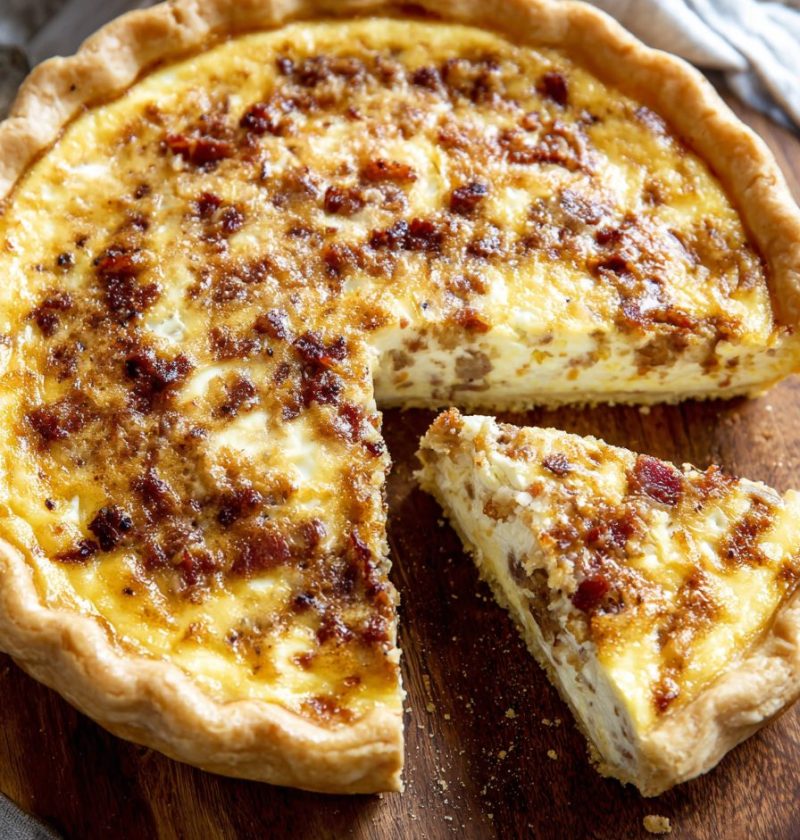
If you’re looking for a cozy, elegant, and surprisingly simple brunch dish, this Quiche Lorraine Recipe is hard to beat—golden flaky crust, smoky bacon, silky custard, and just the right amount of cheese in every bite.
A Classic French Favorite That Never Goes Out of Style
There’s something so comforting about a good Quiche Lorraine recipe. It’s one of those dishes that feels a little fancy, yet it’s made from familiar, everyday ingredients. A classic Quiche Lorraine comes from France and is traditionally made with eggs, cream, bacon, and pastry. Some versions include cheese, and while purists may raise an eyebrow, I’ll tell you right now—I love a little Gruyère in mine. It adds a nutty richness that makes this bacon quiche recipe especially satisfying.
I’ve been making some version of this homemade quiche Lorraine for years, especially in spring for Easter brunch, Mother’s Day lunches, and those Sunday mornings when everyone lingers around the table a little longer. It’s the kind of savory pie recipe that works beautifully for breakfast, brunch, lunch, or even a simple supper with a green salad. And if you’ve ever wanted a French quiche recipe that feels approachable, this is the one.
What makes it special? That contrast. The flaky pastry on the outside, the creamy egg custard in the center, the crisp bacon tucked into every slice. It’s basically a cheese and bacon quiche with old-school charm. Better still, it’s a solid make-ahead dish, which is a lifesaver when you’re feeding guests and don’t want to stand at the stove in your good blouse.
Why You’ll Love This Recipe
- Rich and comforting with a creamy, custardy filling.
- Perfect for brunch but versatile enough for lunch or dinner.
- Make-ahead friendly for holidays, showers, and weekend guests.
- Uses simple ingredients you can find at any U.S. grocery store.
- Easy to customize with different cheeses, herbs, or add-ins.
- Beautiful presentation with very little fuss.
- Freezer-friendly if you like planning ahead.
- Balanced texture—crisp crust, tender filling, crispy bacon.
- A reliable classic that feels timeless, not trendy.
- Beginner-friendly even if you’ve never made a quiche before.
Ingredients
Here’s everything you’ll need for this traditional French quiche with a few helpful notes along the way:
- 1 9-inch pie crust (homemade or refrigerated store-bought; I often use Pillsbury for ease)
- 8 slices thick-cut bacon, chopped
- 1 small yellow onion, finely diced
- 4 large eggs
- 1 1/2 cups heavy cream
- 1/2 cup whole milk
- 1 cup Gruyère cheese, shredded (Swiss cheese works well too)
- 1/4 teaspoon kosher salt
- 1/4 teaspoon black pepper
- 1/8 teaspoon ground nutmeg (optional, but lovely)
- 1 tablespoon unsalted butter (if needed for sautéing onions after cooking bacon)
- 1 teaspoon fresh thyme leaves or 1/2 teaspoon dried thyme (optional)
Ingredient tips:
- Pie crust: A buttery crust matters here. If using frozen, thaw it fully before fitting it into the pie plate.
- Bacon: Thick-cut bacon gives the best texture and flavor. Cook until crisp, because soft bacon can get chewy once baked.
- Onion: A small yellow onion adds sweetness. Shallots are a nice substitute if you want a slightly softer flavor.
- Eggs: Large eggs create the right custard ratio. Room-temperature eggs mix more smoothly.
- Cream and milk: Heavy cream gives that luxurious texture, while a little milk keeps it from feeling too heavy.
- Gruyère: This is the gold standard for a bacon and cheese tart, though Swiss, Emmental, or even white cheddar can work in a pinch.
- Nutmeg: Just a whisper adds warmth. Don’t overdo it.

Directions
-
Preheat the oven and prepare the crust.
Set your oven to 375°F. Fit the pie crust into a 9-inch pie plate, crimp the edges if you like, and chill it for 10 minutes. Then line it with parchment and pie weights or dried beans, and blind bake for 10 minutes. Remove the weights and bake for 5 more minutes until it looks just lightly set. This helps prevent a soggy bottom, and nobody wants that. -
Cook the bacon.
In a large skillet over medium heat, cook the chopped bacon until crisp, about 8 to 10 minutes. Transfer it to a paper towel-lined plate. Leave about 1 tablespoon of bacon drippings in the pan for flavor. -
Sauté the onion.
Add the diced onion to the skillet and cook for 4 to 5 minutes, until softened and lightly golden. If your bacon didn’t leave much fat, add a little butter. Let the onions cool slightly before adding them to the filling. -
Mix the custard.
In a medium bowl, whisk together the eggs, heavy cream, milk, salt, pepper, and nutmeg until smooth. You don’t need to beat in a lot of air—just whisk until fully combined. A gentle custard bakes more evenly. -
Assemble the quiche.
Sprinkle the bacon, onions, and shredded Gruyère over the pre-baked crust. If you’re using thyme, scatter that in too. Slowly pour the egg mixture over the top. Pour carefully so the fillings stay evenly distributed. -
Bake until just set.
Place the quiche on a baking sheet and bake for 35 to 40 minutes, or until the center is mostly set but still has the slightest jiggle. Think Jell-O, not soup. If the crust starts browning too quickly, loosely cover the edges with foil. -
Let it rest before slicing.
Remove the quiche from the oven and let it rest for 15 to 20 minutes. This step matters more than people think. The custard finishes setting as it cools, so your slices come out neat and lovely instead of sliding all over the plate. -
Serve warm or at room temperature.
This brunch quiche recipe is delicious warm, but honestly, it’s also wonderful at room temperature with a crisp green salad, fresh fruit, or roasted asparagus.
Servings & Timing
- Yield: 6 to 8 slices
- Prep Time: 20 minutes
- Cook Time: 50 to 55 minutes
- Rest Time: 15 to 20 minutes
- Total Time: About 1 hour 30 minutes
For meal planning, that means you can start this easy quiche recipe and have it on the table comfortably within a weekend morning.
Variations
If you love the base recipe but want to change it up a little, here are a few easy ideas:
- Spinach twist: Add 1 cup of wilted, well-squeezed spinach for a greener take.
- Mushroom version: Sauté 1 cup sliced mushrooms with the onions for an earthy flavor.
- Cheddar swap: Use sharp white cheddar instead of Gruyère for a bolder American-style finish.
- Crustless option: Skip the pie crust and bake the filling in a greased pie dish for a lower-carb breakfast quiche idea.
- Ham instead of bacon: Use diced ham for a softer, saltier variation.
- Mini quiches: Bake the filling in muffin tins with small rounds of pastry for party-friendly bites.
Storage & Reheating
This flaky pastry quiche stores beautifully, which is one reason I reach for it so often when hosting.
- Refrigerator: Store cooled quiche tightly covered in the fridge for up to 4 days.
- Freezer: Wrap individual slices or the whole quiche well and freeze for up to 2 months.
- Reheating: Warm slices in a 325°F oven for 10 to 15 minutes or microwave in short bursts, though the oven keeps the crust crisper.
- Thawing: Defrost overnight in the refrigerator before reheating for best texture.
- Make-ahead advice: You can blind bake the crust and cook the bacon and onions a day ahead. Assemble and bake the next day, or bake the whole quiche ahead and reheat before serving.
Notes
After testing this recipe a few different ways, here’s what I’ve learned. First, blind baking is worth the extra few minutes. I know, I know—it sounds fussy, but it makes a real difference with a creamy egg custard pie like this one. A crisp bottom crust is part of the charm.
Second, don’t overbake the filling. Quiche should be tender and silky, not rubbery. If the center has the tiniest wobble when you pull it from the oven, you’re in good shape. It will firm up as it rests.
Third, shred your own cheese if you can. Pre-shredded cheese is convenient, but it often contains anti-caking agents that keep it from melting quite as smoothly. For a savory egg tart with the best texture, freshly grated Gruyère really pays off.
And one more thing: let the bacon cool before adding it to the crust. Hot bacon can start cooking the eggs too soon, which sounds minor, but little details like that do matter.
FAQs
Can I make this Quiche Lorraine recipe the night before?
Yes, absolutely. Bake it fully, cool it, refrigerate it, and reheat gently in the oven the next day.
What’s the difference between Quiche Lorraine and regular quiche?
A traditional French quiche Lorraine is known for its egg-and-cream custard with bacon, usually in a pastry crust. Other quiches often include more vegetables, different meats, or broader cheese combinations.
Do I have to use Gruyère cheese?
No. Gruyère is classic and gives wonderful flavor, but Swiss, Emmental, or white cheddar all work nicely in this cheese and bacon quiche.
Why is my quiche watery?
Usually it’s from underbaking, overloading the filling with moisture, or not pre-baking the crust. If adding vegetables, cook them first and remove excess liquid.
Can I use half-and-half instead of cream?
You can, though the texture will be a little less rich. For the best homemade quiche Lorraine, I recommend keeping at least some heavy cream in the mix.
How do I know when the quiche is done?
The edges should be set, and the center should have a slight jiggle. If it sloshes, it needs more time; if it’s puffed up and stiff, it may be slightly overbaked.
Can I freeze leftover quiche?
Yes. Cool it completely, wrap it tightly, and freeze for up to 2 months. Individual slices are especially handy for quick breakfasts.
Is this served hot or cold?
Warm is lovely, but room temperature is also traditional and very tasty. Straight-from-the-fridge cold? It’s not my first choice, though some folks enjoy it that way.
A Few Serving Ideas to Round Out the Plate
If you’re serving this for brunch, pair it with a citrus salad, fresh berries, or simple roasted potatoes. For lunch, I love it with arugula tossed in lemon vinaigrette. It cuts the richness beautifully. And if you’re building out a full spread, add muffins, a fruit platter, and a pot of coffee—suddenly it feels like a little café lunch at home.
If your readers enjoy recipes like this, you might also link to related favorites such as a spinach feta quiche, a crustless vegetable frittata, or a simple mixed greens salad. Those internal links help readers keep browsing, and honestly, they help answer that constant question: “What should I serve with it?”
Conclusion
This Quiche Lorraine Recipe is everything a good classic should be—simple, rich, dependable, and full of flavor. With its flaky crust, smoky bacon, silky custard, and melty cheese, it’s the kind of dish that makes brunch feel special without making you work too hard. Give it a try, and if you do, I’d love to hear how it turned out for you—leave a comment, share your favorite variation, or browse a few more cozy brunch recipes while you’re here.