Would you like to save this?
Caramel Rolls Recipe (Soft, Sticky, and Absolutely Worth Waking Up For)
If you’ve been craving a warm, bakery-style Caramel Rolls Recipe with soft, pillowy dough and a shiny, sticky caramel glaze topping, pull up a chair—this one’s for you.
A Cozy Morning Caramel Rolls Recipe You’ll Make Again and Again
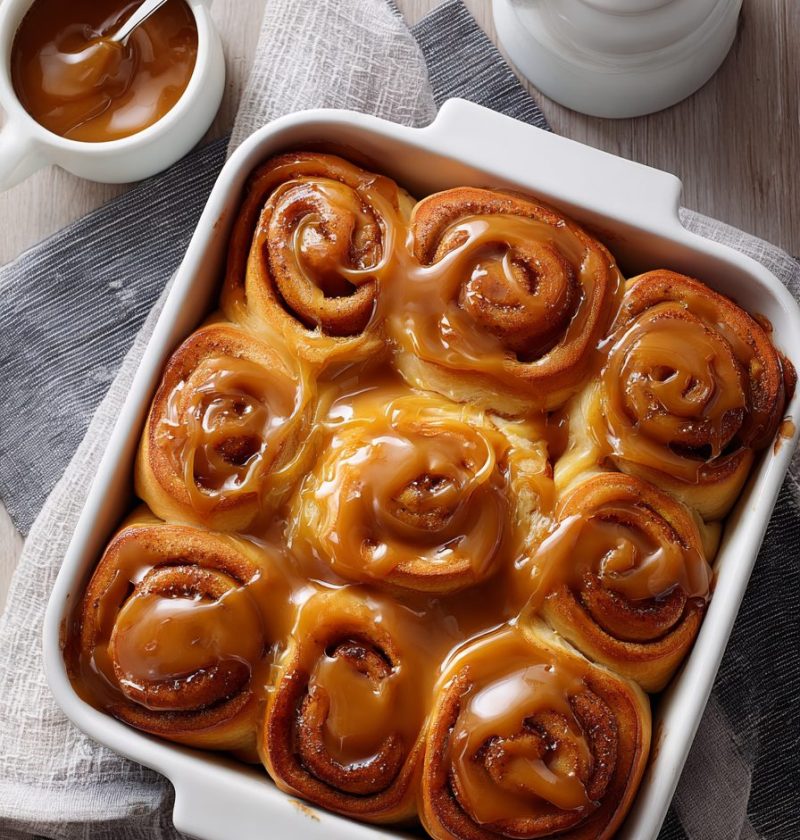
Let me explain what we’re making here. This Caramel Rolls Recipe gives you classic, old-fashioned yeast caramel rolls: tender swirls of cinnamon caramel rolls baked on a bed of buttery caramel sauce that turns into the most glorious sticky caramel rolls when you flip them out of the pan.
These are the homemade caramel rolls I make when the house is full—Christmas morning, lazy fall Sundays, or when my grown kids come home and “accidentally” wander into the kitchen the moment they smell yeast dough.
They’re soft caramel rolls made from a simple sweet roll recipe, with a rich caramel glaze topping that forms right in the pan while they bake—no fancy equipment, no pastry degree, just a little patience and a cozy kitchen.
Are they healthy? Let’s be honest: these are comfort-food breakfast rolls. But there are some thoughtful choices you can make—using real butter, whole milk, and warming spices—so every bite feels intentional and worth it. And you know what? Sometimes that’s exactly the kind of “healthy for the soul” we need.
Why You’ll Love This Caramel Rolls Recipe
You know how some recipes are “once-a-year” projects? This isn’t one of them. Here’s why this Caramel Rolls Recipe earns a regular spot in your rotation:
- Bakery-style texture at home – Soft, fluffy yeast caramel rolls with that classic pull-apart crumb.
- Rich, sticky caramel topping – No separate frosting needed; the caramel glaze topping is built right in.
- Make-ahead friendly – Prep the caramel roll dough the night before and bake fresh in the morning.
- Beginner-friendly yeast dough – Clear steps and cues, great if you’re still building confidence with yeast.
- Customizable sweetness – Easily adjust the sugar and cinnamon to fit your taste.
- Perfect for holidays and brunch – This is a showstopper breakfast roll recipe for guests.
- Freezer-friendly – Bake once, freeze some, and enjoy caramel rolls on busy weekdays.
- Smells like a hug – Your whole house will smell like a small-town bakery (in the best way).
Ingredients for the Best Homemade Caramel Rolls
Here’s everything you’ll need for these sticky caramel rolls. I’ll list it in three parts: dough, filling, and caramel topping.
For the Caramel Roll Dough:
- 1 cup whole milk, warmed to 105–115°F (warm but not hot to the touch)
- 2 ¼ teaspoons active dry yeast (1 standard packet, 7 g)
- ⅓ cup granulated sugar
- 2 large eggs, room temperature
- 6 tablespoons unsalted butter, melted and slightly cooled
- 1 teaspoon fine sea salt
- 3 ½–4 cups all-purpose flour (start with 3 ½ cups and add more as needed)
Tips:
- If your kitchen runs cool, set the eggs in warm water for 5–10 minutes to bring them to room temp.
- Use good-quality all-purpose flour; King Arthur or similar gives a nice, consistent rise.
For the Cinnamon Filling:
- ½ cup unsalted butter, very soft (not melted)
- 1 cup packed light brown sugar
- 2 tablespoons ground cinnamon
- ½ teaspoon ground nutmeg (optional, but lovely for fall)
- Pinch of salt
Tips:
- Soft butter spreads more evenly over the dough, giving more uniform swirls.
- If you like things less sweet, use ¾ cup brown sugar instead.
For the Caramel Glaze Topping:
- 1 cup packed light brown sugar
- ½ cup unsalted butter
- ½ cup heavy cream (or half-and-half in a pinch)
- ¼ teaspoon fine sea salt (use flaky salt on top after baking for a salted caramel vibe)
- 1 teaspoon pure vanilla extract
Tips:
- Heavy cream gives the richest caramel; if you use milk, the caramel will be a bit thinner.
- Don’t skip the salt—it keeps the caramel from tasting flat.

Step-by-Step Directions (With Real-Life Tips)
1. Proof the yeast
Warm the milk to about 105–115°F—warm like bathwater, not hot. Pour it into a large mixing bowl (or the bowl of a stand mixer). Stir in the sugar and yeast. Let it sit for 5–10 minutes until the top looks foamy and creamy.
If it doesn’t foam, your yeast may be old or the milk was too hot or too cool; it’s worth starting over here because the dough won’t rise properly otherwise.
2. Mix the dough
Whisk in the eggs, melted butter, and salt until combined. Add 3 ½ cups of flour and stir with a wooden spoon (or use the dough hook on low speed) until you get a shaggy, sticky dough.
If the dough is still very wet and clinging heavily to the bowl, add more flour 2 tablespoons at a time. You’re aiming for a soft, slightly tacky dough that pulls away from the sides but gently sticks to your finger.
3. Knead until smooth and elastic
Turn the dough out onto a lightly floured surface, or keep it in the mixer with the dough hook. Knead for 6–8 minutes by hand or about 5–6 minutes on medium-low speed.
You’ll know you’re there when the dough feels smooth, stretchy, and just a little springy. If you stretch a small piece between your fingers, it should thin out without tearing right away (this is called the “windowpane” test—nothing fancy, just a clue that the gluten is doing its job).
4. First rise
Form the dough into a ball and place it in a lightly greased bowl, turning once to coat. Cover with a clean kitchen towel or plastic wrap.
Let it rise in a warm, draft-free spot for 1–1 ½ hours, or until doubled in size. A slightly warm (but turned off) oven or a sunny corner of the counter works well.
If my house is chilly, I sometimes set the bowl on a heating pad on low—very cozy for the dough.
5. Make the caramel glaze topping
While the dough rises, prepare the caramel for the bottom of the pan (which will become the top of the rolls).
In a small saucepan over medium heat, combine brown sugar, butter, and heavy cream. Stir gently as it melts and comes together. Bring to a gentle simmer and cook for 2–3 minutes, stirring, until it’s smooth and slightly thickened. Remove from heat and stir in salt and vanilla.
Pour the caramel into a greased 9×13-inch baking pan, tilting the pan so it coats the bottom evenly. Set aside to cool slightly.
6. Prepare the cinnamon filling
In a small bowl, mix the soft butter, brown sugar, cinnamon, nutmeg (if using), and a pinch of salt until it forms a paste. It should be easily spreadable.
7. Roll out the dough
Once the dough has doubled, gently punch it down to release extra air. Turn it out onto a lightly floured surface.
Roll it into a rectangle about 12×18 inches. It doesn’t have to be perfect—just aim for even thickness, about ¼ inch. If it keeps springing back, let it rest for 5 minutes and roll again.
8. Add the filling and roll it up
Spread the cinnamon filling evenly over the dough, leaving about ½ inch border on one long edge so the roll can seal.
Starting from the long edge opposite the clean border, roll the dough up into a tight log. Try to keep the log even so you don’t get skinny end rolls (though honestly, those crunchy ones are some people’s favorite).
9. Slice the rolls
Using a sharp serrated knife or unflavored dental floss, cut the log into 12 even rolls (about 1 ½ inches thick). Floss works beautifully—slide it under the log, cross the ends over the top, and pull to slice cleanly.
Place the rolls cut side down into the caramel-lined pan. They’ll look spaced out, and that’s good; they need room to rise.
10. Second rise
Cover the pan loosely and let the rolls rise again for 30–45 minutes, or until puffy and touching.
For an overnight version, cover tightly with plastic wrap and refrigerate up to 12–14 hours. In the morning, let them sit at room temperature for 30–45 minutes before baking.
11. Bake
Preheat your oven to 350°F (175°C). Bake the rolls for 25–30 minutes, or until they’re golden on top and the centers read about 190°F on an instant-read thermometer.
If the tops are browning too quickly but the centers aren’t done, tent the pan loosely with foil for the last 5–10 minutes.
12. Flip and serve (the fun part!)
Let the rolls cool in the pan for about 5 minutes—no longer, or the caramel can start to stick. Place a large rimmed baking sheet or serving platter upside down over the pan. Carefully (using oven mitts) flip the whole thing over in one smooth motion.
Lift off the pan and let the caramel cascade down over the rolls. It’s a little dramatic, a little messy, and completely worth it. Serve warm.
Servings & Timing
- Yield: 12 large caramel rolls
- Prep Time: 30–40 minutes (active)
- Rise Time: 1 ½–2 hours (plus optional overnight chill)
- Bake Time: 25–30 minutes
- Total Time: About 3 hours same-day, or mostly hands-off if doing the overnight method
Fun Variations to Try
You know what? Once you’ve made these once, you’ll probably start playing around with them. Here are some ideas:
- Pecan Sticky Caramel Rolls – Sprinkle 1–1 ½ cups chopped toasted pecans over the caramel in the pan before adding the rolls.
- Salted Caramel Rolls – Finish the baked rolls with a tiny sprinkle of flaky sea salt for a sweet-salty contrast.
- Apple Cinnamon Caramel Rolls – Add 1–1 ½ cups finely chopped, peeled apple over the cinnamon filling before rolling.
- Maple Caramel Rolls – Swap half the brown sugar in the caramel with real maple syrup and reduce the cream by 2 tablespoons.
- Lighter Sweet Rolls – Use half whole-wheat flour (and a touch more liquid) in the dough for a heartier breakfast roll.
- Glazed Cinnamon Caramel Rolls – Drizzle with a simple powdered sugar and milk glaze after baking if you want extra sweetness and a pretty finish.
Storage, Freezing & Reheating Tips
They’re best warm and fresh, but life gets busy, so here’s how I handle leftovers:
- Room temperature: Store cooled rolls in an airtight container at room temp for up to 2 days.
- Refrigerator: For longer storage, refrigerate up to 5 days; the caramel firms up but softens again when warmed.
- Freezer (baked): Wrap individual rolls tightly in plastic wrap and place in a freezer bag; freeze up to 2 months. Thaw overnight in the fridge or at room temp for a couple of hours.
- Freezer (unbaked): After shaping and placing in the pan over cooled caramel, cover well and freeze. Thaw overnight in the fridge, then let rise at room temperature until puffy before baking.
Reheating:
- Microwave a roll on a microwave-safe plate for 20–30 seconds until warm and gooey.
- Or reheat covered with foil in a 300°F oven for 10–15 minutes to refresh a whole pan.
For make-ahead brunch, I like to assemble the rolls the night before, refrigerate, then bake fresh in the morning. Coffee, pajamas, warm sticky caramel rolls—no complaints from anyone.
Notes From My Kitchen (Little Things That Make a Big Difference)
- Yeast confidence: Active dry yeast likes warmth and a bit of sugar. If you’re nervous, use a thermometer and watch for that foamy top—no foam, no go.
- Soft dough = soft rolls: Resist packing in too much flour. A slightly sticky dough gives you those tender, bakery-style homemade caramel rolls.
- Even baking: Spacing the rolls evenly and not overcrowding the pan helps them rise up instead of just out.
- Flavor layering: That pinch of nutmeg and salt in the filling keeps the sweetness interesting, not one-note.
- Caramel timing: Don’t let the caramel sit in the pan for hours before adding the rolls; if it firms up too much, it won’t soak the rolls as nicely (if it does, warm the pan briefly in a low oven to soften it).
- Flipping the pan: Place a towel underneath your serving tray for extra grip—and breathe. It’s one of those “looks harder than it is” moments.
FAQs About This Caramel Rolls Recipe
1. Can I use instant yeast instead of active dry yeast?
Yes. Use the same amount of instant yeast and skip the proofing step; mix it straight with the flour, then add warm milk and other dough ingredients.
2. My dough didn’t rise—what went wrong?
Usually it’s either old yeast or milk that was too hot or too cool; also make sure your kitchen isn’t too cold and give the dough extra time if needed.
3. How sticky should the caramel be after baking?
It should be pourable and glossy when you flip the pan—if it’s grainy or hard, it was likely cooked too long or baked a bit too hot.
4. Can I cut the sugar in this recipe?
You can slightly reduce the brown sugar in the filling and caramel (by about ¼ cup each), but much more and the texture and stickiness will suffer.
5. Can I make these caramel rolls without cinnamon?
Absolutely—just leave out the cinnamon and nutmeg for a simple brown sugar caramel roll, or add a little cardamom for a different twist.
6. What if I don’t have heavy cream for the caramel?
Half-and-half works well; whole milk can be used too, but the caramel will be thinner and a bit less rich.
7. Do I have to flip the rolls out of the pan?
You don’t have to, but flipping lets the caramel glaze the tops beautifully; if you leave them in the pan, spoon some caramel over each roll before serving.
8. Can I make smaller rolls instead of 12 big ones?
Yes—roll the dough slightly wider and slice into 16 smaller rolls; check for doneness a few minutes earlier since they’ll bake faster.
Wrapping It Up (And Passing You the Spatula)
These soft caramel rolls are the kind of breakfast roll recipe that turns an ordinary morning into a little celebration—pillowy yeast caramel rolls, ribbons of cinnamon, and a glossy caramel glaze topping that makes everyone “just have one more bite.”
If you try this Caramel Rolls Recipe, let me know how it goes—leave a comment, share a photo, or tell me what fun twist you added. And if you’re in the mood for more cozy baking, this recipe pairs beautifully with a simple quiche, fresh fruit, and a big pot of coffee for an easy brunch spread.
Caramel Rolls (Soft, Sticky Yeast Caramel Rolls)
Ingredients
- 1 cup whole milk warmed to 105–115°F
- 2 1/4 teaspoons active dry yeast 1 standard packet (7 g)
- 1/3 cup granulated sugar
- 2 large eggs room temperature
- 6 tablespoons unsalted butter melted and slightly cooled
- 1 teaspoon fine sea salt
- 3 1/2-4 cups all-purpose flour start with 3 1/2 cups and add more as needed
- 1/2 cup unsalted butter very soft, for filling
- 1 cup light brown sugar packed, for filling
- 2 tablespoons ground cinnamon
- 1/2 teaspoon ground nutmeg optional, for filling
- 1 pinch salt for filling
- 1 cup light brown sugar packed, for caramel topping
- 1/2 cup unsalted butter for caramel topping
- 1/2 cup heavy cream or half-and-half
- 1/4 teaspoon fine sea salt for caramel; plus flaky salt to finish if desired
- 1 teaspoon pure vanilla extract for caramel
Instructions
- Warm the milk to 105–115°F (warm but not hot). Add it to a large mixing bowl or the bowl of a stand mixer and stir in the granulated sugar and active dry yeast. Let sit for 5–10 minutes, until the mixture looks foamy and creamy on top. If it does not foam, discard and start again with fresh yeast and properly warmed milk.1 cup whole milk, 2 1/4 teaspoons active dry yeast, 1/3 cup granulated sugar
- Whisk the eggs, melted butter, and salt into the foamy yeast mixture until combined. Add 3 1/2 cups of the all-purpose flour and stir with a wooden spoon or use a dough hook on low speed until a shaggy, sticky dough forms. If the dough is still very wet and clinging heavily to the bowl, add more flour 2 tablespoons at a time. Aim for a soft, slightly tacky dough that pulls away from the sides but gently sticks to your finger.2 large eggs, 6 tablespoons unsalted butter, 1 teaspoon fine sea salt, 3 1/2-4 cups all-purpose flour
- Turn the dough out onto a lightly floured surface or keep it in the mixer with the dough hook. Knead by hand for 6–8 minutes or with the mixer on medium-low for 5–6 minutes, until smooth, stretchy, and slightly springy. A small piece of dough should stretch thin without tearing right away (windowpane stage).
- Form the dough into a ball and place in a lightly greased bowl, turning once to coat. Cover with a clean kitchen towel or plastic wrap and let rise in a warm, draft-free spot for 1–1 1/2 hours, or until doubled in size.
- While the dough rises, prepare the caramel. In a small saucepan over medium heat, combine the brown sugar, butter, and heavy cream for the caramel topping. Stir gently as it melts and comes together. Bring to a gentle simmer and cook for 2–3 minutes, stirring, until smooth and slightly thickened. Remove from the heat and stir in the salt and vanilla. Pour the caramel into a greased 9×13-inch baking pan, tilting the pan to coat the bottom evenly. Set aside to cool slightly.1 cup light brown sugar, 1/2 cup unsalted butter, 1/2 cup heavy cream, 1/4 teaspoon fine sea salt, 1 teaspoon pure vanilla extract
- In a small bowl, mix the very soft butter, brown sugar, cinnamon, nutmeg (if using), and a pinch of salt until it forms a smooth, easily spreadable paste.1/2 cup unsalted butter, 1 cup light brown sugar, 2 tablespoons ground cinnamon, 1/2 teaspoon ground nutmeg, 1 pinch salt
- Once the dough has doubled, gently punch it down to release excess air and turn it out onto a lightly floured surface. Roll into a rectangle about 12×18 inches and roughly 1/4 inch thick. If the dough springs back, let it rest for 5 minutes and roll again.
- Spread the cinnamon filling evenly over the dough, leaving about a 1/2-inch border along one long edge so you can seal the roll. Starting from the opposite long edge, roll the dough into a tight, even log.
- Using a sharp serrated knife or unflavored dental floss, slice the log into 12 even rolls, about 1 1/2 inches thick. Place the rolls cut side down onto the caramel-lined pan, spacing them evenly. They should have room to expand during the second rise.
- Cover the pan loosely and let the rolls rise for 30–45 minutes, or until puffy and touching. For an overnight version, cover tightly with plastic wrap and refrigerate for up to 12–14 hours. In the morning, let the rolls sit at room temperature for 30–45 minutes before baking.
- Preheat the oven to 350°F (175°C). Bake the rolls for 25–30 minutes, or until golden brown on top and the centers register about 190°F on an instant-read thermometer. If the tops brown too quickly, tent the pan loosely with foil for the last 5–10 minutes of baking.
- Let the rolls cool in the pan for about 5 minutes. Place a large rimmed baking sheet or serving platter upside down over the pan. Using oven mitts, carefully flip the pan and platter together in one motion. Lift off the pan, allowing the caramel to cascade over the rolls. Serve warm; sprinkle with flaky sea salt if you like a salted caramel finish.