Would you like to save this?
Bicol Express Recipe (Creamy, Spicy, and Comforting Filipino Pork Stew)
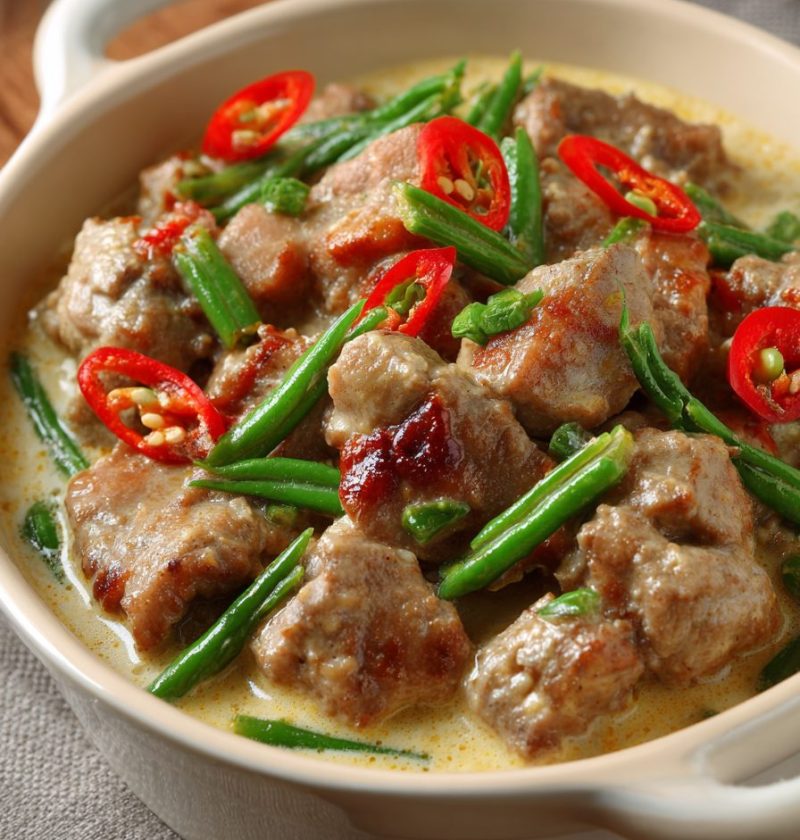
If you love bold flavors and creamy comfort food, this Bicol Express Recipe—a spicy pork stew simmered in rich coconut milk—will warm you from the inside out.

What Is Bicol Express – And Why Everyone Falls For It
Bicol Express is a beloved Filipino coconut milk dish made with tender pork, lots of chilies, and a silky coconut sauce that’s both creamy and fiery. It’s named after the Bicol region in the Philippines, famous for its love of chili and coconut, and it’s exactly what you’d expect from a Bicolano pork dish: rich, spicy, and absolutely crave-worthy over a big bowl of hot Rice.
As a 50-year-old home cook who’s fed a hungry family for decades, I’m always drawn to recipes that feel like a hug but don’t keep me chained to the stove all day. This authentic Bicol Express checks all the boxes—simple, hearty, and a little dramatic with those bright red chilies floating on top.
What makes this Bicol Express Recipe special is how customizable it is. You can go heavy on the pork belly for a luscious, almost decadent stew, or lean things out a bit with shoulder or even a mix Of Pork and vegetables. You can push the heat level for spice-lovers or keep it more mellow without losing that classic flavor. And because it’s a one-pan Filipino spicy recipe, cleanup is easy, which my 50-year-old knees truly appreciate.
I love serving this on cool evenings, for casual weekend dinners, or when my grown kids drop by and “forget” to leave. It’s that kind of dish that makes people linger at the table, sneaking an extra spoonful of chili coconut pork sauce even after they’re “done.”
And yes—the focus here is flavor. But between the protein, the coconut milk, and the simple ingredient list, this pork in coconut milk is also straightforward, budget-friendly comfort food. No fancy equipment, no fussy steps, just a slow simmer and a little patience.
Why You’ll Love This Bicol Express Recipe
- Big flavor, simple ingredients – Everything is easy to find in most grocery stores or Asian markets.
- Customizable heat level – Make it mild, medium, or fiery without losing that traditional Bicol Express taste.
- Creamy and comforting – Coconut milk creates a luscious, restaurant-quality sauce with almost no effort.
- Weeknight-friendly – About 20 minutes of active prep; the rest is gentle simmering.
- Great for meal prep – The flavors deepen overnight, so it tastes even better the next day.
- Flexible protein – Use pork belly, shoulder, or a leaner cut, and I’ll share how to adjust so it still turns out flavorful.
- Perfect with rice – This hot chili pork stew was practically made to be spooned over steamed white rice or garlic fried rice.
- Easily adjustable for pork-free diets – I’ll share chicken, shrimp, and veggie variations that keep the soul of the dish.
Ingredients for Traditional Bicol Express
Let’s set you up for success. Here’s what you’ll need for this creamy spicy pork stew, plus some notes from my own kitchen testing.
Serves about 4–6, depending on appetite.
-
2 lbs (900 g) pork belly, cut into 1-inch cubes
- Tip: Pork belly is classic for a truly authentic Bicol Express—rich, tender, and flavorful.
- Substitute: Pork shoulder (Boston butt) if you want it a little leaner but still juicy. You can also do a 50/50 mix.
-
1 tablespoon neutral oil (canola, vegetable, or avocado oil)
- You won’t need much since pork belly renders its own fat.
-
1 medium onion, finely chopped
- Yellow or white onion both work; chop it small so it melts into the sauce.
-
6 cloves garlic, minced
- Don’t be shy here—garlic is key to that deep savory base.
-
1–1½ inches fresh ginger, peeled and minced (about 1 tablespoon)
- Ginger brightens the richness of the coconut milk and pork.
-
3–4 tablespoons shrimp paste (bagoong alamang)
- Use sautéed (cooked) shrimp paste if possible; it’s less raw-tasting and more balanced.
- If you’re new to shrimp paste, start with 3 tablespoons and taste before adding more.
-
2 cups (480 ml) coconut milk
- Full-fat canned coconut milk works best for a creamy, thick sauce.
- Look for brands like Aroy-D or Chaokoh for consistent quality.
-
1 cup (240 ml) coconut cream (or use more coconut milk if that’s what you have)
- Coconut cream makes this a richer, more luxurious pork belly in coconut milk.
- If using only coconut milk, simmer a bit longer to thicken.
-
8–10 green chilies (siling haba / long green chilies), sliced on the bias
- These give fragrance and gentle heat. Anaheim or jalapeño can stand in if you’re in the U.S. and can’t find Filipino chilies.
-
4–8 red bird’s eye chilies (siling labuyo), sliced
- These bring the real kick; adjust to your heat tolerance.
- If you’re spice-sensitive, start with 2–3, then add more at the end as needed.
-
1–1½ teaspoons fish sauce (or to taste)
- Adds depth and umami; you can use soy sauce if you can’t have fish.
-
½ teaspoon ground black pepper
-
1–2 teaspoons brown sugar (optional, to balance the heat and saltiness)
-
Salt, to taste
- Go easy at first—shrimp paste and fish sauce are salty, so taste as you go.
-
Optional garnish:
- Extra sliced chilies, chopped green onions, or a squeeze of calamansi or lime for brightness.
How to Make Bicol Express (Step-by-Step Directions)
You know what? Take a deep breath, put on some music, and let’s make the kitchen smell amazing.
-
Prep the pork and aromatics
Pat the pork belly dry with paper towels and cut it into evenly sized 1-inch cubes—this helps it cook evenly and brown nicely. Chop the onion, mince the garlic and ginger, and slice your chilies. Wear gloves if you’re sensitive to chili oils and avoid touching your face. -
Render the pork fat and brown the meat
Heat a large, heavy-bottomed pot or deep skillet over medium heat. Add the oil, then the pork belly pieces in a single layer, working in batches if needed. Let the pork render and lightly brown, stirring occasionally, for about 10–12 minutes. You want some golden edges, not deep frying. Spoon off excess fat if there’s a lot—leave about 1–2 tablespoons in the pan for flavor. -
Sauté the aromatics
Push the pork to one side of the pot or briefly transfer it to a plate. In the same pot with the rendered fat, add the chopped onion. Cook over medium heat for 3–4 minutes until soft and translucent. Add the garlic and ginger; sauté 1–2 minutes more, stirring often, until fragrant but not burnt. If anything starts to brown too quickly, lower the heat. -
Stir in the shrimp paste
Add the shrimp paste (bagoong) to the pot and cook for 2–3 minutes, stirring and pressing it into the aromatics. This step mellows the sharpness of the shrimp paste and wakes up its flavor. The mixture will smell strong at first—don’t worry, it transforms once the coconut milk goes in. -
Add the pork back and combine
Return any pork (and juices) to the pot if you removed it. Stir well so the pork is coated with the aromatics and shrimp paste mixture. Cook together for another 2–3 minutes to let the flavors start mingling. -
Pour in the coconut milk and bring to a gentle simmer
Pour in the coconut milk and stir, scraping up any browned bits from the bottom of the pan (that’s flavor!). Bring the mixture to a gentle simmer over medium heat; avoid a hard boil, which can cause the coconut milk to separate. Once it’s simmering, reduce the heat to medium-low. -
Add the chilies and seasonings
Stir in the green chilies and about half of the red bird’s eye chilies. Add black pepper and a splash of fish sauce (start with 1 teaspoon). If you’re using a little sugar to balance, add 1 teaspoon now. Simmer uncovered for 20–25 minutes, stirring occasionally, until the pork is tender and the sauce is starting to thicken. -
Finish with coconut cream and adjust
Pour in the coconut cream and stir well. Continue to simmer for another 10–15 minutes, or until the sauce is thick, glossy, and clinging to the pork. Taste and adjust: more fish sauce for salt, more chilies for heat, a pinch more brown sugar if it feels too sharp or salty. If the sauce seems too thick, add a splash of water or extra coconut milk; if it’s too thin, simmer a bit longer. -
Rest and garnish
Turn off the heat and let the Bicol Express rest for about 5 minutes—this helps the sauce settle and thicken slightly more. Garnish with extra sliced chilies or green onions before serving, if you like. -
Serve hot over rice
Serve your traditional Bicol Express hot over steamed white rice, garlic fried rice, or even cauliflower rice if you’re going low-carb. Spoon plenty of that creamy, spicy coconut sauce on top—that’s the best part.
Servings & Timing
- Yield: Serves 4–6 people
- Prep Time: 20 minutes (including chopping and trimming)
- Cook Time: 45–55 minutes (mostly hands-off simmering)
- Total Time: About 1 hour–1 hour 15 minutes
I find that giving the dish a brief 5–10 minute rest before serving makes the texture of the sauce even nicer, so factor that into your timing if you’re serving guests.
Fun Variations on Bicol Express
This classic Filipino coconut milk dish is surprisingly flexible. Try one of these twists when you want to mix it up:
- Chicken Bicol Express – Use boneless, skinless chicken thighs instead of pork and reduce simmering time to about 25–30 minutes.
- Seafood Bicol Express – Add shrimp and squid in the last 8–10 minutes of cooking, simmering just until tender.
- Vegetable Bicol Express – Swap the pork for firm tofu, eggplant, and green beans; sauté tofu until golden first for better texture.
- Lighter Bicol Express – Use pork shoulder, skim off extra fat, and use mostly coconut milk with just a splash of coconut cream.
- Extra-smoky Bicol Express – Add a small piece of smoked fish (tinapa) or a few drops of liquid smoke while simmering for a deeper flavor.
- Keto-friendly Bicol Express – Serve over cauliflower rice and skip the sugar; this is naturally a great low-carb, high-fat dish.
Storage, Reheating, and Make-Ahead Tips
One of my favorite things about this spicy pork stew is that it tastes even better the next day. The flavors settle, the sauce thickens, and the heat mellows just a bit.
- Fridge:
- Store cooled Bicol Express in an airtight container for up to 3–4 days.
- Freezer:
- Freeze in meal-sized portions for up to 2 months. Coconut-based dishes freeze quite well—just stir after reheating if it looks slightly separated.
- Reheating:
- Reheat gently on the stovetop over low to medium-low heat, adding a splash of water or coconut milk if the sauce has thickened too much.
- You can also microwave in short bursts, stirring in between, until hot.
- Make-ahead:
- This is an excellent make-ahead party dish. Cook it a day in advance, chill overnight, and reheat before serving. Taste and adjust seasoning after reheating—you might want a bit more fish sauce or fresh chilies to brighten the flavor.
Notes From My Kitchen (What I Learned Testing This Recipe)
- Heat builds over time – When you first taste the sauce, it might seem moderate, but give it a minute; the heat creeps up. That’s why I like to add bird’s eye chilies in stages.
- Don’t rush the simmer – Pork belly loves gentle, patient cooking. If you try to cook it too quickly over high heat, it can get tough, and the coconut milk can split. Low and slow gives you tender meat and a silky sauce.
- Shrimp paste is strong but essential – The smell when you first add it can be intense, but once it simmers in coconut milk, it softens into a rich, savory background note. If you’re unsure, start with less and add more later.
- Adjust for your rice – If you’re serving with very plain white rice, a slightly saltier Bicol Express works beautifully. If your rice is garlicky or seasoned, keep the stew a little more balanced.
- Use good coconut milk – This makes a big difference. Cheaper brands can be watery. Look for coconut milk that feels thick when you shake the can and has minimal additives.
- Cut pork evenly – Uneven pieces mean some are overcooked while others are chewy. Take a few extra minutes with your knife; it pays off in every bite.
Frequently Asked Questions About Bicol Express
1. How spicy is this Bicol Express Recipe?
It’s medium to spicy as written, but you can make it milder by using fewer bird’s eye chilies and more long green chilies, or spicier by adding extra chilies toward the end.
2. Can I make Bicol Express without shrimp paste?
Yes, but it will lose some of its classic depth. If you need to skip shrimp paste, add extra fish sauce and a small amount of anchovy paste or miso to bring back some umami.
3. My coconut milk separated—what went wrong?
Coconut milk often splits if boiled too hard or if there’s a big temperature shock. Keep the heat at a gentle simmer and stir occasionally. Even if it separates a little, it’ll still taste good; just whisk it and keep cooking gently.
4. Can I use light coconut milk?
You can, but the sauce will be thinner and less creamy. If you use light coconut milk, I recommend adding at least some coconut cream or simmering longer to reduce and thicken the sauce.
5. What’s the best cut of pork for Bicol Express?
Pork belly is traditional and gives the richest flavor, but pork shoulder is a great option if you prefer something a bit less fatty. You can also mix the two.
6. How can I reduce the saltiness if I added too much shrimp paste or fish sauce?
Add a bit more coconut milk or plain water, then simmer to blend. A teaspoon of brown sugar and a squeeze of citrus (like lime or calamansi) can also help balance things out.
7. Is Bicol Express gluten-free?
Yes, it typically is, as long as your shrimp paste and fish sauce are gluten-free. Always check labels if you’re cooking for someone with celiac disease or gluten sensitivity.
8. Can I cook this in a slow cooker?
Yes—brown the pork and sauté the aromatics and shrimp paste on the stovetop first, then transfer everything (including coconut milk) to a slow cooker and cook on low for about 4–5 hours. Stir in coconut cream and chilies closer to the last hour so they stay vibrant.
Wrapping It Up: A Bowl of Comfort With a Kick
This Bicol Express Recipe brings together everything I love about home cooking: simple ingredients, big personality, and that cozy feeling when everyone reaches for a second helping. It’s rich but not fussy, familiar yet exciting, and it turns humble pork in coconut milk into a memorable Filipino spicy recipe you’ll come back to again and again.
If you make this Bicolano pork dish, I’d truly love to hear how it turned out—tell me how spicy you went and what you served it with. Leave a comment, rate the recipe, or bookmark it for your next family dinner. And if you enjoy bold, saucy dishes like this, you might like exploring other Filipino coconut recipes next—your rice bowl will thank you.
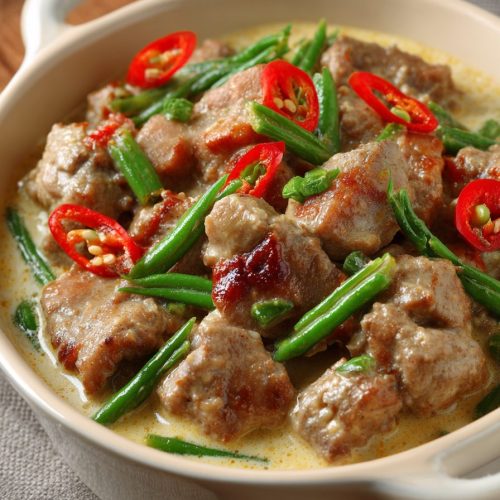
Bicol Express (Creamy Spicy Filipino Pork Stew)
Ingredients
- 2 lbs pork belly cut into 1-inch cubes; can substitute pork shoulder or a 50/50 mix
- 1 tablespoon neutral oil such as canola, vegetable, or avocado oil
- 1 medium onion finely chopped; yellow or white
- 6 cloves garlic minced
- 1 tablespoon fresh ginger 1–1½ inches, peeled and minced
- 3-4 tablespoons shrimp paste (bagoong alamang) preferably sautéed/cooked; start with 3 tbsp and adjust to taste
- 2 cups coconut milk full-fat canned for best creaminess
- 1 cup coconut cream or use additional coconut milk if needed
- 8-10 long green chilies (siling haba) sliced on the bias; Anaheim or jalapeño can substitute
- 4-8 red bird’s eye chilies (siling labuyo) sliced; adjust to your heat tolerance
- 1-1 1/2 teaspoons fish sauce or to taste; soy sauce can be used if avoiding fish
- 1/2 teaspoon ground black pepper
- 1-2 teaspoons brown sugar optional, to balance heat and saltiness
- salt to taste; go easy as shrimp paste and fish sauce are salty
- optional garnishes extra sliced chilies, chopped green onions, or a squeeze of calamansi or lime
Instructions
- Pat the pork belly dry with paper towels and cut into evenly sized 1-inch cubes. Finely chop the onion, mince the garlic and ginger, and slice the green and red chilies. Wear gloves if you are sensitive to chili oils and avoid touching your face.
- Heat a large heavy-bottomed pot or deep skillet over medium heat. Add the neutral oil, then add the pork belly pieces in a single layer, working in batches if necessary. Let the pork render and lightly brown, stirring occasionally, for about 10–12 minutes until you see golden edges. Spoon off excess fat if there is a lot, leaving about 1–2 tablespoons in the pan.
- Push the pork to one side of the pot or transfer it briefly to a plate. In the same pot with the rendered fat, add the chopped onion and cook over medium heat for 3–4 minutes until soft and translucent. Add the garlic and ginger and sauté for 1–2 minutes more, stirring often, until fragrant but not burnt. Lower the heat if anything browns too quickly.
- Add the shrimp paste (bagoong alamang) to the pot and cook for 2–3 minutes, stirring and pressing it into the aromatics. This mellows the sharpness of the shrimp paste and develops its flavor. It will smell strong at first but will balance once the coconut milk is added.
- Return the pork (and any accumulated juices) to the pot if you removed it. Stir well so the pork is coated with the aromatic-shrimp paste mixture. Cook together for another 2–3 minutes to start blending the flavors.
- Pour in the coconut milk and stir, scraping up any browned bits from the bottom of the pan. Bring to a gentle simmer over medium heat, avoiding a hard boil to prevent the coconut milk from separating. Once simmering, reduce the heat to medium-low.
- Stir in the long green chilies and about half of the red bird’s eye chilies. Add the ground black pepper, 1 teaspoon of fish sauce, and 1 teaspoon of brown sugar if using. Simmer uncovered for 20–25 minutes, stirring occasionally, until the pork is tender and the sauce begins to thicken.
- Pour in the coconut cream and stir well. Continue to simmer for another 10–15 minutes, or until the sauce is thick, glossy, and clings to the pork. Taste and adjust: add more fish sauce for salt, more chilies for heat, or a pinch of brown sugar if the flavors seem too sharp or salty. If the sauce is too thick, add a splash of water or extra coconut milk; if too thin, simmer a bit longer.
- Turn off the heat and let the Bicol Express rest for about 5 minutes to allow the sauce to settle and thicken slightly. Garnish with extra sliced chilies, chopped green onions, or a squeeze of calamansi or lime, if desired.
- Serve hot over steamed white rice, garlic fried rice, or cauliflower rice for a low-carb option. Spoon plenty of the creamy, spicy coconut sauce over the pork when serving.