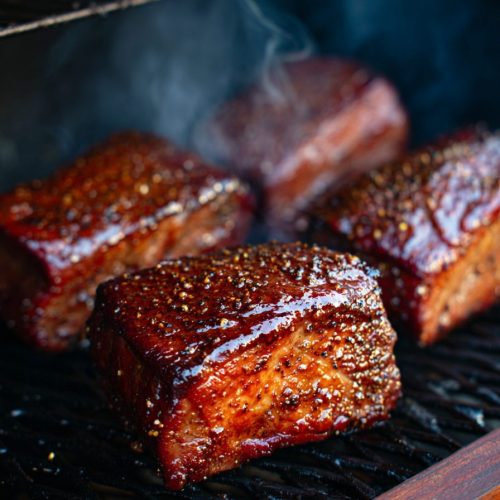
Pellet Smoker Pulled Pork (Smoked Pork Shoulder)
A beginner-friendly smoked pork shoulder made on a pellet smoker. Low and slow, mostly hands-off, and perfect for pulled pork sandwiches, tacos, nachos, or feeding a crowd on a weekend.
Ingredients
- 1 whole pork shoulder (Boston butt), 7–9 lbs look for good marbling; leave most of the fat cap intact
- 2 tablespoons kosher salt reduce slightly if using table salt
- 2 tablespoons coarse black pepper
- 3 tablespoons brown sugar packed; light or dark both work
- 2 tablespoons smoked paprika regular paprika can be used, but smoked adds flavor
- 1 tablespoon garlic powder
- 1 tablespoon onion powder
- 2 teaspoons ground mustard
- 1-2 teaspoons chili powder adjust to taste
- 1 teaspoon cayenne pepper optional, for heat
- 1 teaspoon ground cumin
- 2-3 tablespoons yellow mustard used as a binder; you won’t taste it
- 1/2 cup apple juice or apple cider for spritzing
- 1/4 cup apple cider vinegar optional; mix with apple juice for a tangier spritz
- 1 cup barbecue sauce your favorite brand, for serving or finishing
- 1/4 cup apple juice for optional finishing sauce
- 1 tablespoon Worcestershire sauce
- 1/2-1 teaspoon liquid smoke optional, for extra smokiness in the finishing sauce
- wood pellets for your smoker hickory, mesquite, applewood, or a blend
- buns, coleslaw, and pickles for serving, optional
Instructions
- Place the pork shoulder on a cutting board. Trim off any loose flaps of fat, but leave most of the fat cap intact so it can baste the meat during cooking. Pat the pork dry with paper towels.1 whole pork shoulder (Boston butt), 7–9 lbs
- Rub a thin, even layer of yellow mustard all over the pork shoulder so it looks glossy. In a small bowl, mix together the kosher salt, black pepper, brown sugar, smoked paprika, garlic powder, onion powder, ground mustard, chili powder, cayenne (if using), and cumin. Coat the pork generously with the rub, pressing it into the meat. Let the seasoned shoulder sit at room temperature for 20–30 minutes while you preheat the smoker, or wrap and refrigerate overnight for deeper flavor.1 whole pork shoulder (Boston butt), 7–9 lbs, 2 tablespoons kosher salt, 2 tablespoons coarse black pepper, 3 tablespoons brown sugar, 2 tablespoons smoked paprika, 1 tablespoon garlic powder, 1 tablespoon onion powder, 2 teaspoons ground mustard, 1-2 teaspoons chili powder, 1 teaspoon cayenne pepper, 1 teaspoon ground cumin, 2-3 tablespoons yellow mustard
- Fill the hopper of your pellet smoker with your chosen wood pellets (such as hickory, mesquite, applewood, or a blend). Set the smoker temperature to 225°F, close the lid, and let it preheat for 15–20 minutes until the temperature is stable. Clean the grates and lightly oil them with a high-heat oil to prevent sticking.wood pellets for your smoker
- Place the pork shoulder directly on the smoker grates, fat side up, in the center of the cooking area. Insert a meat probe into the thickest part of the shoulder, avoiding the bone. Close the lid and smoke at 225°F for about 4 hours without opening the smoker more than necessary.1 whole pork shoulder (Boston butt), 7–9 lbs
- After the first 2–3 hours of smoking, mix the apple juice (and apple cider vinegar if using) in a spray bottle. Lightly spritz the surface of the pork shoulder every hour to help keep the bark moist and build flavor. Continue smoking until the bark is a deep mahogany color and the internal temperature approaches the stall around 150–165°F.1/2 cup apple juice or apple cider, 1/4 cup apple cider vinegar
- When the internal temperature is around 160°F and the bark is dark and set, remove the pork from the smoker. Wrap it tightly in heavy-duty aluminum foil or peach butcher paper, making sure it is fully sealed. Return the wrapped shoulder to the smoker, seam side up, and continue cooking at 225–250°F until the internal temperature reaches 200–205°F.1 whole pork shoulder (Boston butt), 7–9 lbs
- When the pork reaches 200–205°F and a probe or skewer slides in with very little resistance (like soft butter), remove it from the smoker. Keep it wrapped and let it rest for at least 45–60 minutes in a cooler, or in a pan tented with foil on the counter, to allow the juices to redistribute.1 whole pork shoulder (Boston butt), 7–9 lbs
- Unwrap the rested pork shoulder, reserving any juices in the wrap. Transfer the meat to a large pan or cutting board. Use two forks or meat claws to pull the meat into shreds, discarding large pieces of fat and mixing the shredded meat with the collected juices for extra moisture and flavor.1 whole pork shoulder (Boston butt), 7–9 lbs
- For a saucier pulled pork, combine the barbecue sauce, 1/4 cup apple juice, Worcestershire sauce, and liquid smoke (if using) in a small saucepan. Warm over low heat, stirring until smooth and heated through. Toss some or all of the shredded pork with the sauce, or serve it on the side.1 cup barbecue sauce, 1/4 cup apple juice, 1 tablespoon Worcestershire sauce, 1/2-1 teaspoon liquid smoke
- Serve the smoked pulled pork on buns with coleslaw and pickles, or use it in tacos, nachos, or over rice. Leftovers keep well for meal prep and can be refrigerated or frozen.buns, coleslaw, and pickles
Notes
Yield: about 10–12 servings (more if used in tacos or sliders). Prep time: 20–30 minutes. Cook time: typically 8–12 hours at 225°F, plus 45–60 minutes resting. Use internal temperature and tenderness (probe should slide in like warm butter) as your main doneness cues. Wrap when the bark is a rich mahogany color to avoid a pale or overly dark crust. Store cooled pulled pork in the fridge up to 4 days or in the freezer up to 3 months, adding some cooking juices to keep it moist. Reheat gently on the stovetop, in the oven at 300°F, or in the microwave with a splash of liquid.
Love this recipe?Follow us at @Recipecs for more