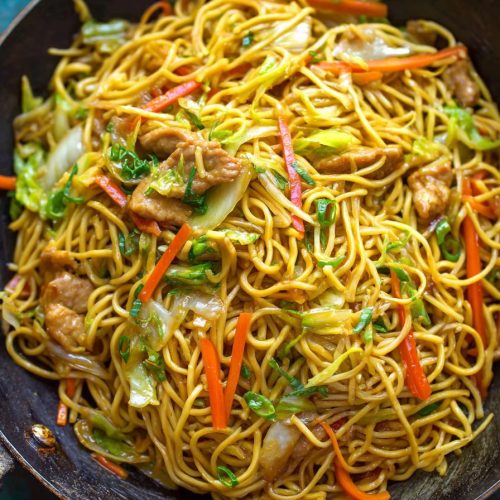
Panda Express Chow Mein (Copycat)
This Panda Express Chow Mein copycat recipe makes saucy, savory stir-fried noodles with tender cabbage, carrots, and onion in a light soy-based sauce. It tastes like takeout but is fresher, lighter, and ready in about 30 minutes.
Ingredients
- 14-16 oz chow mein noodles fresh or parboiled; can use yakisoba/stir fry noodles or 12 oz dry spaghetti cooked al dente
- 2 tbsp neutral oil such as canola, avocado, or vegetable oil
- 1 medium yellow onion thinly sliced (about 1 cup); white onion also works
- 2 cups green cabbage thinly sliced; Napa or regular green cabbage, finely shredded
- 1 cup carrots matchstick carrots or 1 large carrot, peeled and julienned
- 3 cloves garlic minced
- 2 green onions sliced, white and green parts
- 4 tbsp low-sodium soy sauce or regular soy sauce; use tamari for gluten-free
- 2 tbsp oyster sauce or vegetarian oyster sauce
- 2 tsp brown sugar light or dark
- 1 tsp sesame oil preferably toasted
- 1/4 tsp ground white pepper or black pepper
- 2-3 tbsp water or low-sodium vegetable broth to loosen the sauce and coat noodles
- 1-2 tsp fresh ginger minced, optional
- 1-2 tsp rice vinegar optional, for brightness at the end
- 1-2 tsp chili oil or sriracha optional, for heat
- extra water or broth as needed, if noodles look dry while stir-frying
Instructions
- If using fresh or parboiled chow mein or yakisoba noodles, gently separate them with your fingers. If they are stuck together, quickly rinse under warm water to loosen, then drain very well. If using dry noodles or spaghetti, cook according to package directions until just al dente (about 1 minute less than usual). Drain, rinse briefly under cold water to stop the cooking, and toss with about 1 teaspoon of oil to prevent clumping. For best stir-fry texture, spread the cooked noodles on a sheet pan to cool slightly while you prep the vegetables.14-16 oz chow mein noodles
- In a small bowl, whisk together the soy sauce, oyster sauce, brown sugar, sesame oil, ground white pepper, and 2–3 tablespoons of water or vegetable broth. Taste and adjust: add a pinch more sugar for sweetness or an extra teaspoon of oyster sauce for more umami. Set aside.4 tbsp low-sodium soy sauce, 2 tbsp oyster sauce, 2 tsp brown sugar, 1 tsp sesame oil, 1/4 tsp ground white pepper, 2-3 tbsp water or low-sodium vegetable broth
- Thinly slice the onion and cabbage, julienne or prepare matchstick carrots, mince the garlic (and ginger, if using), and slice the green onions. Place all vegetables and the sauce near the stove, as stir-fries cook quickly. Heat a large nonstick skillet or wok over medium-high heat. When hot, add the neutral oil and swirl to coat the pan.2 tbsp neutral oil, 1 medium yellow onion, 2 cups green cabbage, 1 cup carrots, 3 cloves garlic, 2 green onions, 1-2 tsp fresh ginger
- Add the sliced onion to the hot pan and cook for 2–3 minutes, stirring often, until softened and just turning golden at the edges. Stir in the garlic (and ginger, if using) and cook for about 30 seconds, just until fragrant. Add the shredded cabbage and carrots. Stir-fry for 3–5 minutes, until the cabbage is wilted but still slightly crisp and the carrots are tender-crisp. If the pan seems dry, add a tablespoon of water to create steam and help soften the vegetables.1 medium yellow onion, 2 cups green cabbage, 1 cup carrots, 3 cloves garlic, 1-2 tsp fresh ginger, 2-3 tbsp water or low-sodium vegetable broth
- Reduce the heat to medium. Add the prepared noodles to the pan with the vegetables. Using tongs or chopsticks, gently toss to combine, lifting and flipping rather than pressing down to avoid breaking the noodles. If any noodles are clumped together, carefully separate them as they warm.14-16 oz chow mein noodles
- Give the sauce a quick stir to redistribute the sugar, then pour it evenly over the noodles and vegetables. Toss for 2–4 minutes, until the noodles are heated through, evenly coated, and glossy light brown, like Panda Express chow mein. If the noodles look dry, add another tablespoon or two of water or broth and continue tossing until everything is well coated.4 tbsp low-sodium soy sauce, 2 tbsp oyster sauce, 2 tsp brown sugar, 1 tsp sesame oil, 1/4 tsp ground white pepper, 2-3 tbsp water or low-sodium vegetable broth, extra water or broth
- Turn off the heat. Stir in the sliced green onions, and if desired, a splash of rice vinegar for brightness and/or a drizzle of chili oil or sriracha for heat. Taste and adjust seasoning with more soy sauce for saltiness, a pinch of sugar for sweetness, a touch more sesame oil for aroma, or pepper for extra bite. Serve hot straight from the skillet or transfer to a serving dish.2 green onions, 1-2 tsp rice vinegar, 1-2 tsp chili oil or sriracha
Notes
SERVINGS & STORAGE: Makes about 4 main-dish or 6 side-dish servings. Cool leftovers completely and refrigerate in an airtight container for 3–4 days. Reheat on the stovetop with a splash of water or broth until hot, or microwave in a covered dish with a teaspoon or two of water. Freezing is possible for up to 1 month but will soften the noodles.
VARIATIONS: Add stir-fried chicken, beef, shrimp, or tofu for extra protein. For a veggie-loaded version, include snap peas, bell peppers, mushrooms, or baby bok choy. For lower carbs, replace half the noodles with extra shredded cabbage and bean sprouts. To make gluten-free, use tamari instead of soy sauce, a gluten-free oyster sauce or extra tamari, and gluten-free rice noodles or brown rice spaghetti.
TIPS: Do not overcook the noodles in the boiling step; slightly undercooked is ideal since they finish cooking in the pan. Use plenty of cabbage—it wilts down significantly and gives that classic Panda Express chow mein texture. Keep the heat at medium-high and stir frequently to achieve a light smoky edge without burning.
VARIATIONS: Add stir-fried chicken, beef, shrimp, or tofu for extra protein. For a veggie-loaded version, include snap peas, bell peppers, mushrooms, or baby bok choy. For lower carbs, replace half the noodles with extra shredded cabbage and bean sprouts. To make gluten-free, use tamari instead of soy sauce, a gluten-free oyster sauce or extra tamari, and gluten-free rice noodles or brown rice spaghetti.
TIPS: Do not overcook the noodles in the boiling step; slightly undercooked is ideal since they finish cooking in the pan. Use plenty of cabbage—it wilts down significantly and gives that classic Panda Express chow mein texture. Keep the heat at medium-high and stir frequently to achieve a light smoky edge without burning.
Nutrition
Calories: 400kcal
Love this recipe?Follow us at @Recipecs for more