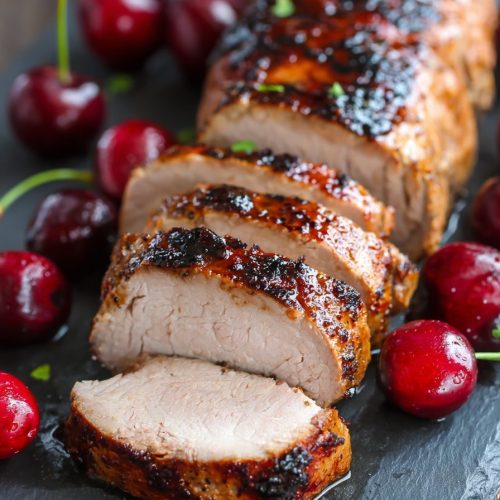
Cherry Pork Tenderloin
Cherry Pork Tenderloin is a tender, juicy roasted pork tenderloin wrapped in a glossy, sweet-and-savory cherry glaze. It layers flavor with a cherry marinade, a good sear, and a quick cherry sauce, and works with fresh or frozen cherries for a company-worthy yet weeknight-friendly dinner.
Ingredients
- 1.5-2 pounds pork tenderloin usually 2 smaller tenderloins, about 3/4–1 lb each; trimmed of excess fat and silver skin
- 1 1/2 teaspoons kosher salt use 1 teaspoon if using fine table salt
- 1 teaspoon black pepper freshly ground
- 1 teaspoon garlic powder
- 1 teaspoon dried thyme or Italian seasoning
- 2 tablespoons olive oil divided; or use avocado oil for searing
- 2 cups pitted cherries divided; 1 cup for marinade, 1 cup for sauce; fresh or frozen, halved or roughly chopped
- 3/4 cup low-sodium chicken broth divided; or vegetable broth
- 3-4 tablespoons balsamic vinegar divided; to taste
- 3-4 tablespoons pure maple syrup or honey divided; start with smaller amount and add to taste
- 2 cloves garlic minced, for marinade/sauce
- 1 teaspoon Dijon mustard
- 1 teaspoon fresh thyme leaves or 1/2 teaspoon dried thyme, for sauce
- 1 tablespoon unsalted butter for finishing sauce; use vegan butter if dairy-free
- 1 teaspoon cornstarch mixed with 2 teaspoons cold water; optional, for thickening the cherry sauce
- chopped fresh parsley or thyme optional, for garnish
- flaky sea salt optional, for finishing
Instructions
- Preheat your oven to 400°F (200°C). Pat the pork tenderloins very dry with paper towels. Trim any visible silver skin and excess fat using a small sharp knife, removing the thicker pieces.1.5-2 pounds pork tenderloin
- In a small bowl, mix together the kosher salt, black pepper, garlic powder, and dried thyme or Italian seasoning. Rub this seasoning mixture all over the pork tenderloins, pressing it gently into the surface. If possible, let the seasoned pork rest at room temperature for 15–20 minutes while you prepare the cherry marinade.1.5-2 pounds pork tenderloin, 1 1/2 teaspoons kosher salt, 1 teaspoon black pepper, 1 teaspoon garlic powder, 1 teaspoon dried thyme or Italian seasoning
- In a medium bowl, stir together 1 cup of the pitted cherries, 1/4 cup of the chicken broth, 2 tablespoons balsamic vinegar, 2 tablespoons maple syrup or honey, the minced garlic, Dijon mustard, and 1 tablespoon olive oil. The mixture will look loose and chunky. You may marinate the pork in this cherry mixture for up to 2 hours in the refrigerator, turning occasionally, or simply reserve it to spoon a little over the pork before roasting and to use as part of the sauce.2 tablespoons olive oil, 2 cups pitted cherries, 3/4 cup low-sodium chicken broth, 3-4 tablespoons balsamic vinegar, 3-4 tablespoons pure maple syrup or honey, 2 cloves garlic, 1 teaspoon Dijon mustard
- Heat the remaining 1 tablespoon olive oil in a large oven-safe skillet over medium-high heat. When the oil shimmers, add the pork tenderloins (let excess marinade drip off if marinated). Sear on all sides until well browned, about 2–3 minutes per side, 6–8 minutes total. You are building a crust, not cooking the pork through.1.5-2 pounds pork tenderloin, 2 tablespoons olive oil
- Turn off the heat. If you did not marinate the pork, spoon a few tablespoons of the cherry marinade over the top of the seared tenderloins. Transfer the skillet to the preheated 400°F (200°C) oven and roast for 12–18 minutes, depending on thickness. Begin checking at 12 minutes. The pork is done when an instant-read thermometer in the thickest part registers 145°F (63°C). If you do not have an oven-safe skillet, transfer the seared pork to a foil-lined baking sheet, spoon some marinade over the top, and roast as directed.1.5-2 pounds pork tenderloin, 2 cups pitted cherries
- Remove the skillet from the oven and transfer the pork tenderloins to a cutting board. Tent loosely with foil and let rest for 10 minutes. This allows the juices to redistribute and keeps the meat moist.1.5-2 pounds pork tenderloin
- Place the same skillet you used for the pork back on the stove over medium heat (or use a clean skillet if you roasted on a baking sheet). Add the remaining 1 cup cherries, the remaining 1/2 cup broth, 1–2 tablespoons balsamic vinegar, 1–2 tablespoons maple syrup or honey (start with the smaller amounts), and the thyme. Scrape up any browned bits from the bottom of the pan. Simmer for 5–7 minutes, stirring occasionally, until the cherries soften and the liquid reduces slightly. Taste and adjust the balance with more vinegar for brightness or more sweetener if the cherries are very tart.2 cups pitted cherries, 3/4 cup low-sodium chicken broth, 3-4 tablespoons balsamic vinegar, 3-4 tablespoons pure maple syrup or honey, 1 teaspoon fresh thyme leaves
- If you prefer a thicker cherry sauce, whisk in the cornstarch slurry (cornstarch mixed with cold water) and simmer for 1–2 minutes more, until the sauce is glossy and lightly thickened. Turn off the heat and stir in the butter until melted for a richer, silky finish.1 tablespoon unsalted butter, 1 teaspoon cornstarch
- Slice the rested pork tenderloin across the grain into 1/2-inch thick medallions. Arrange on a serving platter or individual plates and spoon the warm cherry sauce generously over the top. Garnish with chopped fresh parsley or thyme and a pinch of flaky sea salt, if desired. Serve immediately.1.5-2 pounds pork tenderloin, chopped fresh parsley or thyme, flaky sea salt
Notes
Serves 4–6, about 6–8 slices per tenderloin depending on size. Prep time is about 15–20 minutes plus optional marinating time (up to 2 hours). Pork tenderloin is lean, so using an instant-read thermometer and resting the meat for 10 minutes are key to keeping it juicy. The cherry sauce can be adjusted to taste by balancing the balsamic vinegar and maple syrup or honey, since cherries vary in sweetness. This recipe is naturally gluten-free as long as your broth, mustard, and vinegar are gluten-free; use a gluten-free thickener if needed. Leftover sliced pork and cherry sauce keep well in the refrigerator for 3–4 days and can be frozen separately for up to 2 months.
Love this recipe?Follow us at @Recipecs for more